There was an Iraqi man sitting next to me on the plane as we approached Erbil. He motioned towards the window.
“I love seeing Erbil at night,” he said, looking down on the lights. He sounded like a man talking about a woman or his childhood home. He looked at me, alarmed, as if suddenly abashed by some lack of manners.
“Have you been here before?” he asked.
“No, I haven’t.”
“Come, come over here!” he insisted, unbuckling his seatbelt. “You have to see! Take my seat.”
“No, no,” I said, smiling. “That’s okay. Really.” But he wouldn’t take no for an answer. He stood and pushed passed me into the aisle so that I could slide over into his chair and watch our descent into Iraq. It really was a beautiful site. Erbil spread itself out in shining white lights, hemmed in by the pitch black mountains. It looked like any other city I had flown into before – serene, busy, like an outpost surrounded by darkness.
“Thanks,” I said. “It’s beautiful.” And he smiled, looking rather pleased with himself.
“Do you need a ride from the airport?” he asked. “I can give you a ride if you need one.” I explained that our group had someone picking us up. Need I remind you that it was 4am? Never in all of my travels has anyone ever offered to give me a ride from the airport, much less at that kind of hour.
No, I had to go to Iraq and hang out with Muslims to receive that kind of radical hospitality.
* * * * *
We arrived at our hotel around 5am. We slept until 7am. Had breakfast. Glided into a day-long security training session at 8:30am. Had to prop eyelids open with toothpicks. What I caught from the lesson was this.
The road from Erbil to Mosul, along with the abandoned buildings in Mosul, were lined with thousands of old mines and IEDs that had yet to be disarmed. Our plan was to travel to the outskirts of Mosul two days later.
ISIS will sometimes put toys in the middle of the road for children. These toys are attached to explosives.
Do not leave the road. Do not walk into abandoned buildings. Do not step on rocks that are out of place.
Photos of people who have stepped on landmines and experienced traumatic amputations are images that will stay in your mind for a long time.
* * * * *
I slept well that night. I woke up early the next morning. My body had no idea what time it was – too many late nights in a row, too many long days, too many time zones crossed. I had to believe the clock, and the sun, knew what they were doing.
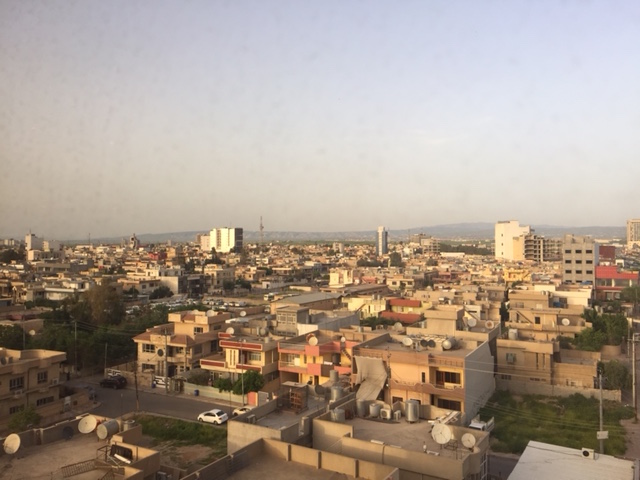
We ate breakfast on the sixth floor of the hotel. The entire wall was glass, and we looked out over Erbil. Again, I was surprised at how normal the city appeared. There weren’t car bombs going off every day; there weren’t mortar rounds falling from the sky. There was traffic, and people opening their shops for the day, and a bell hop who insisted on helping us out the door to our waiting van.
So began our first day in Iraq. We planned on driving two to three hours north, into the mountains, to a remove valley lined with eight Christian villages. It would be many miles on the road, and many checkpoints. I felt a little bit anxious, leaving the safety of Erbil. We climbed in the van, and off we went.
* * * * *
I traveled to Northern Iraq with a group called Reload Love. They take spent bullet casings, melt them down, and turn them into jewelry to raise awareness and money to support children impacted by terror. They send aid to in-country partners that have expertise in rescuing children from harm’s way and provide much needed assistance, including relief supplies, children’s programs, and safe spaces such as playgrounds. Reload Love is doing incredible work. You can find out more about them, as well as check out their beautiful line of jewelry, here.
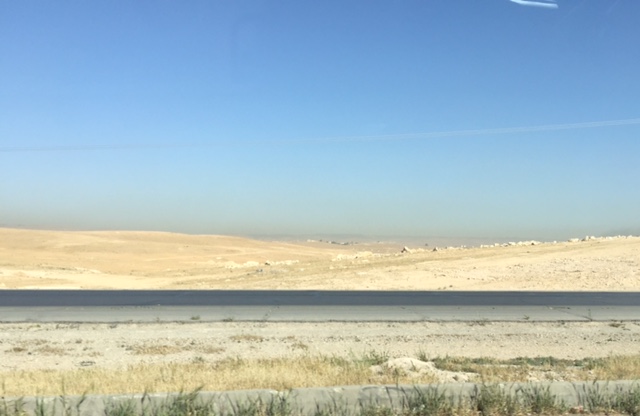
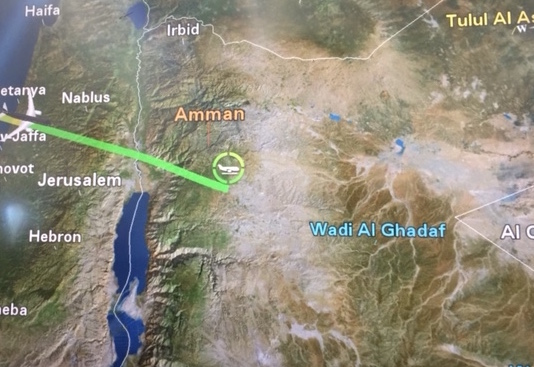
The drive from Amman, Jordan, north to the city of Mafraq (also in Jordan) is a journey from the (vaguely) familiar into the foreign. Amman, at first glance, is a modern city, but as you drive north, the streets begin to fade, turning gradually into wilderness. Soon, the highway is the only man-made thing for as far as the eye can see, splitting a white-tan horizon blurred by distance. On either side, the occasional shepherd wanders with his flock over the rocky hills, though it is impossible to see how anything could survive for long in that landscape.
After a few hours’ drive, the city of Mafraq rises up out of the wilderness, the buildings the same color as the pale rock. Initially, Mafraq opened the door to a small amount of fear in the back of my mind. It came to me in the narrow, back streets, the hard stares, and the impenetrable dark eyes. I had to calmly talk the fear down.
But then I met the people.
There is a pastor in Mafraq whose church is a magnet for volunteers. Over 1,200 people come through his church every year from all over the world, looking to serve the people of the city as well as the refugees who have ended up there. The city’s population of 80,000 has been joined by 100,000 refugees spilling across the Syrian border, yet this church welcomes them. They distribute food and heaters and blankets to the new arrivals. They even started a school that now holds nearly 120 Syrian refugee students who would otherwise receive no education. One of Reload Loves playgrounds is at the school, and we were able to speak to, and play with, the children there.
Back at the pastor’s church, we were invited to attend one of the many women’s classes they offer to the city. This one was heavily attended by Muslim refugees, mostly from Syria. It was a class on forgiveness.
I walked in, and even though I was with the pastor, I felt very out of place. The women quickly scrambled to put up the head coverings of their burqas, and soon all that was visible through the slit was their kind eyes. A teacher spoke to them in Arabic about forgiveness, with the pastor whispering the interpretation into my ear. Many of the 25 women nodded as they listened. A few of them cried quietly.
Lenya was given the opportunity to speak. She thanked them for welcoming us. She asked if they would mind sharing their stories so that we could go back to the United States and bear witness to all that is going on.
One woman raised her hand. She wore a covering that draped down over her head and came up tight under her chin, but her face was visible. When she spoke, it was in a quiet voice, with very little emotion. The interpreter told us what she had said.
“My son can no longer walk. He was shot in the legs by a sniper. My brother was tortured for many weeks, and he can no longer function.”
All the while she spoke, small children played under the tables and in the corners. Sometimes they crawled up into their mother’s laps while they spoke, pulling at their veils for attention. But many of their children played outside on a playground supplied by Reload Love. The Pastor told us it was a blessing to the mothers, who could leave their children in a safe, gated space while they listened to the teaching. Some of them stood in the playground afterwards while their children played, and the mothers became friends with each other in this way.
One by one, the women told us their stories.
“My husband was killed,” another woman said, tilting her head to the side as if to ask us how this could be true. “And I have five children.”
“My husband went back to Syria three months ago to try to find some important things we left behind,” another woman said, “but he has not returned. I tell the children he will be home soon.”
She stared down at her folded hands.
* * * * *
We stood on top of the school building and the call to prayer went out over the city. A small truck approached the school, and a man shouted from it into a megaphone in Arabic. His voice sounded scary, as if he was rounding up the entire neighborhood to hunt us down.
“What’s he saying?” Lenya asked one of our hosts.
The man smiled.
“He’s selling vegetables from his truck.”
I stared out over the city. I wondered how much of our mutual fears came simply from a complete lack of understanding. I could see Syria from that rooftop, its mountains rising. I wondered how this little church in Mafraq could be so welcoming and courageous and generous, while so many of us comfortable brothers and sisters in America can be so afraid, so focused on self-preservation.
I wonder, what will we do with all of our stuff when we are dead?
* * * * *
We returned to our hotel, and a security guard walked around our van with a mirror attached to a pole so that he could examine the underside of our vehicle for explosives before letting us back into the parking lot. We had only a few hours to sleep before we boarded our 2am flight to Iraq.
* * * * *
I traveled to Northern Iraq with a group called Reload Love. They take spent bullet casings, melt them down, and turn them into jewelry to raise awareness and money to support children impacted by terror. They send aid to in-country partners that have expertise in rescuing children from harm’s way and provide much needed assistance, including relief supplies, children’s programs, and safe spaces such as playgrounds. Reload Love is doing incredible work. You can find out more about them, as well as check out their beautiful line of jewelry, here.
It’s Friday morning at 2am and jet lag has turned my head into a solid block. I’m still nursing a strange, low-grade fever and a distant sort of headache. The house is quiet. I got home from Northern Iraq a little over 24 hours ago. There are things I will not forget.
There was the autistic Iraqi boy in a hospital bed, singing a lullaby in perfect pitch with the strum of our guitar. We asked the interpreter what he was singing about. “His mother,” she said. “He is singing a lullaby about his mother who died.”
There was the way we descended into Sinjar City on a winding piece of road, down into buildings now nothing more than booby-trapped rubble. The grassy field on the entrance to the city covered a mass grave of 75 men and boys, killed by ISIS. Here, an exposed femur. There, a small patch of poppy flowers, growing wild. Our guide said a tiny skull used to be visible, but grass and weeds now hid it. And then, in the middle of that city, in the very center of what appeared to be a lifeless place, a playground, and laughing children.
There was the breathless sound we all made, walking quietly through an abandoned ISIS tunnel, our flashlights bobbing.
There are things I will not forget.
* * * * *
Maile and I were spending one last night together, just the two of us (plus Poppy) in a hotel. We thought it would be nice to get away for a night before I went to Iraq and died in a blaze of glory. I say that tongue-in-cheek, but it’s funny how carried away your imagination can get. Fear, like hope, is a thing with feathers, and it will fly out beyond your reach, if you let it.
Toward the end of the day, as we settled into the bed in our hotel room, I checked my email. I sighed.
“I have to do an online training,” I said to Maile. “For the trip.”
“What’s it about?” she asked.
I paused. I tried to insert some humor.
“How to spot IEDs in the workplace.”
She only stared at me.
“You know. Improvised Explosive Devices. Land mines. That kind of thing.”
She didn’t blink. Then she rolled over in bed and faced the other direction.
* * * * *
My Tuesday flight from Harrisburg to Chicago was uneventful, and in the windy city I met up with the Reload Love team: Lenya, the founder, a strong leader and wonderful human being; Jen, the director, the one who knew everything and had anything you could ever need; Murray, an Aussie version of MacGyver who was also a mean guitar player; and Nick, entertainer and camera man extraordinaire.
We had dinner together, got to know each other, and then boarded a 12-hour Royal Jordanian flight to Amman where we’d meet up with some of Reload Love’s partners during a 36-hour layover. The flight was bumpy, and when we landed in Amman, the passengers cheered. It makes me nervous when people cheer a successful plane landing – it makes me feel like there was something I should have known about.
Outside, the landscape was covered in a dusty haze. Nick leaned over towards me.
“Welcome to the Middle East,” he said with a grin on his face.
* * * * *
I have strange dreams now that I’m home. I dream of checkpoints we cannot get through, and desert roads lined by bottomless canyons. I dream of getting beat up by border guards. I dream of my children dying. I wake up again, sweating. I go downstairs and turn on the stove, heating up the kettle. I watch as the tea bag stains the water. I sit at the table in front of my glowing computer, and, again, I listen to the quiet.
* * * * *
I traveled to Northern Iraq with a group called Reload Love. They take spent bullet casings, melt them down, and turn them into jewelry to raise awareness and money to support children impacted by terror. They send aid to in-country partners that have expertise in rescuing children from harm’s way and provide much needed assistance, including relief supplies, children’s programs, and safe spaces such as playgrounds. Reload Love is doing incredible work. You can find out more about them, as well as check out their beautiful line of jewelry, here.
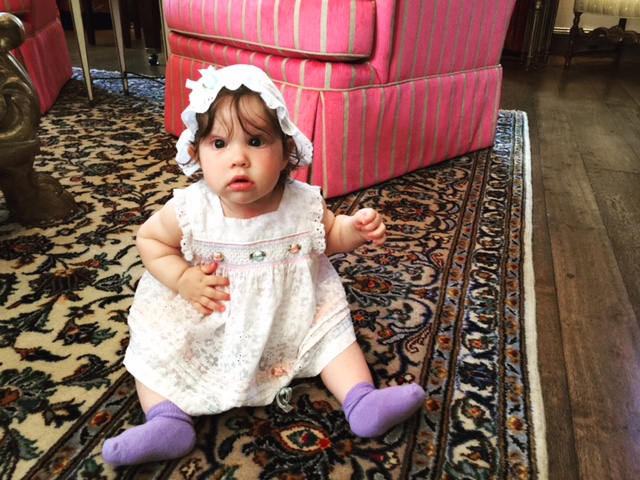
Poppy at her first Maundy Thursday service, her sisters washing her feet.
We walked the six blocks to Saint James on Good Friday, the sun shining, a spring breeze chasing us along the sidewalks. I pushed the double-stroller – occupants varying in combination between Poppy, Leo, Sam, and Abra – and sometimes Maile would come up beside me, quietly, nestling her hand in under my arm. We walked long stretches without saying anything. She sometimes looked up at me with tears in her eyes.
The knowledge of my upcoming trip to Iraq came to us during Lent, just before Holy Week. Everything about Easter week felt heavier to me after my trip details were finalized. Everything felt pregnant with undelivered meaning.
* * * * *
Two-year-old Leo did remarkably well during the Good Friday service, but towards the end, he got antsy, and I took him out into the courtyard. He played in the fountain, carefully picking up tiny pieces of gravel and making small piles, or squatting over the meandering movement of an ant, or eyeing the flowers blooming off to the side.
But he wanted to walk, he wanted to run, and around the corner of the church he fled. I followed him through the arches, past the climbing tree (as our middle son Sam calls it), and back, back, back into the church yard. The cemetery.
Two days later, two days after Leo and I wandered among the stones, our church would hold its annual egg hunt there, and children would scramble over the graves, trampling the grass and hugging the trees and walking over all those bones. They would laugh and call out to each other, their new voices filtered by standing reminders of death.
So, Leo and I walked through the stones. He climbed on the graves’ edges, balancing like a man on a cliff. He jumped into the green grass. Would that we all saw death as our playground! We made our way to the far, back corner. There is a memorial stone there, and large granite slabs. While there are no more free spaces in the church’s cemetery, this is where our saints are now remembered. Flowers reached up around the edges.
I saw my friend’s name there on one of the slabs: Nelson Keener. He died one year ago. I sat with my back against the hard stone and watched Leo, now swinging a stick. This is life. This is death. And so it goes.
* * * * *
Planning a trip to Iraq during Holy Week is a wonderful way to come face to face with your mortality. I know the odds are in my favor of returning, perhaps not unscathed emotionally, but at least in one piece physically. It’s the unknown, I suppose. I will be there for a little over a week. If I spent that time here, at home, that week would probably pass by like most other weeks I have come to know. But now, thousands of miles away, in a place decimated by war and conflict, in a place so full of hurting people, that week will be different. Life will be different, measured as happening either before or after my trip to Iraq. This is only a sense that I have. Time will tell.
* * * * *
Can I take a moment and tell you all you need to know about our wonderful priest, Father David? Stay with me. This will all come together in the end.
Imagine this: Easter morning. The church is packed. The choir has made their way to the front, and Father David stands at the front beside Father Rob. The church is ringing with the sound of saints singing, the sound of a trumpet peeling against the beautiful morning light streaming through stained-glass windows. And suddenly, Father David is walking towards me where our family sits in the front row. We are not normally front row people, but on Easter morning the church was full, and we were two minutes late, so there we were.
Anyway, Father David walks down the stairs, comes over to me, and leans in close.
“I think your wife is looking for you,” he whispers, smiling before he turns and walks back to his place. I look around, locate and make eye contact with Mai, and wave her to the front. But it struck me, the fact that my priest would, in the middle of the service, take the time to come down to where I sat and let me know my wife couldn’t find where I was sitting.
This may seem like a small thing to you. I have never seen a pastor do such a thing before, not during such an important service. This is not a small thing.
Nine months in the womb, and now almost nine months out. Poppy has been the icing on our cake.
* * * * *
Father David spoke on Easter morning about those four powerful words the angel uttered to the women at the grave, when they came to see Jesus.
“He is not here.”
Father David went on to say that, basically, it sure feels that way, doesn’t it? I look around at this world I live in, and it’s easy to wonder if God is here or not. And it’s easy to conclude, when you see Syrian children being gassed or pulled out from under the rubble, when you see Iraqi children dying in the wilderness, when you hear of aid workers being killed by ISIS sniper fire, when you hear a woman across your very own street screaming at, and hitting, her child, when you lose yet another friend to cancer…and on and on.
“He is not here.”
And yet. The angel goes on to say, “He has risen from the dead and is going ahead of you into Galilee. There you will see Him.”
He is going ahead of you.
There, you will see him.
* * * * *
The unasked question I see in many friends’ and relatives’ eyes when I tell them I am going to Iraq is not difficult to recognize. They have, every one, remained verbally positive, but eyes ask questions mouths will not utter.
“You have a family and you’re risking your life on a trip to the Middle East? For what?”
My only answer is that I was asked to do something that fits entirely within the realm of our family’s mission and way of life. But as I think more about it, I realize there is another answer, a truer answer. The true answer to why I am going to Iraq is that God is not here. He is there. He has gone ahead of me.
There, I will see him.
* * * * *
I think we all have an Iraq to go to. God is not here anymore. Do you realize that? He has gone ahead of you. Go! There, you will see him.
* * * * *
If you want to read about someone who is going, who is following the call to wherever there might be, someone who inspires me to stay open to where the spirit might lead, check out my friend Tsh Oxenreider’s beautiful new book, At Home in the World, releasing today! It’s the story of her family of five’s journey around the world. Yes, around the world. Tsh is insightful, funny, adventurous, and you will love this book. I promise.
I’ve never met Tsh or her husband, Kyle, but we’ve become online friends. If you’re intrigued by people who do not allow themselves to be tied down by conventional commitments, people who want to live fresh, meaningful lives, Tsh and Kyle are your kind of people. Here’s a snippet about her newest book:
What would you say if your spouse suggested selling the house, putting the furniture in storage, and taking your three kids under age ten on a nine-month trip around the world? Tsh Oxenreider said, “Thank you for bringing it up first.”
At Home in the World follows their journey from China to New Zealand, Ethiopia to England, and more. They traverse bumpy roads, stand in awe before a waterfall that feels like the edge of the earth, and chase each other through three-foot-wide passageways in Venice. And all the while Tsh grapples with the concept of home, as she learns what it means to be lost—yet at home—in the world.
Check it out HERE or wherever books are sold. Buy it. Trust me.
When Father David said what he said on Sunday morning, I immediately grabbed the pen my daughter was drawing with and scribbled his quote at the top of my bulletin. “Hey!” she hissed in quiet protest. Lucy and Cade looked over my shoulder to see what I was doing, what I had stolen from Abra. When I finished writing down Father David’s words, I handed the pen back folded the piece of paper, and tucked it into my pocket. Those words were like a promise to me, like some kind of blessing.
* * * * *
Two years ago, I read a blog post by Ann Voskamp that left me in tears. When Maile came home later that evening, I made her sit down and read it, too. We soaked in Ann’s writing, suddenly aware, awake, to a small part of what was going on in the Middle East, and we were shattered. Empty. We did what we could, we gave what we could, but for the last two years, ever since reading that post, I’ve felt a holy kind of restlessness whenever I thought about the Middle East. It felt, and continues to feel, intensely personal.
This is part of the reason I’ve been so upset by President Trump’s efforts to keep out refugees from the Middle East. This is part of the reason I befriended a Syrian refugee family who recently moved to Lancaster. This is part of the reason I’ve done work with Church World Service and Preemptive Love. The restlessness, the discomfort, has continued to grow. I wanted to do more, but I didn’t know what else I could do.
We all know this sense of helplessness, right? In a world where we see every tragedy, where we witness every injustice, how can we feel anything but helpless? Well, I found a small way to beat back the helplessness, and for me it came in doing small things, whenever I could. You might find this useful, too, when you’re drowning in helplessness, in a sense of smallness.
Ever since reading Ann’s article two years ago, I’ve felt a kind of irresistible pull towards that region of the world. Sometimes I’ve felt impatient to get involved – What’s taking so long, God? At other times, I’ve been content to sit back and wait – after all, our life is busy, and the days fall over each other in their passing. Months get swept away. I can hardly believe two years has passed since I first read that blog post.
Still, there was this invisible trajectory, inevitable in its motion. I think the passing of this time, all these days and weeks and months, have been a grace, God’s way of easing Maile and I into a new movement, one that at first might have been difficult to accept had we not been given so much time for it to grow. I think God knew that if he gave us this opportunity too soon, we might mistakenly pass it up out of fear or practicality or uncertainty. But God gave us time. Two years, to be exact.
I continue to be amazed at God’s adept use of time in my life, this insistence that I wait, that I not have everything precisely when I want it. I’m beginning to think it might be God’s greatest talent, this use of time, this creating of holy space, this invitation into the waiting.
* * * * *
Finally, the penny dropped. I spoke with my agency about a potential project, and that led to a phone conversation with the potential client. I researched her story and what her organization is involved in. What I didn’t expect was the question that came next.
“Would you be willing to travel to Iraq to see the work we’re doing first hand?”
I called Maile as soon as I got off the phone.
“The client wants to know if I’m willing to travel with her to see the work they’re doing.” Maile was quiet on the other end of the line. “So, where do they want you to go?” she finally asked, laughing nervously, because somehow she already knew.
“You’ll never guess,” I said, also starting to laugh, for no reason. We were both giddy with nerves and a sense that what we had dreaded and wanted was upon us.
“Iraq,” she said, and we both stopped laughing. We both grew serious.
“I knew you’d know,” I said.
“The dangerous part of Iraq, or the really dangerous part?” she asked.
“Take your time and think about it. We both have to be okay with this.” I paused. “We’ll talk when I get home.”
Later that day, I walked straight up to the bedroom, past my kids’ greetings and requests for food and shouts to arbitrate some new disagreement. I went up the stairs, back the hall, and into our room, where Maile was folding clothes on the bed and seven-month-old Poppy was sitting, proud of herself, happy to see me.
I started talking, but Maile held up her hand and smiled and there were little seeds of tears in her eyes.
“You’re going to Iraq. We both know it. We’ve both seen this coming for a long time. And I’m okay with it. I don’t know how, or why. But I’m not even worried. It’s the next thing.”
* * * * *
A few days later, Maile and I were up in the study. Through the narrow window, I could see this little city we’ve grown to love. We gathered the kids into the room and they sat down, some on the chair, some on the floor, some on us. We have six, you know, and everyone was there except Poppy.
“So, Daddy has a new writing project,” Maile explained. The kids stared at us. This is nothing new to them. We are constantly talking about having or not having projects, having or not having money, having or not having time. We explain when it’s time to tighten our belts. We explain the value of money and how it relates to time. Then, when a new deposit comes in or a new contract is signed, we celebrate by going out to eat. I hope our honesty with them is a good thing. I don’t want them to be obsessed with money, but I do want them to understand the true cost of a thing.
“To write this book, he has to go to Iraq,” Maile continued. I nodded.
“Is there a war going on there?” Cade asked.
“There’s a lot of conflict,” I conceded. “They’re working on getting rid of ISIS.”
“Is it dangerous?” Lucy asked.
“It’s not the safest place in the world,” I said, shrugging. Maile laughed.
“It is a dangerous place,” Maile said, “but here’s the thing. This is right in line with the purpose of our family. We are adventurous. We try to stand up for people being persecuted. We live differently, or we try to. And when God opens up an opportunity like this, we say yes.”
Maile paused. It was quiet there in that third-floor room.
“Daddy has the opportunity to shed some light in the darkness. He has a chance to share stories people might not otherwise hear.”
Our five oldest kids, including Leo, stared at Maile as if she was explaining the meaning of life. Their eyes were round, their mouths stretched in serious straight lines. I was glad Maile was talking because I felt myself getting choked up. I don’t know if it’s possible to plan a trip to Iraq without at least considering the possibility that you might not come back.
“So Daddy is representing our family, what our family stands for. And that’s why he’s going.”
* * * * *
This writing life, this crazy, beautiful, unpredictable writing life, has led me to so many wonderful places: Sri Lanka, Istanbul, an Iranian community in Los Angeles, middle-of-nowhere Indiana, a Navy SEAL’s house in Maryland, and so many others. I’ve read the sacred diaries of a young woman who committed suicide. I sat across the table and became friends with a father whose young son committed triple homicide. I’ve witnessed firsthand the ridiculous power of forgiveness.
And now, in a few weeks, Jordan and Iraq.
Tonight, I came back early from driving Uber because I’d rather watch some basketball with my son than make another $20 or $30. When facing a trip to a place like Iraq, I am reminded that time is a non-renewable resource. I suddenly see how limited it is, how we hold it without any guarantee, and I find myself spending the minutes more deliberately.
At one point I went into the bathroom and there, on the sink, was my bulletin from Sunday. I unfolded it, square upon folded square, and there at the top were the words I had written down, Father David’s words.
“Live a little more beautifully and dangerously, as Christians should.”
So, I go, and do what I’ve been created to do: tell stories, mine, as well as the stories of those who cannot tell their own. And I represent Maile and my kids and all of us who believe Christ was not about worldly power or cultural success or being first, but about being last, about taking up an Iraq-shaped cross, and going, even when it doesn’t always make sense. Or when it makes perfect sense. And I carry with me the phrase of Father David:
“Live a little more beautifully and dangerously, as Christians should.”
I always try to remember to confirm a passenger’s destination before pulling away from the curb. When a girl climbed into the car a few days ago, I said the name of the street she was going to.
“Yep,” she said, putting on her seat belt. Then, I confirmed the town, really as an afterthought. I don’t always do that. Usually the street is enough. The town she had selected as her destination was about twenty minutes away.
“What?” she exclaimed. I repeated the name of the town she had listed.
“No!” she said. “Is that the destination I put into the app?”
“Yeah,” I said. “Where do you want to go?”
“Same street, but right here, in this town,” she said. I laughed.
“Good thing we got that ironed out. What would you have thought if I started driving you out into the country, in the complete wrong direction?”
It struck us both funny and soon we were cracking up.
“You probably would have thought I was taking you out there to kill you,” I joked.
“Yeah!” she said, giggling. “And I probably would have kicked open the door and jumped out while the car was moving!”
“And I would have thought, ‘What is wrong with this passenger?’”
By then we were laughing so hard we were almost crying. I pulled up to her stop, about five blocks away. It took all of three minutes to get there. I finally managed to stop laughing, and I sighed.
“Wow, that was great. Have a good day.”
“Thanks for not killing me!” she said.
“No problem,” I said. “Thanks for not jumping out of a moving vehicle.”