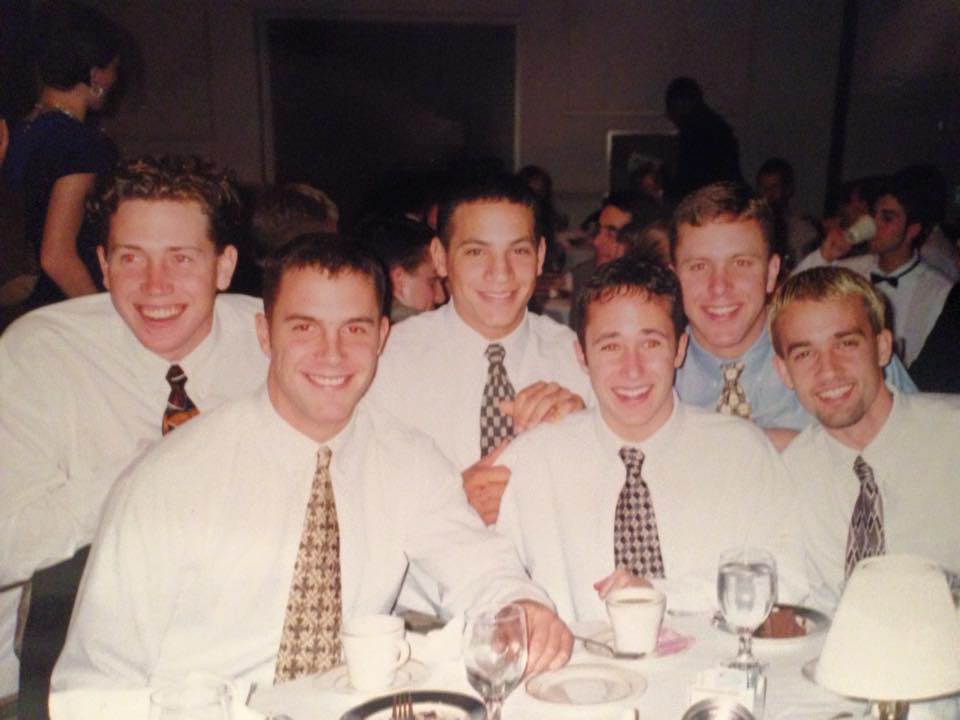
That’s me at the far right, 20 years ago. Yes, I had blond hair. There’s no rational explanation for that.
Twenty years is an eternity. Twenty years is yesterday. Twenty years ago this month I was a junior at Messiah College, finding my way, losing my way, finding it again. Twenty years ago I was twenty years old. How old I felt! How experienced and worldly-wise! (Twenty years from now will I look at my 40-year-old self and chuckle, shake my head, feel such grace towards the youngster I was at the time?)
I played on the soccer team at Messiah and it was one of the greatest joys and disappointments of my life. On one particular Saturday in October, 1997, we were slated to play our arch nemesis. Campus was alive and plans were made and friends prepared to travel to the away game.
More importantly, after the game, I had a date.
A real, live date with a beautiful girl named Maile Silva, a girl who I had five classes with that fall. We both loved Modern American Lit and Counting Crows and Li-Young Lee. She was a dream, to be honest, and those blue eyes. Those blue eyes. She was so sincere, so earnest. So beautiful. Did I mention that?
Twenty years ago this month, Maile and I went on our first date. I raced out of the locker room when we returned from the away game, and I jogged, breathless, to my friend Karen’s apartment to pick up her keys so that I could borrow her white Honda (Civic, I think?) and take this girl Maile on our first date. Later, Maile would tell me she was horribly ill all day and almost called it off. If she would have, would I have asked her out again? Who knows. Who knows the twisting road we all will travel, where it leads, where it dead-ends, where we are left without it and must plow our own way through.
I picked her up and we went to a diner (which has since burned down) and then to a bookstore (which has since gone bankrupt) and finally to a movie theater (which has since closed). We are, literally, the only thing that has lasted from that night.
We saw the movie Gattaca. I remember the thrill of holding her hand, our fingers slowly touching. I remember, a few weeks later, kissing her under the lamp light at the side door of the Miller/Hess dorm, her friends giggling and watching us through the window three floors above.
* * * * *
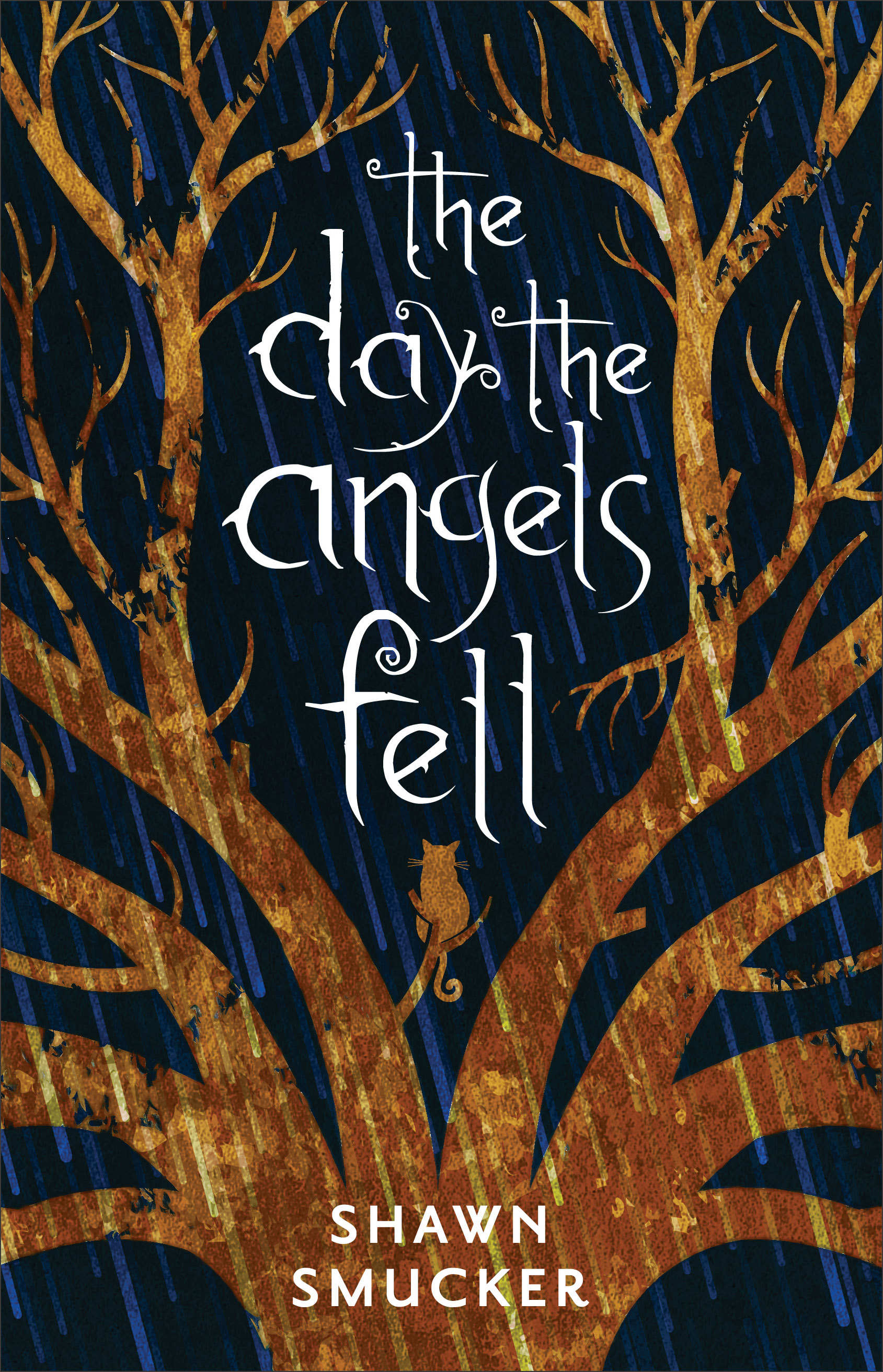
This Saturday, we’re taking our six kids back to Messiah for homecoming where I’ll be selling copies of The Day the Angels Fell. I can’t wait to show them our favorite spots (although I don’t want to play the college up too much, because there’s no way we could afford the tuition these days).
Would the 20-year-old me even believe it if someone told him what his life would be like when he was 40? Six kids? Married for 18 years? Making a living as a writer? A novel published? Not making much money at all? A friend of Muslims? Driving around strangers to make extra cash? Traveled to Istanbul and Sri Lanka and Iraq and lived in England?
Would any of us believe it, if we could peer down a 20-year hallway? Would any of us recognize the self we are always becoming?
* * * * *
Twenty years is an eternity. Twenty years is yesterday.
* * * * *
Where were you 20 years ago? What about your present self would surprise you the most?
The weekend was long and tiring, filled with wonderful things and busy things and fewer spare moments than I would have liked. This is life. We are still learning.
Our 8-year-old is probably the most passionate and insistent one among us. When the weekend brought not enough sleep and too many “we’ll see” answers, he started falling apart. Personality clashes. Frustration. An early bed time on Sunday night.
After getting the 3-year-old in bed, I curled up on the floor beside the 8-year-old (he insists on sleeping on the floor). A simmering sense of having been terribly wronged emanated from him. His pillow was wet with tears. I lay down beside him in the dark, only the night light on, and I pushed the hair back from his eyes. I pushed it back again. It became this methodical movement, a tenderness. His pillow was wet with tears.
“I don’t think this is about bed time or having a snack or being bored,” I said quietly, and he softened. He sniffled, a sob-tremor shuddering through his body. “This is about not getting much playing time at the football game today, isn’t it?”
He hesitated. His defenses crumbled. He nodded. When he spoke, his voice came out in stop-start, haltering fashion.
“Why…does…everyone…underestimate…me?”
I sighed. My heart broke, for the thousandth time. As each of my children gets older, I am struck fresh by the realization that this world will hurt them and many times there’s not a thing I can do about it. Raising six children, raising one child, raising any amount of children, caring for anyone outside of yourself, will render your heart a shattered mess. Of course, this is not always a terrible thing, because as Leonard Cohen said,
There is a crack in everything That’s how the light gets in.
* * * * *
It’s probably the question that lies at the foundation of our subconscious. It explains why so many of us have responded to life the way we have. This question can drive us up a mountain or plant us face first in the dust.
Why does everyone underestimate me?
It’s the question I asked myself when I didn’t make the starting team in college, when I didn’t get accepted to any of the MFA programs I applied to in my early 20s, when I didn’t get that job or this promotion, that agent or this book deal.
Why does everyone underestimate me?
Feeling underestimated is one of the worst feelings out there because it usually means we weren’t even given a shot. Failing is one thing, but kept entirely out of the game is another. Missing the shot is one thing, but never getting to take it is another.
Why does everyone underestimate me?
* * * * *
He fell asleep in minutes. I spoke to his coach on the phone later that night. There were some misunderstandings, some chaos on the sideline. He will get his chance to prove himself.
If you’re feeling underestimated today, I see you. I hear you. I can only encourage you in two ways – keep going, and whenever it is in your power to give someone else a chance to prove themselves, do it. Give them that shot.
We all deserve it.
* * * * *
How have you dealt with feeling underestimated? What have you done (or what are you doing) to move through that?
Today is the day. My novel, The Day the Angels Fell, officially releases to the world. You will probably find me in my study today, alternating between elated, anxious, happy, sick to my stomach, and hopeful. Or all at the same time.
In any case, I hope you’ll take the time today to purchase the book and tell your friends about it. Here are a few places you can find it:
Aaron’s Books in Lititz, PA (preorder it from Aaron’s, come out to the store on September 8th, and I’ll sign it for you in person)
But, to be honest, I’ve grown a little weary of shouting the news of my book from the rooftops for the last few months. I am not a natural self-promoter – it’s all rather exhausting. So, I wanted to take a moment today and point you to some other wonderful books I’ve been reading. Please consider supporting these fine writers and treating yourself to another great read:
It’s always been my dream to write a Newberry Award-winning book, so it’s partially out of jealousy that I picked up The Girl Who Drank the Moon. It’s a beautifully-written, intriguing book that I can’t wait to finish.
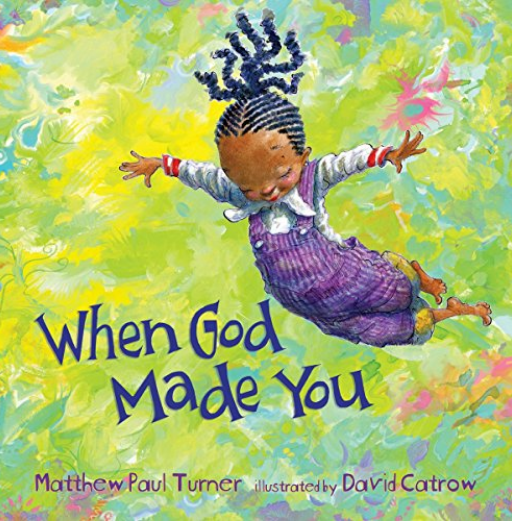
The writing pulls on your heart. The illustrations are breathtaking. I cannot recommend enough this children’s book by Matthew Paul Turner. (Also, a perfect baby-shower gift.)
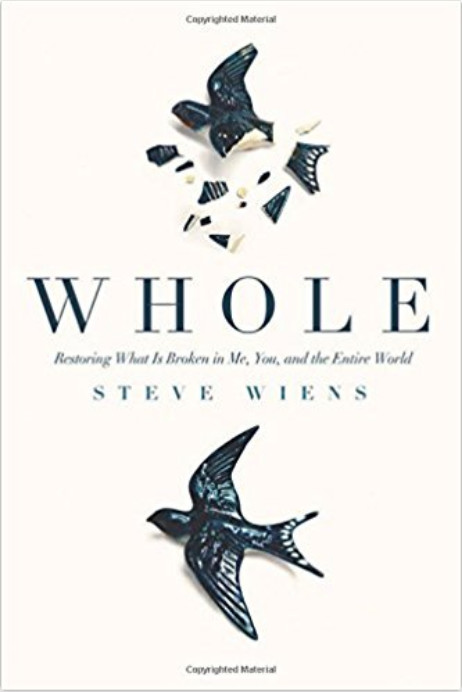
Whole, a nonfiction book by Steve Wiens, came to me at just the right time, when I needed to slow down and breathe, seek the peace of God. This is quiet book, but it brings the quiet in a kind, firm way.
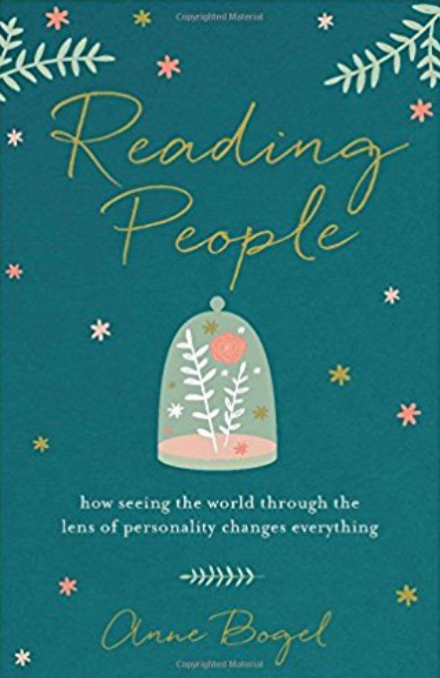
Anne Bogel (you might know her as Modern Mrs. Darcy) is insightful and funny, and I can’t wait to read her new book! It just arrived on my doorstep a few days ago, but it’s quickly moved to the top of my TBR list.
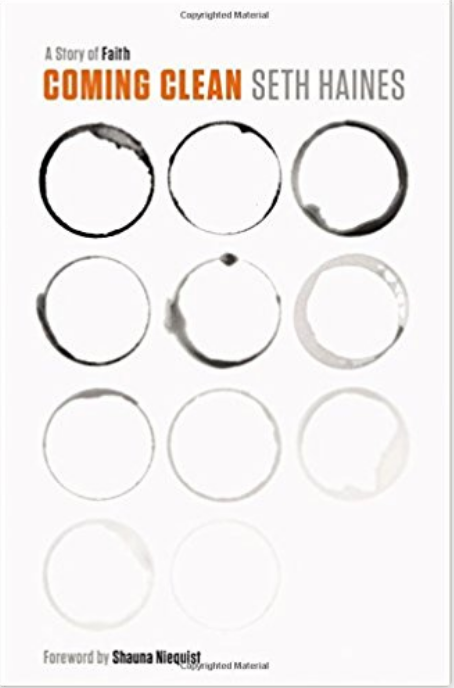
Seth’s book Coming Clean isn’t hot off the press, but it’s a poignant read, and September is recovery month, so what better time to sit back, take a look at your life, and think about how your own addictions are running the show? After all, we’re all addicted to something.
Andi’s voice is a quiet, encouraging influence in a world – and I’m talking specifically writers’ self-help world – that includes far too many snake-oil salesmen and get-rich-quick classes. Never bossy or illusory, Andi offers a book that will guide you along your path of writerly self-discovery.
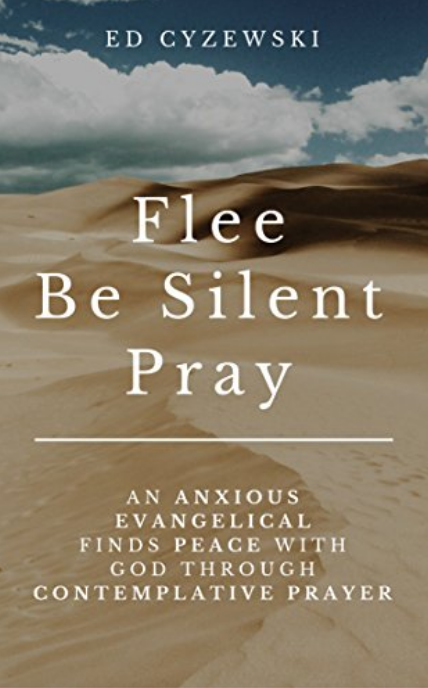
Ed is a pastor and mentor to writers, and in Flee, Be Silent, Pray, he offers up what I think is his most compelling nonfiction work to date, in which he explores the importance of contemplative prayer. Christian or not, you will find this book a welcome challenge to our culture’s current devotion to busyness and noise.
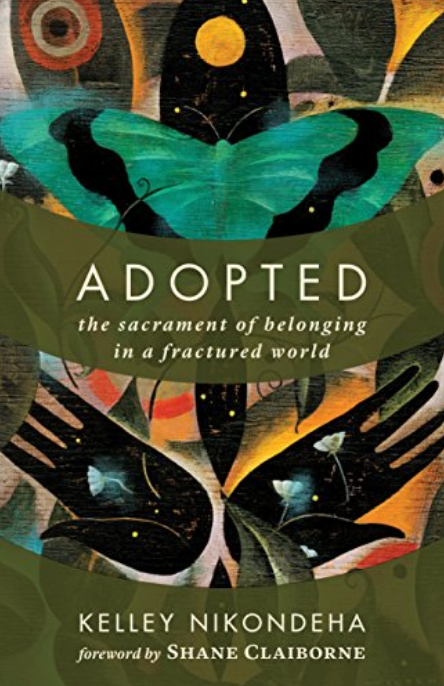
I haven’t yet read Kelly Nikondeha’s book Adopted, but I find the premise so compelling, and her online voice so important, that I had to include her book here. Check it out. You’ll be glad you did.
This one doesn’t come out for a little while, but I’ve enjoyed crossing paths with Jen Fulwiler, and her voice is so relevant and endearing. I’m looking forward to her book, releasing April, 2018. (In the mean time, I’ll be on her radio show on 9/5, so come listen to us chat on SiriusXM channel 129 at 2pm.)
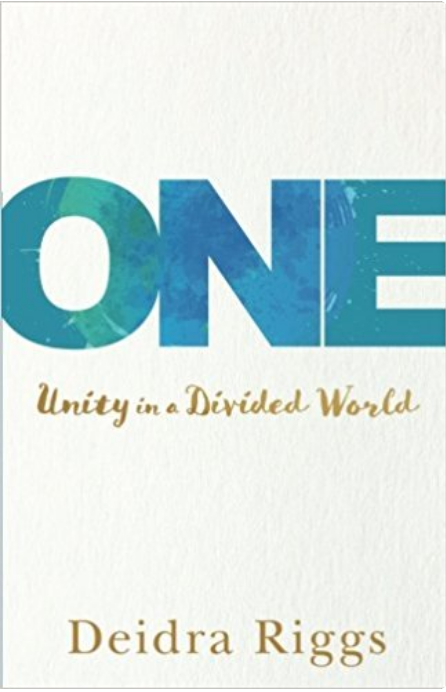
Deidra speaks with a calm, authoritative voice into a culture that seems to thrive on discord and disagreement. I respect her presence and way of being in the world, and this book is a beautiful reflection of her.
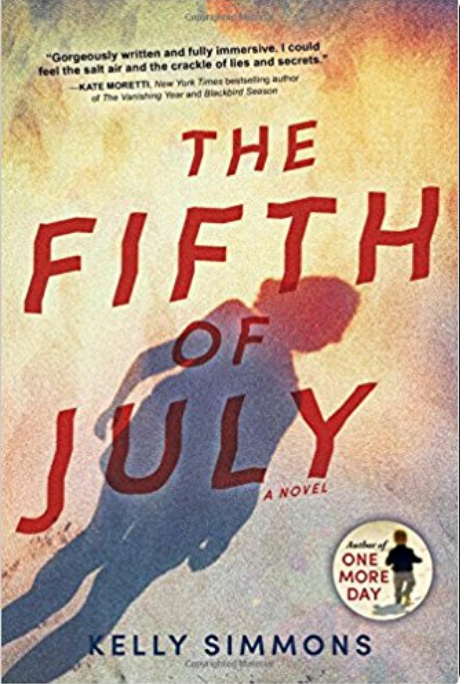
This is one of the novels on my current to-be-read stack. I met Kelly at a writers’ conference a little over a year ago, and I’ve been anticipating this book for quite some time. “After a tragic Fourth of July weekend, one upper-crust American family learns that some secrets never stay hidden, no matter how deeply you bury them…”
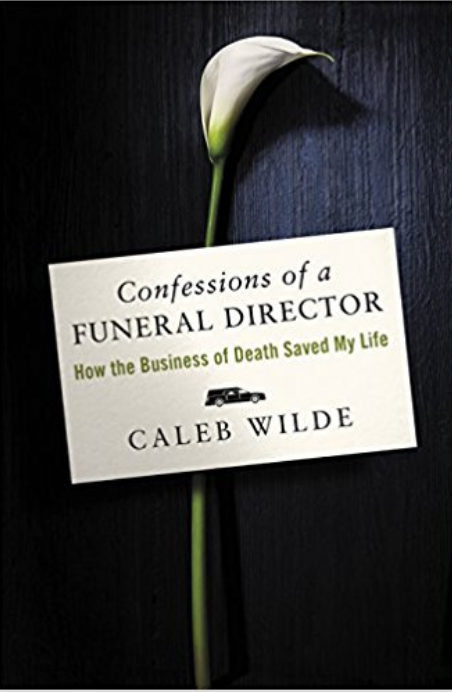
Last but certainly not least, Caleb Wilde’s long-anticipated memoir, Confessions of a Funeral Director, releases in about a month. Preorder it now! You won’t want to miss this one.
As Bob Dylan sang once upon a time, “The times, they are a changin’.”
Have you ever felt your life slowly going in a new direction, even a good direction, but you still felt hesitant about the change because of the unknown variables? Maybe you had the opportunity to take a new, better job in the same company. Maybe you were offered a raise that would require a little more responsibility. Maybe you felt compelled to step into a new volunteer position or start creating in new ways. These changes, sometimes they can percolate up into your awareness in a gradual way, almost unnoticed.
But then, suddenly, you see what’s happening. And you’re not sure what to do. Should you resist? Make the leap? Allow things to continue unfolding, or make some hard decisions?
This is how I have felt for most of the summer. My writing life has been changing, not due to any conscious choice on my part, but due to new circumstances. For most of the last seven years, I have blogged almost daily. I did take almost a year off at one point, and this year I only posted once a week or so, but for the most part, blogging has been a huge part of my writing life for almost a decade. Over a thousand posts. Over half a million words.
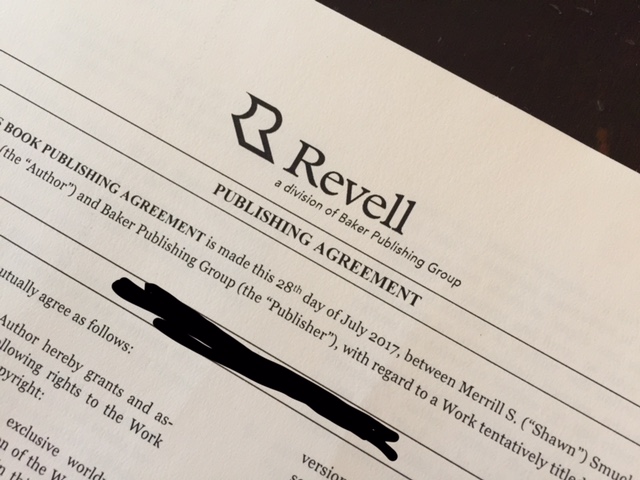
Then this summer happened, a whirl wind of new things. It has contained the lead up to the launch of my first novel, The Day the Angels Fell(you can preorder it on Amazon, B&N, ChristianBook.com, or from your local bookstore – it’s even on audio!). I’ve been working on a co-written book that I love, one that included a trip to Iraq earlier this year. I’ve got a serious, in-depth revision coming up for the sequel of The Day the Angels Fell (coming out next summer, which you’re going to love). And (this is the fun announcement), I’ve signed on with Revell to do my fourth traditionally published book, a work of nonfiction, one that will come out at the end of 2018 (you’ll hear more about this one in the fall).
Writing my own books (and selectively taking on co-writing projects) has been the writing life I have been eyeing up for at least the last seven or eight years. And while I’ve made a good living during that time by co-writing, this year and next will be the first years that I release my own traditionally published fiction. I’m thrilled about it, and it’s thanks to all of you and your support that it’s even happening.
But when good things start to happen, when these positive shifts start taking place, there are always things we have to set to the side. We simply can’t do everything. Blogging is one of the things, at least in the short term, that I have to put down. But you know what? I didn’t know it, not for sure, until I read this post by Tsh called “Changes.” Turns out, she’s going through a similar season in her writing, and reading her post helped me navigate my own thoughts about change.
I’ll still be floating around Facebook and Twitter and Instagram. I’ll still be sending out the occasional email newsletter (which you can sign up to receive HERE). I’ll still let you know when my books are coming out. But I won’t be blogging much, if at all, for the rest of this year – and yes, this means a pause on the ever-popular Rideshare Confessional series (but I’ll still be driving for Uber and collecting stories to share later).
Hitting pause on my blog-writing makes me a little sad, but I want these books to be the best possible books they can be, and I only have so many words.
You’ve probably heard the amazing quote by Howard Thurman: “Don’t ask what the world needs. Ask what makes you come alive and go do it. Because what the world needs is people who have come alive.”
I think my writing life is going down a similar path. Sometimes, we have to be willing to lay aside things we enjoy in order to go deeper into the things we’re called to do. I couldn’t be more excited about the books I’m writing for you. Now, it’s time for me to focus on them.
* * * * *
Is there an impending, necessary change in your life you’re hesitant to make? Leave a comment below – I love hearing from you.
I pull to a stop outside a fancy golf course’s club house. It is late – midnight? 1am? – and the parking lot is empty. A man emerges from the shadows and confirms he is my passenger. He seems friendly, in a good mood, and mostly drunk. He laughs and says he has some friends who are coming, they’ll be right out. He’s going to use the bathroom. I start the fare.
Three other men approach the car, laughing and talking about their golf outing that day. They are also wasted. They squeeze into the back seat, mostly good-natured about the small back seat. Except the guy in the middle. He isn’t happy. He makes some snide remarks about the car, some more snide remarks about Uber drivers in general, then sits there, shoulders slumped, scowl on his face, somewhere between annoyance and sleep. He is the youngest of the group, and to be honest, he looks a little young to be participating in the inebriation.
The first man returns, hops in the front seat, and off we go.
“Dad, give me your phone. I want to text Billy,” the kid in the middle seat demands.
“What are you going to text to him?”
“Nothing. Just give me your phone.”
The argue for five minutes about the phone.
“Fine, you can have it, but let me read it before you send the text.”
“What? No way.”
“Fine, you can’t have the phone.”
“Okay, just give it to me. I’ll let you read it first.”
The father hands over his phone.
The kid becomes increasingly agitated as we drive, reliving the ways he was cheated on the golf course that day. He makes fun of seemingly every person he crossed paths with. He keeps spouting off about this or that, and the father starts sliding from happy-go-lucky to morose to angry. He snaps at his kid. He’s clearly embarrassed by his son’s drunken state.
The kid hands the phone back.
“You already sent the text!” his father shouts.
“No, I didn’t.”
“Yes, you did! What is wrong with you?”
“Sorry, sorry,” the kid’s words are slurred and he looks like he might fall asleep. “I guess I did. By accident.”
We arrive at the house, a mansion dropped into one of those neighborhoods where the mansions are lined up one beside the other. Each man apologizes as he gets out. This is one common trait of drunken people who rideshare – they almost always apologize for being drunk.
The dad lingers.
“Sorry, man,” he says, running his hands through his hair. He seems suddenly full of regret. He hands me a $10 tip on a $12 fare. “Sorry.”
Check out this guest post by my friend Zach Hoag, and then go buy his book, The Light is Winning, a book “for anyone who is anxious about the future of the church and their place in it.”
* * * * *
In 2008, my wife and I took the plunge that many others like us were taking at the time, immersed as we were in literature and media about “the emerging church.” It required a great deal of sacrifice; it was an all-or-nothing proposition. We mortgaged our lives on an exciting new venture, all for the sake of the kingdom of God.
Namely, we planted a church.
And for a time, it was healthy and growing and effective. I had a ministry background, but the experience was still something new for all of us involved – it was a process, an unfolding. A thrilling one, at that.
And it was a process for me individually and internally too. Towards the beginning of the plant, I broke with the Gospel-Centered New Calvinism that had dominated my thinking for almost a decade. And throughout the church-planting years, new thoughts about the nature and character of God, the meaning of salvation, the work and mission of the church, and the cultural lines of exclusion in my evangelical context rose to the surface. I was captivated by this process and these new revelations, excited for how they might shape and reshape my ministry to our little church and our beloved city of Burlington, VT.
Our church plant, as “cutting edge” as it sometimes seemed to be, was firmly located within the evangelical world. And because of that, some of my emerging perspectives made our more conservative core members uneasy, if not upset. It’s not that I was trying to fool anyone or be a theological rogue; it’s just that I was beginning to see everything differently. And that can pose a problem for folks who want things to stay the same.
More than anything else, I felt a fierce determination to stay on the mission of being a church for our progressive, post-Christian city, not merely in a superficial sense of staying relevant but in an increasingly deeper sense of discerning how to do theology in the midst of God’s mission in our neighborhood, outside the church walls. Part of that process was deconstructive: identifying some of the ways those of us with churched backgrounds might be build- ing barriers in our theology and practice without even knowing it. I was looking for a way to embody acceptance and inclusion, so that our friends and neighbors might experience God and meet Jesus. I didn’t want us to just do superficial outreach or create a program to condescendingly engage “those people.” I wanted those people to be our people. I wanted them to be us.
But then things went south. And as conflicts and decline hit our growing but small and fragile congregation, it only took about a year for it to unravel completely. In the end, when it all came crashing down, this thing I had committed my whole life to—I was completely devastated.
One of the sermon series I preached during the last year of our church was called “Exit through the Wilderness,” a survey of the book of Exodus with a nod to the Banksy documentary Exit through the Gift Shop—because who brilliantly critiques the empire better than Banksy? A sweeping Exodus theology emerges when we see the Scriptures as a story of God liberating all of creation from the effects of human empire—liberation from both the power and control out there, and the power and control tempting our hearts to break bad. Yes, the empire you will always have with you. And prone to wander, Lord, I feel it.
The process of moving from one perspective to another that was underway in my life accelerated to the moment of impact in the end of our church. And that end laid waste to not only the faith-structures around me but those within me too. I had no idea what wilderness awaited me when I preached about the Israelites being liberated from the Egyptian Empire only to feel lost in the sojourn that followed. I didn’t know that my necessary suffering would parallel my preaching, that my ego would have to die even as I identified empire business all around me. I was unaware of how deeply I would soon descend into the desert of the real.
Father Richard Rohr talks about the difference between the true self and the false self. The false self is bound up in our outward identity—title, achievement, success, image. But our true self goes back much farther; it is who we really are, who God has made us to be, our bedrock of belovedness, which cannot be changed or taken away. The false self, Rohr says, “will and must die in exact correlation to how much you want the Real.”
In one of my final sermons to our dwindling church plant, I talked a little bit about grace:
Grace is surrender.
Grace, really, is giving up.
It’s giving up on self, and it’s giving up on striving. It’s giving up plans and dreams and hopes. It’s giving up your vision. It’s giving up on the purpose and direction that you hold dear and precious, like Paul did when he experienced insults and hardships and persecutions that rudely interrupted his purpose and direction.
Grace is that kind of giving up.
Grace is often the death of what is most dear. Sometimes, grace is the death of your life’s work. The death of the thing that you have poured every waking moment into, for years. The thing that has caused you to stay awake for countless sleepless nights. The thing that you dedicated every ounce of who you are to build, every drop of blood in your heart expended until you have nothing left. Grace is watching that work fall apart, assailed and attacked until it comes crumbling down bit by bit, stone by stone.
Grace is the very soft place of defeat and death.
Our church had to die for deeper health to come to those involved, including myself and my little family. And while it has taken a good deal of devastation, darkness, and deconstruction for my heart to accept the words I shared that day, I finally have accepted them, and I feel free.
At the bottom of it all, I was meant to discover my own belovedness. And who I really am. Through this experience of death, I was meant to finally choose life and start living.