How To Dilute Your Own Message and Get Burned Out (or, What I Learned From Making Maple Syrup)

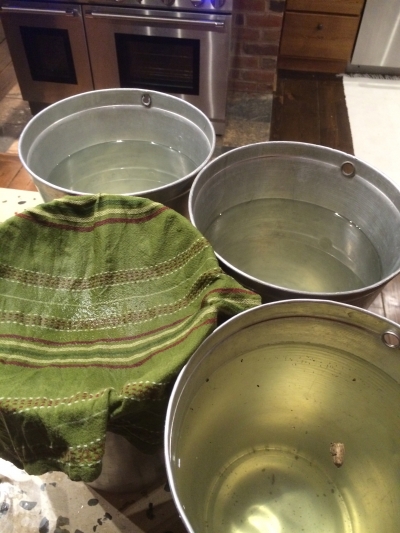
IMG_08352:00am. I got up off the sofa and meandered into the kitchen. I hadn’t thought this whole process would take so long, but there I was, middle of the night, boiling maple sap in five pots and pans on our stove top, trying to turn it into maple syrup. I was skeptical. When I started boiling the twelve gallons, it was clear as water. By 2am, nine hours later, it looked tan, but nothing like syrup.

I went back and sat on the sofa. The whole house was hot and humid from all that boiling down, adding more sap to the pans, boiling down further. I thought back over the last week, since I had stopped getting on Facebook and Twitter and Instagram. I have to admit: it’s been a peaceful week. My mind feels much less cluttered and there’s a freedom that comes from not feeling like I always have to check my phone, share this thought, post this photo.

But there’s also been some ego-checking at the door. 70% of my blog traffic comes from Facebook, so without getting on there and promoting my blog, I’m probably headed for a drastic decrease in traffic. It can be hard to come to terms with fading into the shadows. It can be hard to let go of an audience.

It’s difficult to diminish.

“He must become greater. I must become less.” (John 3:30)

I went back out to the kitchen. Enough of the water had boiled out of the sap that I could start pouring the smaller pots into the larger ones. Soon I was down to two large pans. Then one.

That’s when the realization hit me, the metaphor hanging thick as the steam in the room.IMG_0836

Diminishing is hard work. It’s like boiling down maple sap. The heat, the long process, the whole thing is about becoming less and less and less, smaller and smaller, until twelve gallons of maple sap is boiled down into less than two quarts of golden liquid.

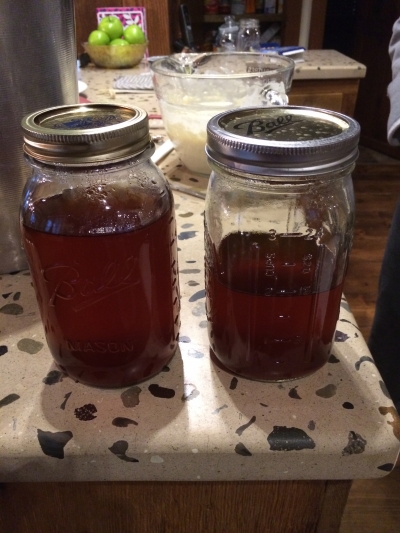
I watched the thermometer carefully as it crept upwards. 214 degrees. 215. 216. 217. 218. By now the small saucepan was full of a dark amber liquid. I took a spoonful, scalded my tongue, but the taste was heavenly, like liquid caramel.

219 degrees.

219.5 degrees.

I turned off the heat and the boiling stopped. That was it. That was all that was left of my 12 gallons of sap. Somehow that tasteless, worthless sap, full of ants and bugs, had been concentrated down into pure deliciousness.

When we constantly promote ourselves, when we shout from the rooftops, “Look at me!”, when we say more and more and more…we end up diluting our message. We join the noise, and we try to shout louder, but we can never shout loud enough, and the striving burns us out. It’s all rather exhausting in the end. IMG_0838
It would be like taking a quart of maple syrup and adding twelve gallons of water. Yes, we have more of it. Yes, twelve gallons takes up a considerable amount of space. But you wouldn’t put it on your pancakes.

Diminishing is painful for the ego. Deliberately stepping back from influence, taking a break from leadership, fading gracefully into the shadows stage right: these things do not come naturally. But if we can make space in our lives for seasons of diminishing, all of the flavor will rise to the top. All of the empty water will boil away, and what’s left will be concentrated and rich.

“But he said to me, “’My grace is sufficient for you, for my power is made perfect in weakness.’” (2 Corinthians 12:9)

I was doubting my decision this week. I have important things to say, I told myself. I really shouldn’t stop promoting my blog. I shouldn’t stop shouting.

Then I received this email:

Shawn,

I’m writing to let you know that I found your blog this week–several days after you decided to stop promoting it.

…for lots of reasons I made two decisions: a) to walk away from Church and b) change careers and go into medicine.  11 years later I’m an Obstetrician just about to finish residency.  A father of two.  And still don’t go to Church.  

It’s an amazing job.  Delivering babies is wonderful.  But there’s the other half–the stillborn babies and lost pregnancies and ovarian cancer.  Despite the fact that sometimes the suffering and grief are almost unbearable, I find such privilege in taking care of people in those moments.   And that’s why,  when I’m on call late at night, I go searching for people who write about faith in a way that acknowledges suffering and loss.  Most days I don’t believe in God.  But I haven’t given up on faith.  I’m grateful to have found your recent post.  And the post about miscarriage.   And I’ll keep reading.  And wondering.  And will remain grateful for your writing which will make me better at my job.

I thought you should know–that I’m out there learning from your writing–no promotion necessary.

This is it, isn’t it? It’s not about the number of hits. It’s not about the page views or the ad income or the number of comments.

What is it about?

I’m not sure. But I know one thing – it’s not about me.

He must increase. I must decrease.
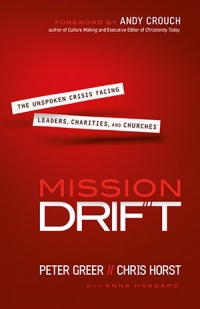
 

BOOK OF THE WEEK Mission: Drift

Mission-Drift-coverFor the next few weeks, I’ll be highlighting a book here every Monday. So drop in if you’re looking for a good read – you might even get a chance to win a free copy of the book being highlighted.

Peter Greer, the President of Hope International, is a great friend of mine. His latest book, Mission: Drift, is one you’ll want to check out if you are a pastor, leader, or business executive concerned about the mission of your organization and the direction it’s headed.

Here’s an excerpt (and if you’re interested in winning a copy, simply leave a comment – I’ll draw one lucky winner later in the week from the names of those who comment on the post):

A Street Preacher and an Oilman

Tycoons Howard Pew and Henry Crowell had much in common. Both were titans in their industries, Pew in oil, Crowell in food; renowned for extraordinary generosity, and bold in their Christian faith.

But the legacy of their foundations provides a fascinating case study in Mission Drift.

Oil and Evangelism

Billy Graham was a risk-taker. And so was oil magnate Howard Pew. Which is what made their partnership work.

In 1955, Graham sat down with Pew in his Sunoco Oil headquarters. He laid out his vision for a magazine of “evangelical conviction.”

This historic meeting led to the launch of Christianity Today.

“I came to have great affection and admiration for him,” Graham said, “not because he had a great deal of money but because he was a man of God and a man of wisdom who wanted to see his wealth used wisely for the cause of Christ.”[1]

Not only partners, Graham and Pew became friends.

When Pew died in 1971, Graham spoke at his funeral. The Pew Charitable Trusts paid homage to Pew’s friendship with Graham, donating $3 million toward the construction of the Billy Graham Memorial Library.[2]

Planned Parenthood and Raging Incrementalism

Unfortunately, since the founders died, the Pew Charitable Trusts has taken a U-turn. And it’s received significant public scrutiny because of its departure from Howard Pew’s intentions.

In recent years, the Pew Charitable Trusts have made major gifts to organizations like Planned Parenthood and many of the Ivy League schools Howard Pew eschewed.

The drift has been so marked that one author described it as “the gravest violation of donor intent.” [3]

In other words, the Pew Charitable Trusts hasn’t done what Howard Pew founded it to do.

Trademark Generosity

In stark contrast is the example of another titan of commerce, Henry Crowell, founder of Quaker Oats.

A friend once asked Crowell how much he gave, in sum, toward charity.

He responded, “Well, I’ve never even let myself in on that.”[4]

But records show that for more than forty years, Crowell gave away over seventy percent of his income.

What motivated Crowell was the advancement of the Gospel. While Billy Graham had been Howard Pew’s partner and friend, evangelist D.L. Moody was a close ally and friend for Crowell. Crowell supported many of Moody’s ministries, as well as served as chairman of the board for Moody Bible Institute for over forty years.

Crowell knew that, unguarded, his wealth would be disbursed to a number of worthy causes, but not toward the cause he cared about most: Jesus.

So Crowell intentionally wrote safeguards into the charter of The Crowell Trust, which gave to faith-based institutions.

Consider one safeguard that is still practiced annually. Trustees gather to observe a rather particular tradition written in The Crowell Trust’s charter: first, they begin in prayer. Next, they read—aloud—the mission and vision Henry Crowell himself wrote. They read his words and meditate on the vision God gave him before starting official foundation business.

From the outside looking in, the tradition seems almost comical: a group of high-powered executive leaders sitting for three hours while reading aloud to one another. But it is a practice demonstrating a defining characteristic of Mission True organizations: They proactively protect their mission, understanding that every organization is susceptible to drift.

“Many folks come into the Crowell Trust and tell me that Crowell is one of the few trusts that have stayed true to its indenture,” noted Candy Sparks, current executive director of The Crowell Trust.

Safeguarding Mission

Henry Crowell attended to details. He placed guardrails around the vision and funds God entrusted to him. In contrast, Howard Pew’s successors took his intent and replaced it with their own.

The Pew Charitable Trusts today fund many admirable causes. But their priorities bear little resemblance to the convictions and legacy of Howard Pew.

The problem isn’t the mission of the Pew Charitable Trusts today. The problem is with the blunt change of course.

Leaders are responsible to remain faithful in safeguarding the mission of their organizations.

Continue the conversation:

·      Have you taken steps (like Crowell) to protect what matters most?

___________________________

Peter Greer and Chris Horst are the coauthors of Mission Drift, a book about the importance of faith-based organizations retaining their religious identity as they grow and professionalize. Greer and Horst serve as executive leaders of HOPE International, a Christian microfinance organization.


[1] Billy Graham, Just As I Am (New York: HarperCollins, 1999), 286–288.

[2] Neela Banerjee, Accolades, Some Tearful, for a Preacher in His Twilight Years,” The New York Times, June 1, 2007, www.nytimes.com/2007/06/01/us/01graham.html.

[3] Martin Morse Wooster, The Great Philanthropists and the Problem of “Donor Intent,” (Capital Research Center, 3rd Edition edition, January 1, 2007), 44.

[4] Ibid.,  209.

Disclosure: I received a free copy of this book.

It’s Not You, It’s Me: On Attending the Funeral of a Friend and Saying Good-Bye to Social Media

IMG_0697

Last Sunday afternoon I drove under gray skies, through rain that was soon to be sleet, to the funeral of a young man I went to high school with. His name is Peter. The calendar said spring was less than three weeks away, but there was another snow storm on the way. Canadian geese circled the fields, uncertain as to whether they should be heading north or south, which was kind of how I felt, driving to a funeral being held for a 35-year-old father of three. I felt disoriented, unsure which way to fly. These things aren’t supposed to happen. 35-year-olds shouldn’t die of cancer, leaving their wife and children and parents behind.

The Lutheran church was packed and just as I walked in they set up an extra row of chairs at the very front, which is where I sat. Then the family came in. Peter’s father was my music teacher in middle school. Peter’s uncle was my first baseball coach. We called him Mr. P. He taught me how to keep my elbow up, how to pitch with my fingers along the seams, how to turn my glove so the ball wouldn’t skip off my palm and hit me in the face.

Peter’s cousin, Johnny, was one of my closest friends, someone I’ve known since I was six years old. We grew up playing baseball together. He was the catcher and I was the pitcher and we created a series of signals – one for a fastball, two for a curveball, and three for an off-speed (even though every pitch I ever threw pretty much did the same thing). I remember how the seams felt against my fingers, rough and spinning out of control. I remember how I accidentally hit my fourth grade girlfriend in the hand while she was batting for the opposing team. I remember how she came to school with a splint on her finger. I gave her a jar of root beer barrels for Christmas later that year.

While I was never extremely close to Peter, his family always formed a backdrop to my existence, like the mountains do for those who live in California – always off in the distance, always there. Peter’s older brothers were the cool upperclassmen. His father introduced me to John Denver. His uncle taught me the great American past time.

I saw them all walk in, single file, and sit in a pew across the way from me. All of them with their families and their children. Then Peter’s wife came in and sat down, her two little girls dressed in beautiful dresses, one of them looking exactly like Peter. They didn’t cry. They were too young to understand the weight of such a moment. They giggled at something, then sang with all their hearts when the hymns were sung. At some point in the service they got down on their knees and colored on papers, the pew serving as their desk.

She’s a wonderful mother who lets her children smile and draw pictures at their father’s funeral. There was so much I learned in that moment about life and death and creativity. So much.

* * * * *

One of my favorite scenes from The Lord of the Rings movie is when Frodo offers the Ring of Power to Lady Galadriel. He is already tired of carrying it, and the mission feels impossible to him.

Have you felt that before, the weight of life, the heaviness of being? Perhaps you feel it right now, this very moment. The downward pull of discouragement or sadness or death. Pain. Hopelessness.

Galadriel seems intrigued by Frodo’s offer, and as she imagines what it would be like to wield the Ring of Power and be in complete control of everything, she grows large and ominous.

“You offer it to me freely?” she asks. “I do not deny that my heart has greatly desired this…In the place of a Dark Lord you would have a Queen! Not dark but beautiful and terrible as the Morn! Treacherous as the Seas! Stronger than the foundations of the Earth! All shall love me and despair!”

It is so easy to convince ourselves that great power would not tarnish us as it has so many others. I am different, somehow. My resolve would hold. I would be fair and wonderful.

Just as she is about to take the ring, something inside of Galadriel changes, and she seems relieved as she turns down Frodo’s offer.

“I have passed the test,” she says. “I will diminish, and go into the West, and remain Galadriel.”

* * * * *

At one point during Peter’s funeral the Lutheran clergy led us through communion. It was a beautiful moment, watching so many of my old high school friends and teachers and absolute strangers walk to the front.

“The body of Christ, given for you.”

A small piece of bread.

“Amen.”

“The blood of Christ shed for you.”

A sip of wine from a single cup.

There was something disarming there, walking slowly in a long line, taking part with so many others. There was a healthy diminishing, a coming back into line with who I truly am, not who I’m so often striving to be. There was, for the briefest moment, an understanding that I am not the center of everything.

I sighed, and I looked over at Peter’s family. They watched the crowd receive communion. There was wonder on the children’s faces, as if all of these people were doing this for their father. And in many ways they were right.

* * * * *

Every so often, I read through Brennan Manning’s book, Ruthless Trust. Maybe once a year. This time one particular quote pierced me to the marrow.

“The way of trust is a movement into obscurity, into the undefined, into ambiguity, not into some predetermined, clearly delineated plan for the future…The reality of naked trust is the life of a pilgrim who leaves what is nailed down, obvious, and secure, and walks into the unknown without any rational explanation to justify the decision or guarantee the future. Why? Because God has signaled the movement and offered it his presence and his promise.”

I realize that there are areas of my life where I do not trust God. One of them is my writing. I am determined to follow any predetermined, clearly delineated plan that I can find. I listen to all the gurus who say this is how you build a platform, this is how you gain an audience, this is how you get a book deal. I resist obscurity. I want future guarantees.

But I’m tired. I’m tired of promoting myself. I’m tired of relying on my own ability. I’m tired of trying to convince people to read what I write.

So, for a time, I’m walking away from the clearly defined path. I’m going to take a break from social media, the main driver of traffic to my blog, and I’m going to simply write. No sharing. No endless Facebook promoting. No mind-numbing Tweets.

I don’t say this to criticize what others are doing. There are some excellent bloggers out there making an amazing difference in the world, and receiving their status updates and reminders has always been a pleasure. I think that by being on Facebook and Twitter they’re making the world a better place. But for me, the time has come to walk a different path, even if it doesn’t make sense or appear to head in the direction I’ve always wanted to go.

I’ll still be posting here every Wednesday, so I hope you’ll join me. I’ll still occasionally send out emails to those of you on my list, updating you on my latest projects or letting you know what some of my writer friends have been up to. I’d love to get emails from you, anytime: shawnsmucker(at)yahoo.com. But after today I won’t be on Facebook, Twitter, or Instagram, at least not for a little while.

It’s actually a huge relief, the diminishing. The trusting.

What unorthodox path are you being called to follow?

Country Roads, Take Me Home

IMG_0856

Three weeks ago I sat in an apartment in Los Angeles with six Iranian women, most of them in their fifties and sixties. It felt like home, with comfortable couches and a large table and a small cat that kept getting into trouble.

One of the women told me how the Iranian authorities came and arrested her husband. Took him away without saying why or where they were going. She spent the next 24 hours visiting every hospital, prison and morgue in the city. Three days later she heard from him. He had been in solitary confinement. They had given him one phone call to see if he could come up with money for bail.

Another woman told me the story of her son’s suicide, how he had missed Iran so much after they moved to the States that he became severely depressed. She and her husband heard the gunshot as they watched television one night, and they ran to his room. She cried as she told us how she wrapped him in a blanket and sat with him in her lap as they waited for the ambulance, how she kept believing he might still live until she saw the way the paramedics weren’t rushing off, and we all cried with her.

Then one of the women in the apartment screamed and shouted. The cat was on the table, eating the desserts. Someone shooed it off and everyone else laughed. From tears to laughter in the time it takes a cat to disappear into the shadows. Then the room grew silent. I took a deep breath. The woman whose son had taken his own life sighed, then looked at me through kind eyes and smiled a sad smile.

* * * * *

I found out a few days ago that a friend from high school died on Monday. His name is Peter. He was a young man, in his thirties, a Lutheran minister. He had a wife, two daughters, and a son. It was cancer, that piece of shit disease that keeps trying to establish hell on earth.

I don’t think I’ve seen Peter since high school. I remember one day, my senior year, all of us guys on the soccer team went to his house and he shaved our heads before our final home game. It was a right of passage of some kind, a minor rebellion.

I remember watching my long brown hair hit the floor. I remember the sound of the hair clippers as well as the sound of him laughing. I kind of remember his father, our middle school music teacher, walking through the house and mumbling about how much better we looked with our hair intact. But I could be making that part up.

* * * * *

I haven’t prepared well for this winter. The snow has impaired my ability to collect the wood I cut in the summer. Last winter I just went out each week and brought in what I needed. This year, with over two feet of snow now melted down to eight inches of icy slush, navigating the paths through the woods is still fairly impossible.

Anyway, I was out the other day with my warmest coat on and my hood up. I carried each large log, one at a time, from the log pile to the porch where I split it and stacked it. At one point I caught my own reflection in the door, and for that brief moment I thought I was my dad. The salt and pepper beard, the same eyes, something about my face: the combination of these things made me think I was looking at my dad.

I thought, for that brief moment, that those we love really do live on in us. My dad is still alive, thankfully, but seeing him there, in me, it gave me hope that someday, when he’s gone, I will still see him from time to time.

* * * * *

On Tuesday, around 2pm, I walked through a city parking lot in Lancaster. All around me, the sound of traffic, the honking of horns, the drawn up shoulders of people ready for spring and fending off the cold.

Then I heard it. Someone shouted my name. I turned and looked behind me, through the parking lot, and there they were.

My friend Peter’s parents. I felt the wind get knocked out of me. I walked toward them and they looked tired, very tired, and I didn’t know what to say except two of the truest phrases I’ve said in a very long time.

“I’m so glad to see you.I’m so, so sorry about Peter.”

I hugged his mom for a very long time. Then I hugged his father, our old music teacher. He used to always play “Don’t Worry, Be Happy” in class, and John Denver’s “Take Me Home, Country Roads.”

Life is old there, older than the trees, younger than the mountains, blowing like a breeze.
Country roads, take me home to the place I belong.
West Virginia, mountain momma, take me home, country roads.

We parted ways, and I told them I’d see them Sunday at the service. They said they would really appreciate that.

Tonight I’m sitting in the living room, thinking about them, hoping they’re okay. I hear my own children running through the house upstairs, long after bedtime.

I hope Peter’s parents will see reflections of him everywhere, the way I saw my dad in my own reflection. I hope they see him in so many things: the music he loved, the way he used to say certain things, the beautiful children he left behind. I know these reflections can never replace the real-life people we lose, but maybe they can be something. Maybe they can help us hold on to the hope we have.

I hear her voice in the morning hour she calls me, the radio reminds me of my home far away.
And driving down the road I get a feeling that I should have been home yesterday, yesterday.

Country roads, take me home.

Why I Wanted Our Fifth Child to be a Girl

IMG_0419
 

“If you don’t want to know the baby’s sex, now is the time to look away from the screen,” the ultrasound tech said, so Maile closed her eyes and I looked down at the tiles.

“Would you mind writing down the sex on a piece of paper for us?” Maile asked, her eyes still squeezed shut. When she closes her eyes like that, she looks like a little girl, I thought to myself. I thought of Madeline L’Engle’s words:

I am still every age that I have been. Because I was once a child, I am always a child. Because I was once a searching adolescent, given to moods and ecstasies, these are still part of me, and always will be.

“No problem,” the man said. He was a straightforward man with a kind voice and very little expression.

“Do you ever, you know, is it always easy to tell if it’s a boy or a girl?” Maile asked, trying not to express any doubt in the man’s unquestionable abilities as a magic waver of the ultrasound wand. He looked at her and waited just a second before answering. The pause gave his words added effect.

“At 20 weeks, it’s easy to identify the baby’s sex,” he said, matter-of-fact, like an elementary school teacher answering a child as to whether or not one plus one always equals two.

So that was that. He folded the slip of paper and put it inside an envelope. Written on it was either the word ‘boy’ or ‘girl.’ My sisters would take the envelope to a friend of ours who makes cupcakes, and she would open the envelope and then fill the cupcakes with blue if it was a boy or pink if it was a girl. On Sunday at my parents house some family members would gather and we’d count down and bite into a cupcake and there it would be, boy or girl, the new shape of our family.

We never did these sorts of things with our other children. We always waited to find out until the final push, the first little wail, the anguish-ecstacy of a life breaking into the world. But these are new days. New times. And we are, all of us, changing.

* * * * *

“So what are you hoping for?” everyone asks, and in the past I would have said “A healthy baby” or, if I was feeling particularly ornery, “A human.” But now that I’m older I hold myself to a lower degree of scrutiny. I am less affected by what I used to consider weaknesses of character. I am who I am, and while I still strive to become a kinder presence in the world, use a softer voice with my children, and be more sensitive to the needs of my wife, I also understand that God loves me deeply, just as I am.

So when people asked me what I was hoping for, I answered in a straightforward voice without hesitation, “A girl.”

And I did hope for a girl. At first I wasn’t sure why. I love my sons fiercely and tenderly, so the thought of another son wasn’t something that filled me with bad feelings. This made me even more curious. Why do I want a girl? Then it came to me, through the foggy cloud of self-awareness and personal history.

I didn’t know if I had it in me to be a good dad to three boys. Two already stretched me. I remembered the amount of time my dad spent playing ball with me, the only boy. I remembered growing up with a sense of uniqueness, the only son of Merrill Smucker, the oldest child. I have a very good father.

Parenting girls has never weighed on my mind. Perhaps because I grew up with three sisters, or perhaps because some of my best friends as a child were my female cousins. Whatever the cause, I feel relaxed with my girls, sufficient. I feel that the love that I have for them will be enough.

The arrival of  our fourth child, and second son, Sam, was a surprise to me. I think I always assumed I would have one son, that I could be the same father to my boy as my father was to me. But as Sam grew up, I found myself fighting off feelings of inadequacy. I didn’t have time to play ball with both of them, separately, every day, as my own father did in my memories. I didn’t have the energy to be what I felt Cade and Sam needed me to be. I couldn’t be the same dad to them that my father had been to me.

So at the thought of having another boy, I felt myself shrink back. The voices in the back of mind stepped closer to the foreground.

You should be a different father than the one you are.You could be a better father to your sons.

“So, what are you hoping for?”

“A girl.”

* * * * *

On Wednesday night, four days before the planned revealing of baby number five, we got snowed in. Our half-mile lane was blanketed in two feet of snow. There was no way we were going anywhere, at least not for a few days, so we holed up in the house. I stacked wood outside the house for the woodstove and Maile made all kinds of delicious food for the stretch ahead of us.

On Friday, I started getting a toothache. A bad one. And not only were we snowed in, but we had no pain reliever in the house, nothing, and my dentist was closed for the week. I spent Friday night soaking my mouth in ice, then miraculously drifted into a long night, a fitful sleep.

Maile would dream that we had a boy, but that by the time he was a toddler we still hadn’t decided on a name for him. A little boy walking around, nameless, us still undecided.

On Saturday things didn’t look much more hopeful. My neighbor usually plowed our lane, but his plow wasn’t large enough for this amount of snow. My friend who had a plow had been plowing for his business for 48 hours straight and couldn’t get all the way down to our house in the southern tip of the county. The revealing for Baby #5 was 24 hours away. My sisters threatened to go ahead without us. Then my dad swooped in.

“I’m going to come down and see if we can figure something out. Plus, you need some Advil,” he said. He called me 45 minutes later.

“Hey, I’m out here at the end of the lane and I can’t get the Jeep in. I’m going to ask around and see if anyone has a plow.”

He called back thirty minutes later.

“Do you know your neighbors?” he asked. “You’ve got some really nice neighbors. I talked to the couple in the house at the corner and she’s calling around for someone to come plow your lane. Then I met a little old lady who lives in the small house across the road. They’re trying to help, too.”

Let’s be honest – I’ve lived at the back of that half-mile lane for a year-and-a-half, and I’ve met one set of neighbors. Now my dad comes down to our area and in the span of 45 minutes he was best friends with everyone on the block.

As I hung up the phone, it hit me: I am not my dad. I would have been content to wait until the snow melted, or to sit tight until a friend found the time to come down and help us out. But my dad was canvassing the neighborhood for help. I could have lived in that house for ten years without meeting our neighbors, but my dad got to know them all, and remembered their names, in less than an hour.

And that sentence flashed through my mind again, like a bolt of lightning.

I am not my dad.

A burden the size and weight of a two-foot snowfall lifted from my shoulders. My dad was a wonderful example to me of what a dad should be: loving, accepting, encouraging. He challenged me to make good decisions and to accept responsibility when my decisions were off-kilter. Those are things I can do for my boys. But I don’t have to be him. I can be the dad I am to my sons (and my daughters).

In fact, I have strengths as a father that my dad did not have. If I have a third boy, it will be okay. And I will be enough.

* * * * *

We sat around the table and one of my sisters counted down from three to one. Everyone took a monster-sized bite out of their cupcake (except me – you know, that toothache – so I just pulled mine apart). And then, unplanned, unrehearsed, everyone shouted out together.

“It’s a boy!”

I found myself getting unexpectedly emotional. And so happy. Because I will be a good father to this third boy, of that I am determined. I will be the father he needs.

I looked at Maile and she was crying and I smiled.

“It’s a boy,” I said, shrugging my shoulders, laughing, because it was the kind of joy that forces you to respond.

* * * * *

On Monday morning my dentist fit me in for a quick visit that turned into an on-the-spot root canal. The difference I felt in my mouth before and after was unbelievable. It was the difference between pain and no pain; pressure and no pressure. It was the difference between downhill and uphill, the trajectory of a life.

It was the distance between trying to be someone else, and then suddenly discovering that I am sufficient.

(I’m going to begin posting once a week. The posts might be a little longer, but I’m going to settle into this rhythm for a bit while I work on some other projects. I hope you’ll keep coming by – look for new posts every Wednesday morning.)

What I Found in Los Angeles

1891199_10100802822539296_1611482563_n

Anything could happen here, I think to myself as I drive into Los Angeles, down from those rugged hills. The sun sinks into the Pacific behind the motionless outlines of palm trees and the solid, flat black of square houses filled with people who are remembering and forgetting. They try to keep out the wildness, hiding behind gates and shrubs, lining perimeters with chain-link, pulling down heavy gates over storefronts facing out on to uneven sidewalks.

But the wildness cannot be contained.

Anything could happen here.

As I speed south on Route 5 and see signs for Fullerton, Anaheim, and Santa Ana, I experience the magnetism of Los Angeles, this sense that by morning I could either be starring in a film, searching for something important hidden in a storage unit, or overdosing on Skid Row. I look up under the long shadows cast by the lights that line the highway, I look up under the overpass, deep into that netherworld, and I see a disintegrating backpack, a few plastic trash bags, and I realize someone is living there. People are making homes even under the very roads we drive on.

Anything could happen here.

I could find my fortune, hidden among the rubble of the lost and withering things, or I could find my destruction. For some reason the latter feels much more likely.

There’s something about Los Angeles that makes me feel alive, that reminds me of the myriad directions this life could go. I think again about the people I saw through the windows of the houses sprawling all over the mountain. I think again about the person I didn’t see, hidden under the overpass. I think about all of these people, how they are forgetting and remembering, and while I’m thinking all of these things, the palm trees melt into the sky, now dark.

* * * * *

I sit in a shoebox-sized motel room and I can’t sleep for whatever reasons (they are legion), and it feels the same at 2am as it does at 5am. The walls are thin and I can hear others coming and going, doors slamming, latches clicking into place. Then the air conditioning unit roars to life and there is nothing else, just a humming, a rattling that reaches deep inside my mind and puts me to sleep.

I dream about the stories I heard earlier that night when I sat with women from Iran, the stories of so many lives, so much searching. The stories of finding and losing, of running and coming home, of wanting to live and being desperate to die. The stories that leaked from the eyes of those women were like tears, or liquid joy.

For just a moment, clarity. All of my own desires for fame, for being known, for money and talent and all the other things that will make me feel good…all those desires bow and move to the side. They part like a resistant body of water. I see clearly (for the first time?) that this thing I do, this telling of stories, is all that I have.

I have nothing but stories.

The knowledge of this is both a relief and a burden.

* * * * *

We are ruled by the narratives we chase. We see the narrative of the famous and the wealthy and we see happiness there, and fulfillment, and we wish that could be our story. We see the narrative of the powerful and we want that story, too, because we’ve felt so insignificant, so weak and used up, and we want to be the person at the other end of the abuse. Do we want to be the abuser? I don’t know but, dear God, anything but the abused, anything but that again.

We want to live the story of the family that hasn’t had to battle cancer, the story of the family with healthy children, the story of the single person who finds someone and lives happily-ever-after. We want the smooth story, the easy path. We reach out and grasp at so many other narratives, anything but our own, and we hold them close and they leach into our skin like ink, like a burn.

But then, in the midst of all that longing and striving and ceaseless desire to be “other,” that man with the voice I cannot forget says, Pick up your cross and follow me.

I stare long and hard at my cross. It seems rather rough and unpleasant. Not like all those other crosses that other people are asked to carry.

He says, Unless a seed falls to the ground and dies, it remains a single seed.

And the death I’m asked to die seems so much more deadly than the death my friends are dying.

He says, No greater love has any man than this, that he lay down his life for a friend.

* * * * *

In the morning I take a shower and then I get dressed and brush my teeth while reading things online about Philip Seymour Hoffman. I decide the room feels too small in which to spend another entire day, so I walk down the street to a bagel shop, planning on working there for a little while.

I sit down and get out the laptop and stare at the screen and everyone in there is very friendly. The shop is busy. The employees smile and work quickly. I wonder where all of these people will go after ordering their Western Omelette on a Bagel and their Hummus on a Bagel. I wonder what narrative they will pursue out into the traffic-filled streets of southern California, the streets that run long and straight under tall palm trees, the streets the hit the mountains and then turn in on themselves. I wonder what stories these people are chasing.

And I realize the stories I’m trying to write are too shy to come out in a place like that. They want to drip slowly out of my veins, to well up slowly, ruby-red, but in all of that speed, all of that commotion, they withdraw, fish darting into the shadows. I finish the breakfast I bought, and I realize I’ve lost the art of sitting. I go to cafes and I get out my laptop or stare at my phone, but I never just sit anymore. I never just look around.

When I do simply look around, I feel embarrassed, as if others might think I’m looking at them. As if the other people in the café will look at me and wonder what kind of a strange creature that is, just sitting, just looking, just thinking.

I walk back out into the cool morning, passing under palm trees, their shadows fading as the sun moves back behind the low-hanging clouds.

I go back into my room, the small room that is starting to stretch with me, the room where the stories are. And again I pick up my cross. And again I fall to the ground. And again I lay down my life. The words emerge and begin to drip like sap on the first warm day.

This is my story.