Keeping My Eyes Open

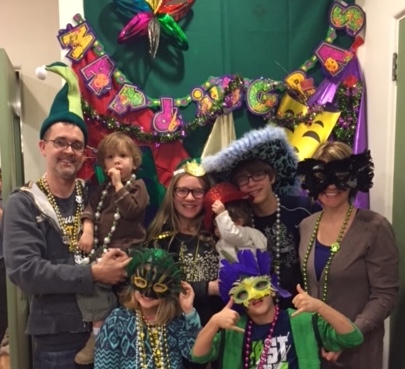
I'm not sure why I went with this photo, other than it's one of the few recent photos of all of us.
I’m not sure why I went with this photo, other than it’s one of the few recent photos of all of us, from Mardi Gras, and I’ve been wanting to work it in anyway.

Eight years ago, when Maile and I were at the bottom financially (or the lowest bottom we’ve been at so far because I guess you never know), I applied for a very well-paying job doing something I probably would have marginally enjoyed. Okay, barely enjoyed. Or not really enjoyed at all. It’s hard to say if I would have enjoyed it for very long. Due to some extenuating circumstances that I won’t go into, I did not get the job. I was furious. Writing work was sparse, and I was tired of living month-to-month. I craved the security of a 9 to 5.

A few months later, I landed a book-writing project. Soon after that, another. For the next eight years, albeit on a financial roller coaster, I went on to write over 20 books and finally, last year, tricked a publisher into signing me to a three-book deal to write fiction. Well, maybe there wasn’t any trickery. The publisher seems to be going into it rather enthusiastically.

None of this would have happened if I would have landed that job. That’s a fact. It was a demanding, hours-heavy position that would have left little time for writing. Most of the progress I’ve made as a writer during the last eight years has come out of desperation as much as anything else. With that job I would have had less desperation, and without that, I would have written a fraction of the words I’ve written.

I’ve thought about that a lot during the last eight years, how sometimes it feels like things are going to hell in a handbasket and then, out of nowhere, the very thing that seems worst about a situation starts to makes sense. It’s happened numerous times. One project will vanish only to make room for an even better one. One opportunity slips away and something else even more intriguing fills the gap.

Of course, it doesn’t always happen that way, and by that I mean, the rotten things that happen don’t always make sense. There are not-so-great things that have happened recently for which I have not received a decent explanation from God. Sometimes, I fall into the cosmic trap of thinking it’s God’s duty to explain or justify or clarify everything that happens in my life that I don’t agree with or understand.

Yet, God keeps on handing me good things and bad things for which there is no rational explanation. Which gets me to the point of this whole thing, which is not that everything makes sense. I’m not here to tell you that if you wait long enough, that hard thing in your life will turn to good or lead to you picking the right Powerball numbers.

But after eight years of being self-employed, after many heartaches and disappointments, after Maile’s two miscarriages, nearly facing bankruptcy, and even after our bus’s brakes went out as we went down the Teton Pass, I can tell you this: continually searching for meaning in the madness is sometimes the meaning itself. In other words, it’s the looking for meaning that has sometimes kept me sane, the asking and doubting, the questions and silence, the searching and searching. And searching.

* * * * *

When things looked like they might slow down back in November, I started driving for Uber and Lyft. It’s a flexible way to add some income when I’m in between projects. The things is, if I was busy, I probably wouldn’t have ever done any ride-sharing, but here we are.

Like I said, now that I’m eight years into this self-employed writing thing, I try to keep my eyes open for what I might find, even in places or times that aren’t exactly of my own choosing. And what do you know! I found stories hidden there in the hundreds of rides I’ve given with Uber and Lyft. Every single fare I’ve taken has been a real, live person with real, live problems and dreams and jobs and hopes and disappointments. I’ve driven immigration lawyers and transgender sex workers, mall employees and high-powered business people, students on their way to school and students who were absolutely hammered. Granted, not everyone wants to talk about their lives – Lord knows, I only feel like talking to people about 50% of the time – but the ones who do want to talk always seem relieved to have spoken, to have had someone listen to them even for just ten minutes.

So here it is again: a difficult thing ends up shining a light on something new, some kind of fresh story, some kind of glimpse of God in these people all around me.

* * * * *

Not every bad thing in your life will come with a ready-made tag explaining or pointing out the redemptive work that has happened or is happening through it. But searching for that redemption – in other words, giving yourself the permission to hope in even the direst of circumstances – is not a terrible way to live a life, even when the question goes unanswered.
Addiction, Recovery, and When I Almost Stole Someone’s Groceries #RideshareConfessional

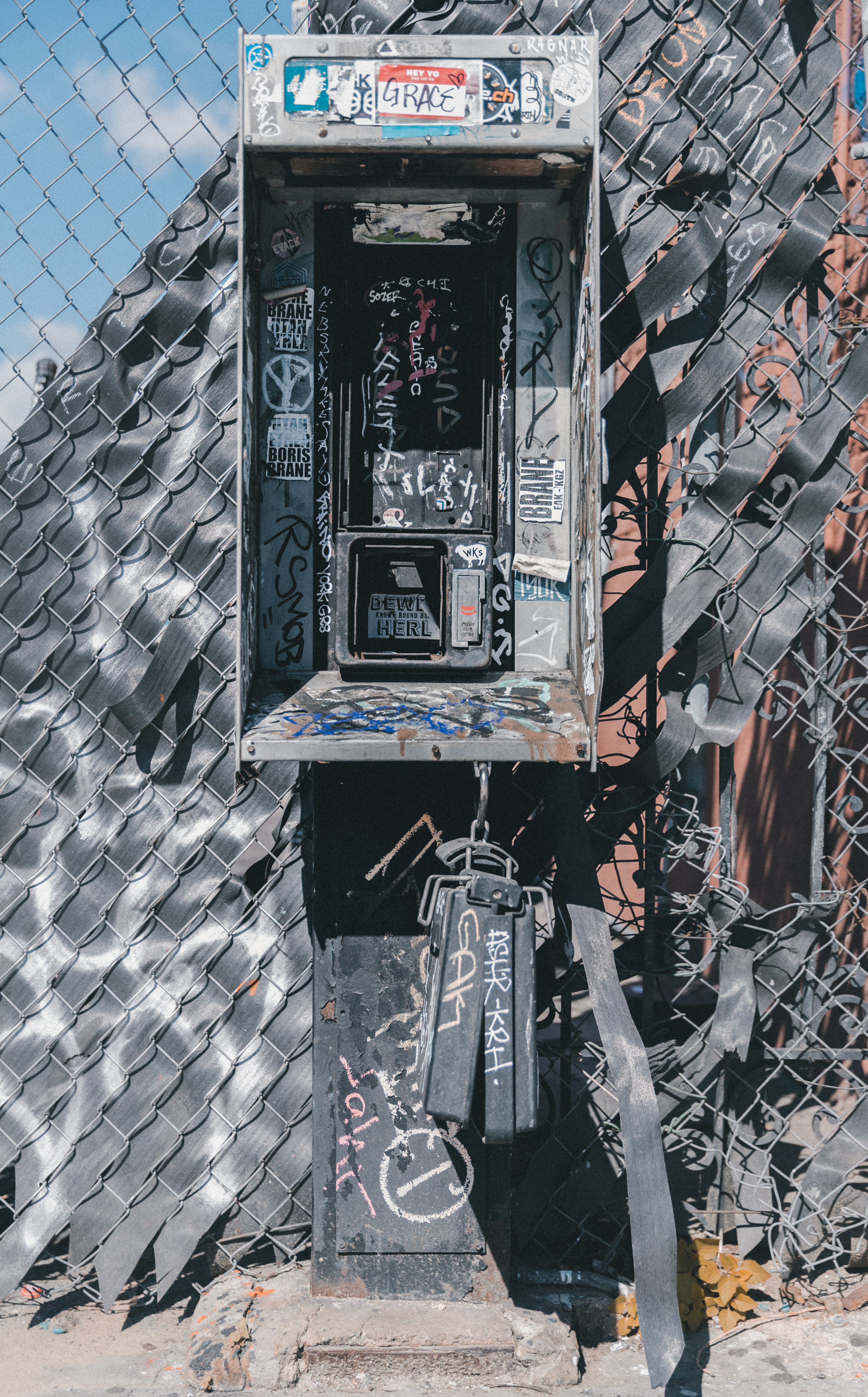
Photo by Jakob Owens via Unsplash

“I’m surprised we could find each other,” the young man said, laughing. I stared at him for a moment and then laughed, too: we both had large, bushy beards in our profile pics, and we had both recently shaved those beards off.

He climbed in and we started back towards the city.

I asked him the normal round of questions: how he was doing, if he was ready for the big storm, if he liked living in the city.

“Yeah, it’s good,” he said.

“How long have you been here?” I asked him.

“About nine months,” he said. He paused, then continued gingerly. “I’m staying in a sober house.”

“Really?” I said. “Good for you.”

He seemed to take heart at my encouragement.

“Yeah, I had to get away from my old city. It can pretty much give you whatever you want, addiction wise. There was just no way out of it.”

I nodded.

“It was brave of you to cut loose.”

“Yeah, I guess,” he said. “I’m doing good now. Got a good job and I’m signing a lease on an apartment this week.”

I told him of the addiction and recovery mass our church just had. It was a beautiful service. The pastor who was speaking that Saturday night stood up in front of the congregation and said, “Hello, my name is Randy, and I’m an alcoholic,” and the entire congregation replied, “Welcome, Randy.” I suppose some people expected it, but it caught me off guard, nearly brought me to tears, that little moment of acknowledgement, that little moment of acceptance. The pastor told us he had his last drink in 1989.

I told this all to the young man sitting in the back of my car. Things got silent for a moment. “That’s really cool,” he said. “I’d like to come to that sometime.”

We got to his house and I dropped him off. I gave him my card.

“Listen,” I said. “No pressure. But if you ever need anything, I hope you’ll let me know.”

“Thanks, man,” he said.

Then I almost drove away without remembering to let him get his groceries out of the back of the car, because that’s how I roll.

The Girl Who Cannot Leave #RideshareConfessional

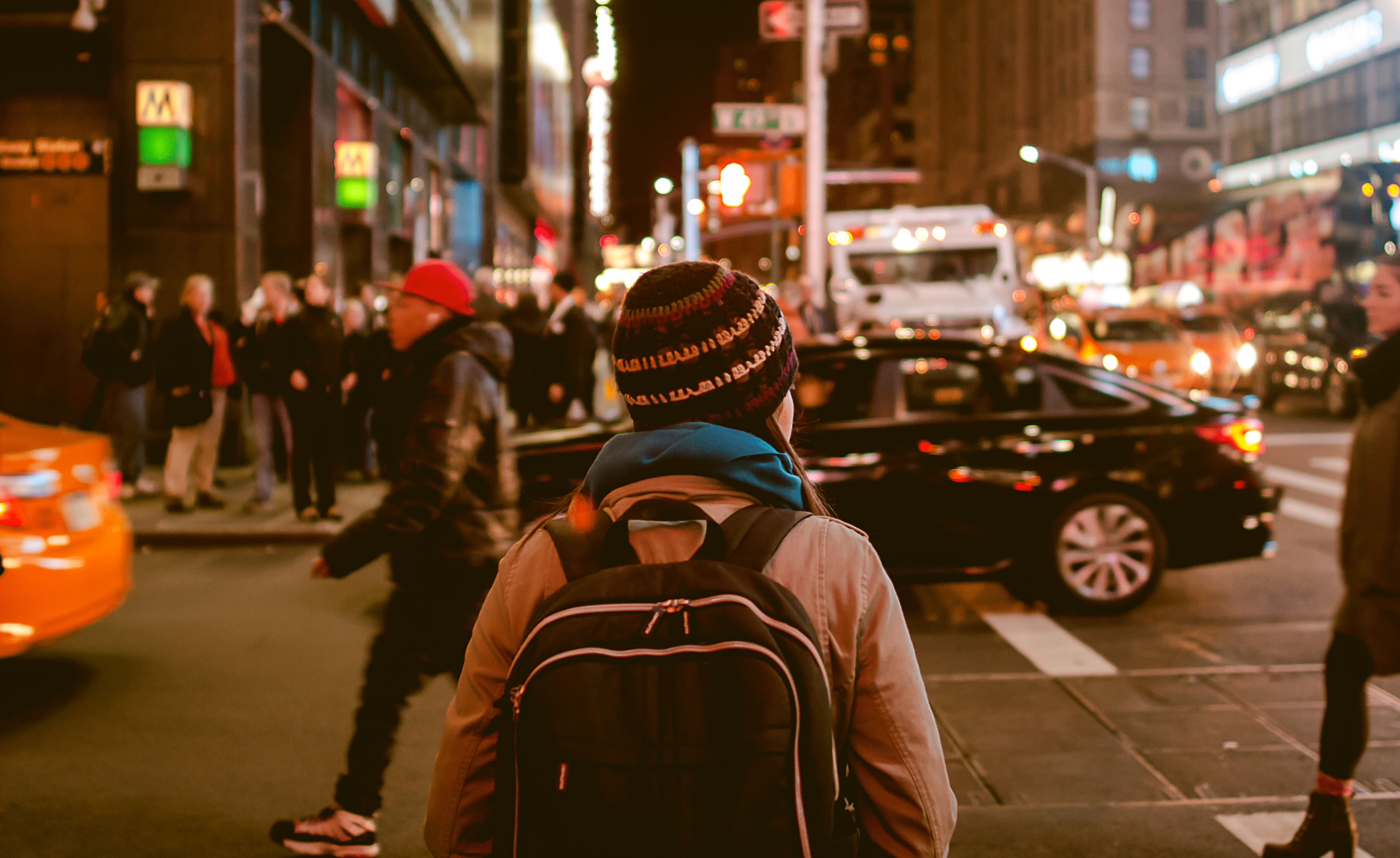
Photo by Anubhav Saxena via Unsplash

Sometimes when I’m driving in Philadelphia, it can be difficult to find a customer, especially during rush hour when there are thousands of people on the sidewalks and impatient cars behind you. It’s a busy place, and that’s part of what makes driving there enjoyable, but it can also be challenging.

Driving at night, the contrast is striking. Sometimes, when the weather is bad, there might not be anyone on that very same street that, just a few hours before, was heaving with people. I can drive a ten-block stretch without seeing another human. It’s a strange feeling, at night, in a city that large, when you feel like you’re the only person there.

* * * * *

So, anyway, I got this call on Friday night and it was bitterly cold and snow flurries came and went through the street lights. I got a call in one of the university districts, but there was only one problem. The person had called for an Uber when they were in the middle of the building, so her ping was in the center of the block on my screen, making it hard to know where to pick her up. I circled once, then parked up and called her.

We had trouble orienting each other to our own surroundings, but eventually I found her. The wind kicked up and rushed into the car when she crawled into the back seat. She was only going a few minutes away. We apologized to each other for the hassle. She had an accent, but I couldn’t place it, so I asked her where she was from.

“Iran,” she said quickly, as if she didn’t want to dwell on it.

“Wow,” I said. “Can you go home from college during breaks, with the situation being what it is?”

“I can’t risk it,” she said quietly. “If I leave, I might not be able to come back in. I have one year left, so I’m almost finished.”

“Wow,” I said again, thinking of how I’d feel if one of my kids was in college, stranded in another country. “Do you miss your family?”

“Very much.”

We talked about what she was studying, how she liked the city. And then, in a blink, we were at her stop.

“Well,” I said, “I, for one, am very glad you are here, in our country.”

“Thank you,” she whispered. And for a moment I thought that was the last thing she was going to say. But it wasn’t.

“It doesn’t usually feel that way,” she said, again in a quiet voice. Then she climbed out into the cold and walked through the dark to her apartment.

The Warrior Disguised as a Grandmother #RideshareConfessional

brendan-church-182747
Photo by Brendan Church via Unsplash

The African-American grandmother climbs into the front seat of my car, propping her cane between her legs. She has a tube delivering oxygen, and the tube runs across her upper lip, but I cannot see what it is connected to. Her three granddaughters climb into the back, and they are like polite little parrots, their cute voices repeating each other.

“Good evening, girls,” I say, smiling.

“Hello,” one says.

“Hello,” the second one says.

“Hello,” the third one says.

“What are you girls up to tonight?”

“We had a play at school,” one of them says.

“It was fun,” another says.

“It was about black history month,” the third says.

“Wow! Awesome!” I pull away from the school.

“These girls are strong and brave,” the grandmother says. Then, she turns and faces them. “And you all did a wonderful job tonight.”

I begin driving around the block in order to head in the other direction.

“It’s taking you out around,” the grandmother proclaims in a deadpan voice, part disgust, part resignation. “These devices.” And she shakes her head.

“I know,” I say. “It really doesn’t like telling me to make U-turns.”

We both laugh.

“I think making a U-turn is exhilarating,” she whispers, and we both laugh again. Who is this inner city grandmother, this fast driver?

We chat for the duration of the ten-minute ride. She’s a no-nonsense woman, and I can tell these granddaughters of hers are in good hands.

“Did you grow up here?” I ask.

“Grew up in south Philadelphia. Now I live in southwest. Been here my whole life.”

“I’ll bet you’ve got a lot of stories to tell,” I say.

“Oh, you wouldn’t even know the half,” and she nods thoughtfully, and she is lost inside her head, lost inside all those memories.

We arrive at the house and they get out.

“Thank you,” says the first girl as she leaves the car.

“Thank you,” says the second girl.

“Thank you,” says the third girl.

They are young, but they carry themselves with poise and dignity. They are polite, but I realize they are not robots. They follow their grandmother through the dark, through the late-night Philadelphia streets, and I wish every child in that city, every child in our world for that matter, had someone like that grandmother to follow. Physically she is tiny, and she walks with a cane, and she needs oxygen to breathe, but it’s easy to see she’s a warrior. Nothing more plain to see than that.

Making Sense of Ash Wednesday and the Crosses on my Children’s Foreheads

Photo by Laurie-Anne Robert via Unsplash

It was a beautiful thing to do in the middle of the afternoon, in the middle of the week, at the beginning of Lent. We crowded into our church’s small chapel, the adults in chairs, the children sitting on the large, red carpet at the front. We prayed together, and we confessed together. We sang hymns together.

We’ve attended Saint James for nearly three years now, and this was the third time in my entire life I attended church on Ash Wednesday. Every time, it surprises me. Every time, I sit there and watch my children walk to the front, receive on their clean little foreheads a dirty cross of ashes (made from the palm leaves of the previous year). Every time, I hear the priest say over them,

Remember that you are dust, and to dust you shall return.

Every time, I feel the tears well up in my eyes as I think of this reality. They are dust. I am dust. And, someday, to dust we shall all return.

* * * * *

Richard Rohr, writer and Catholic priest, has done a lot to help me make sense of the transition we made three years ago from Evangelical to Episcopalian. I say transition, though it’s been more of a melding, more of a taking on than a laying down. In a recent homily, he proclaimed these words:

There’s a tragic sense to life. What Lent is about is somehow asking for, and hopefully receiving, the grace to accept the essentially tragic nature of human existence. On Wednesday, this church filled up all day. I’m always amazed. Why do you all come on Ash Wednesday? You don’t have to, you know. But people pour into church. The cynic says, “Catholics come to church anytime they get anything for free, whether it’s palms or ashes. They all show up.” There might be some truth to that, but why do we want these dang ashes on our foreheads?

Somehow, we know that we need to be told that we came from the earth and we’re going to return to the earth and everything in between is a school. Everything in between is growing up, waking up, cleaning up. Becoming the full image that you were created in, which is always and forever, the image of God.

* * * * *

Maybe there is more than one reason these ashes bring tears to my eyes. Maybe it’s not just about the sadness of death. Maybe they’re hopeful tears, hopeful in the way we sometimes cry at weddings, or births, knowing the hard things are so intricately tangled up with the good things. Maybe I cry because I so desperately want to grow up, to wake up, to clean up, not in a sanitized way but in the way a fresh spring cleans the rocks it pours over. Maybe the emotion comes because I can sense how infinitely close we all are, and also how far away, from becoming the full image of God.

The kids always come running back to us after the service, their cross of ashes on their foreheads, and we gather in an impromptu, instinctual, group hug, as if to comfort each other, as if we know in that moment, as in all moments, that we need to hold one another close, that we need each other in this image-becoming.

One of the main themes in my upcoming book, The Day the Angels Fell, is death and questions surrounding death – what will we do with it? What is its role in our lives? Could it be possible that death is a gift? If you’d like to have me come to your church this fall to talk about the role of death in the Christian world view – incarnation, death, resurrection, and redemption – click the “Contact” button at the top right of the page and let me know. I’d love to see you! In the mean time, you can preorder my book HERE.

Little Girls, Stuffed Animals, and the Men Who Wouldn’t Move Their Car #RideshareConfessional

Photo by Filip Mroz via Unsplash

It is 10pm on a Friday night in southwest Philadelphia. The streets there are pockmarked with holes and cracks and sections that have crumbled in on themselves. The sidewalks look like someone pushed them together, a strewn deck of cards, some leaning up, others down. To the left of the street is a line of mostly-boarded-up row homes. To the right is a school, or what used to be a school – I can’t tell. An eight-foot chain link fence surrounds the building and neglected grounds. The streetlights mounted on the corner of the building only serve to accentuate the shadows.

A man with long dreadlocks comes towards the car, carrying a stroller, followed by two tiny little girls. They are like ducklings, waddling slowly along behind him. I get out and we manage to cram the folded stroller into my tiny trunk. He gets in the back seat with his girls and buckles them in. They fall asleep in moments, each tightly holding a stuffed animal.

“Did you grow up in Philly?” I ask him as we drive a winding path from one place to another. I try to avoid the bumps, try to give the little girls a smooth ride.

“Nah,” he says, and I can tell in the single syllable he isn’t impressed with his new city. “Jersey. But I got these two girls now, and their mom lives here, so I’ve made the move.” He changes tone quickly. “When you make this turn, get over into the wrong lane, if you can. There’s a nasty pothole.”

I take his suggestion, looking for the offending hole in the road, but what I see is more like a trench. An entire section of road is missing, six feet wide, three feet across, and at least eight inches deep.

“Thanks, man,” I say. “I don’t know if this car would have made it out of there.”

He makes a disgruntled sound. “Yeah. You’d think with this soda tax, they’d come through on fixing the roads like they said. But nothing changes. No one cares about this part of the city.”

We pull onto a very narrow street. I have a small car and can barely fit between the vehicles parked on one side and the sidewalk on the other. Someone is parked in the middle of the street, lights on. A group of guys hang out around the car, shooting the breeze, and when I pull up no one so much as moves. We sit there for three or four minutes, and the guy I’m driving becomes animated.

“What the hell is wrong with people,” he mutters, then shouts. “Get the hell out of the road!”

They don’t hear him. I’m glad. I don’t have any particular desire to be in between that group of young men and the one in my backseat. We sit there for at least seven or eight minutes. The night is dark. The men glance at us every so often. One of them gets in the car and puts it in gear, but another guy comes up and leans on his car window, and they talk for a few more minutes before pulling ahead.

“There’s even a f***ing parking space. Right up there. People these days,” the guy in my backseat mutters to himself. We pull up to his house. I get out and help him with the stroller.

“Thanks, man,” he says. “Have a good night.”

He wakes his girls, pulling them from the back seat. They are limp with sleep. They moan in protest. They walk like zombies from the car to the sidewalk and up the steps. I see my own kids there, in the night, the way they don’t even wake up completely. I imagine them under blankets, sleeping until morning.

The sun will come up in the morning, I think to myself. I’m sure this street will look better in the morning. I’m sure it will look like a place tiny little girls should be living.

But I drive away, unconvinced.