Someone Died on Our Street

Photo by Krista Mangulsone via Unsplash

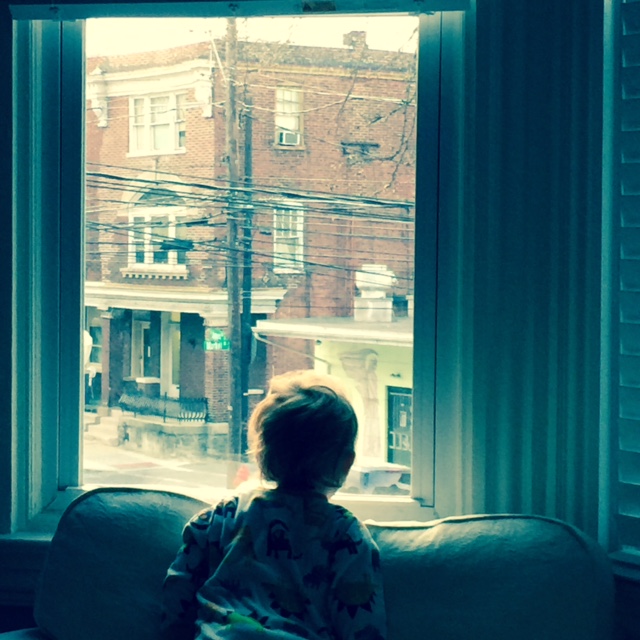
Two or three nights a month, I’ll wake up at an ungodly hour and see blue lights flashing against our white window blinds, a rhythmic beating, like the inside of a vein, or a party light. But, because it’s happened so many times before, I know it’s none of those things. It’s just the police.

A few weeks ago the lights got my attention at three in the morning and I looked out to find a car had crashed and ended up directly under a parked car – as in, there were two cars, and one was parked on top of the other car. Last summer I woke up and looked out to find five or six police officers holding a man down on the sidewalk while his girlfriend shouted at them from down the street, warning them that she was recording everything on her phone. Another time, I woke up to find police breaking up a domestic dispute that had made its way out onto the sidewalk.

This is life in the city. You think you have your own house, but what you don’t realize until you live in a city is that your house is more like your bedroom – you share a living room and foyer (the sidewalk and street) with 70,000 other people.

This happened again on Sunday night. I turned over in bed, noticed the blue flashing, and stumbled over to the window. I lifted one of the slats and peered through. A police officer sat parked in the street, his lights making the lazy turn after turn after turn. Another police car was on the opposite side of the street, lights off. Besides that, nothing.

Streets in our city are eerily quiet at night. It’s strange when you think about how many people are all around you, yet there is no one on the road. The yellow street light across from us shines down on nothing. At 3am, no one even drives by.

But another car did pull up, and this one was a hearse. It stopped behind the police car, and two men got out, dressed in suits and bow ties, and the first thing I thought was, “How in the world can people do that night after night? Show up at a stranger’s house at their most vulnerable moment and carry their dead out the door?” I thought of my friend Caleb, who does this for a living. He’s my hero.

I wondered who had died. I’ve got a friend who lives over there, or at least a guy I stop and talk to from time to time. He’s an older, African-American gentleman with kidney disease. He’s on dialysis twice a week and waiting for a kidney transplant. Was it him? It also happens to be the apartment where the mother lives, the same one Maile confronted the other day after she hit her little daughter over the head. Heaven forbid…not the little girl? There are only three apartments in that row home.

So I sat in the chair and I waited and time oozed past. One of the police officers left. A fire truck came, four burly men went inside, and then they came back out again. The fire truck left.

Maile got out of bed and came over, stood beside me. It was like we were keeping vigil. Neither of us said a word for a very long time. Finally I turned to her.

“Do you want to sit down?” She shook her head no. We continued waiting.

One of the funeral directors came out and moved the hearse into an alley before unloading a stretcher and taking it up onto the porch. It was a heavy moment, a strange moment, sitting there, waiting for the dead to come out. Still, we waited. I wondered if other people watched from other windows, wondering who death had come for on that Sunday night.

They were a long time in the house. Eventually, I turned to Maile, barely able to keep my eyes open any longer. “I’m going back to bed,” I said. She nodded, sat down in my chair after I crawled into bed. Every so often I would doze off, then wake up again. I’d look over and see her sitting there, holding up one slat of the blinds, peering down, waiting. The street lights made pale, golden lines stretch across her body. Besides that, the darkness was all around us.

She woke me up. I have no idea how long this all took.

“They brought him out,” she said, and I went back beside her at the window. And there he was. Or she was. Lying there on the stretcher under a sheet, the topography of a person. I wondered what that person had been doing a few hours earlier. Sleeping? Watching late-night television? Making love? Dreaming? Had they been in pain or absolutely clueless? If they had known death was coming, would they have been relieved or terrified?

What would I think, if I knew death was coming for me? Would anyone recognize me, lying there under the sheet?

I sighed. We couldn’t tell who it was. The body seemed tall, long and lanky, and didn’t seem to match the physical description of anyone we would have recognized from our street, but who knows. Who knows what any of us will look like under a sheet. And we both went back to bed.

I woke up this morning, wondering lots of things, more aware than ever of the fact that it will be me someday, under the sheet. And then all this will be over, and what will I be left with? It’s a strange thing, seeing someone being carried from their home. It’ll make you stop and think.

The Man With the Teardrop Tattoo #RideshareConfessional

Photo by Reza Shayestehpour via Unsplash

The rider canceled once, but I kept driving in their general direction because sometimes people cancel their ride request accidentally, or sometimes they want to try to get a driver who’s closer but it’s just not going to happen, so I try to save them some time by heading in their direction. Sure enough, the request came through again, and I accepted.

And then the person canceled again. Annoying, but I kept going.

Eventually, we got it straightened out. I pulled up in front of the house, and a man came out. He was Caucasian, but his skin tone was more gray than anything else. He had short, gray-brown hair, and eyes that were either sad or tired. I couldn’t tell, exactly. He seemed to be about my age. At the bottom corner of his right eye was the tattoo of a single tear, which made me nervous, because haven’t we all heard urban legends about exactly what that means? I always thought a teardrop tattoo meant you had killed someone. I looked it up later. It can mean that.

“How’s it going, man?” I asked him.

“Not too bad, not too bad,” he said. Once we ironed out his exact destination, I asked him a few of the typical questions. He told me he had moved recently.

“So, where are did you move here from?”

“Harrisburg,” he said, and the word came out in disgust. Then he whispered, “I had to get out of there.”

We talked about a few other things. He was recently in prison. He was on his way to see his girlfriend during her lunch break.

“Did you grow up around here?” I asked him.

“Nah,” he said. “Grew up in Harrisburg. Born and raised. But there was too much to get into. And don’t get me wrong, I got into all of it at some point. Eventually, I had to make a change. I had to get out.”

“Takes a lot of resolve, man,” I said, “Leaving your friends, leaving the places you’re familiar with. You should be proud of that.”

He nodded.

“Maybe,” he said. “But I could see where it was headed. I was done with that scene. Now, my exciting nights are watching TV and eating takeaway food.” He laughed.

“Sounds exciting,” I said, grinning.

“Boring as hell,” he said, laughing again. “But there’s nothing wrong with that.”

Great Responsibility: Maile’s Thoughts on Intervening After Seeing a Mother Hit Her Little Girl

Maile and Leo, in his first moments of life.

After last weeks post about us confronting a neighbor who hit her little girl, we’ve had a lot of feedback, all over the map. Maile and I have continued to talk about it, and I asked her to please write something for my blog because 1) I’ll do just about anything to convince her to share her writing voice with the world and, 2) I think she has some really good things to say about what happened. Here is what she would like to offer to the conversation.

I’ve made it a practice of mine not to get too involved with my husband’s blog. It’s his thing, not mine. I love reading his posts, hearing his perspective on this wild and wooly life of ours, but his blog and his community here is just that: his. But when he posted last week about our recent volatile exchange with the neighbor, myself co-starring in that low-budget drama, I felt the need to respond.

I actually hadn’t seen the blog post until my brother texted me, saying that he read it and how proud he was of me for standing up for injustice, not remaining silent. Like any little sister who wants to impress her older brother (despite the fact that we are now well into middle age) I was flattered by his words. But I immediately noticed an unsettling deep in my belly, an unsettling that I recognized as the same churning I felt the week before when I saw my neighbor hitting her daughter.

I immediately put down my phone after texting my brother back and went on a hunt for my computer, not a small feat in a house with six children who are well trained in the art of laptop misplacement. I found it, got on Shawn’s blog, and read his recount of the event, tears in my eyes as I relived it through his words.

Damn, he’s a good writer.

But when I came to the end, I didn’t want to read the comments. It still felt too fresh; I still hadn’t come to terms with how it all played out. I wanted to call Shawn and tell him to take the post down and delete all the comments. The truth is that I didn’t want people applauding me, but I didn’t want them criticizing me either. I had too many conflicting feeling of my own about it all, and I felt unable to shoulder the feelings of others.

Immediately after the blow up with my neighbor, I felt angry and ashamed and hypocritical. I couldn’t turn a blind eye to someone beating a small child in front of me. I shouldn’t have, and I’m glad I didn’t. A couple days later I shared the story of the incident with a friend, and she said something that gave me some comfort: she said perhaps that girl will remember that someone stood up for her once; that someone said that hitting her wasn’t okay. I hope so.

But while I definitely had compassion for the daughter, I neglected to show compassion for her mother. I don’t know what her life has been like up until now. Clearly, from the fact that her car was being towed and she was tearing down the sidewalk and apartment buildings with her screaming because of it, she wasn’t having a great day. And who was I to point a finger at her when someone could have easily pointed a finger at me during one of the many times I’ve lost it with one of my children; I am no perfect parent. So when the dust settled after the event, the overwhelming feeling that hung over me was failure.

A couple days later, I listened to a sermon by Richard Rohr where he talked about Christ as the Divine Mirror. Rohr’s lesson centered around the passage where Jesus speaks with the Samaritan woman at the well. In the course of their conversation, Jesus basically “holds a mirror” up to the woman, telling her the things about her life that he shouldn’t have known: her sleeping around, her current live-in boyfriend. But Jesus doesn’t say these things in an accusatory way. He simply holds up a mirror to her face for her to see her life as it really is. Rohr suggests that in this divine “holding up of the mirror” in our own lives, Christ’s love and grace will not produce guilt or shame, but it will fill us a feeling of great responsibility.

That phrase “great responsibility” perfectly verbalized the sense that filled me nearly to bursting after the interchange with my neighbor. I was keenly aware that there was a better way to have handled that situation than I did. My greatest regret in it all, or should I say, my greatest wish is that my interaction with her would have led to building a road, no matter how gravelly and pot-holed, that connected us, a road that would allow for exchanging our names and an occasional “hello”, perhaps a road that her daughter could cross to sit beside our children on a sunny spring afternoon to make pastel chalk pictures on the city sidewalks. Instead, my yelling at her without extending any form of compassion built up a wall, and, at this point, that feels nearly impossible to overcome.

Thankfully, I’ve finally come to the realization that God doesn’t see what happened as a failure, but I do clearly recognize the great responsibility He has placed in my heart. I hope I get another chance to do things differently, to write a different story for my neighbor and I.

I hope.

* * * * *

You can read the original post HERE.

For some good thoughts about how to intervene when you see someone treating a child improperly, check out this article. I know I wish I would have read it sooner. What about you? Have you ever witnessed an adult physically abusing a child in public? What did you do, if anything?

On Seeing a Neighbor Hit Their Child, What Maile Did Right, and What I Would Do Differently

IMG_1602

About a week ago, I pulled up to the curb on James Street in time to see someone’s car being loaded onto the flatbed of a tow truck. I had seen the Lancaster parking authority vehicles earlier that morning, and a few of their employees going door to door, trying to find the owner of the vehicle, which happened to be blocking a business’s garage. They hadn’t been able to find them, so the car was getting towed.

I crawled out of my own car and walked towards the house when I heard a woman shout at the top of her voice.

“Noooooooo! Nooooooo!”

I glanced across the street, and she came flying out of the apartments. She was on her phone with someone else while shouting at the man operating the tow truck.

“Noooooooo! Nooooooo! What the f***! What are you doing?”

I didn’t want to hang around for the ugly scene sure to follow, so I started walking up the steps to the house. That’s when Maile pulled up in the Suburban and parked. She had just been to the grocery store. She kissed me and said hello and we started taking groceries into the house and catching up on what we’d been doing that morning.

But the woman got louder and louder until it sounded like she was losing her mind. She kept shouting obscenities – at the driver, at whoever she was talking to on the phone, at the sky. The driver stood there staring at her with something like amazement. The car was halfway onto the truck, and he didn’t seem to know what to do.

Then a little girl came wandering out of the apartment, maybe seven years old, her hair up in a ponytail on top of her head. The mother was shouting at someone on her phone, and when she saw the girl she made a beeline for the apartment. Maile and I were in and out during this time, but what we heard next brought us to a halt right there on the sidewalk.

The woman was pounding on her apartment door, inside the building, and we could hear her screaming and wailing, her hands thudding against the wood. The little girl edged out onto the porch, away from her mother. The woman was terrifying.

“WHAT DID YOU DO!” the woman screamed, somehow finding another volume level, and now her voice was aimed at the little girl. She came out onto the porch and grabbed hold of the little girl’s arm. “HOW COULD YOU DO THIS? WHAT THE F*** WERE YOU THINKING? YOU LOCKED US OUT OF THE APARTMENT! YOU LOCKED US OUT!”

“That’s not right,” Maile said, pausing, staring across the street. We were both frozen. The woman continued screaming at the child. “Hon, that’s not right,” Maile said again. The little girl was crying, cowering on the porch. The mother’s rage only grew. Her voice was louder.

“She can’t do that,” Maile said louder, her voice cracking. “She can’t talk to her that way.”

Then, the woman jerked her little girl’s arm with one hand, and with the other she hauled back and hit her hard, across the head.

“No, no, no, no, no,” Maile said, starting across the street, her normally gentle voice getting louder with each “no.” I have never seen her like this before. I followed her with a strange numbness setting in, the kind that accompanies disbelief. I couldn’t believe this was happening. Maile was in the middle of the street, standing on the double-yellow line. The woman heard her, turned to look.

“You can’t hit her!” Maile shouted. “Stop it! Stop hitting her.”

The woman came flying down the steps to the edge of the curb.

“MIND YOUR OWN BUSINESS!” she screamed, over and over again. And no matter what Maile said, no matter how Maile pleaded, the woman screamed the same thing. “MIND YOUR OWN BUSINESS!” The woman had a crazed look on her face, still holding her telephone, and I thought she was about to come running out on the street and punch Maile. Here we go, I thought. This is where I defend my wife and, let’s be honest, get beat up by some strange woman. I pulled out my phone and called 911.

But there was an invisible wall between the two of them, something that kept them physically separated. The woman kept shouting, MIND YOUR OWN BUSINESS, and Maile kept shouting, SHE’S JUST A LITTLE GIRL! I don’t know what invisible force eventually snapped, but whatever held them together in that opposition dissolved in minutes, moments. The woman suddenly turned her back on Maile and vanished back inside the apartment building, only to resume her bashing on the door. Maile stood there for a moment, and later she told me she was talking to the little girl from about fifteen feet away.

“I’m sorry,” she whispered up the stairs to her, tears running down her face. “I’m so sorry.”

Then, Maile came back across the street while I spoke with the 911 operator and relayed what was going on. Maile kept weeping, sobs shaking her body. She walked past me and up the porch steps to where my daughter Lucy was standing, also watching the entire thing, and Lucy gave her a hug, stood there and held her in a way I’ve not seen one of our children hug either of us before. And Maile just kept crying.

The response I got from the 911 operator was sort of along the lines of, “Really? Is that it? We’ll send someone when they’re free.” Which, whatever. Mind your own business, right?

We were all pretty shaky, and we sat in the living room for a long while. The police came – we watched through the windows – and asked some questions and then they left. But whenever I think about this, and I keep going back to it in my mind, I wonder if we did the right thing, if there was some other way. I know beyond any doubt that Maile did the right thing. Stopping that trajectory was important, crucial.

But after I called 911, well, I don’t know. Maybe I’m becoming an official city-dweller, but calling the police felt icky, like being some kind of colossal tattle-tale. And it felt pointless. I wish I could have put aside that pesky adrenaline, that annoying sense of panic, and walked across the street, asked the woman if I could help her get into her apartment, or if there was something I could do about her car being towed away. I wish I would have offered to help. Maybe she wouldn’t have been able to hear me. Maybe she would have screamed at me, too. I don’t know. But next time, that’s what I’ll do.

At the end of all this wondering, I keep hearing what Maile said to that little girl.

“I’m sorry. I’m so sorry.”

I don’t know why things are the way they are. It doesn’t make any sense.

You can read my wife’s thoughtful response on what she feels she did right and what she could have done better HERE.

The Woman Who Never Said a Word #RideshareConfessional

Photo by The How Photographer via Unsplash

I picked them up in front of a nondescript science center, the name of which I can no longer remember. The mom was impatient and tired. The little guy, maybe eight years old, was only tired. They didn’t crawl into the backseat so much as melt into it, the mom immediately staring vacantly out her window, her son sighing and leaning in against her.

Small droplets of rain ticked against the windshield and the wipers streaked them into long arcing curves of white and red light. We were in Center City Philadelphia, everything glass and money and Friday night action. Couples dashed from this bar to that while groups of college kids swarmed the sidewalks. But these two had a different destination: southwest Philadelphia, deep in the grid.

We made the trek through the lights and the shadows, turning this way and that, the louder bumps snapping the little boy’s head forward or side to side, but he was asleep. His mother sat quietly, never turned her gaze from the window. At first, when there were streetlights every so many feet, the light flashed against her rich, dark skin and measured the distance we traveled, counted off the speed. But in the southwest it was darker, with fewer lights, and the shadows shifted as we drove through them, like underwater currents.

I pulled onto her street and slowly crawled its length. Even in the rain, even late at night, it was busy. The neighborhood kids were out on the sidewalks, standing around, straddling their bikes, and their parents shouted to each other, gathered in small huddles, stared at us as we crept past, their heads turning slowly on a swivel, suspicious of this strange car. I stopped. She opened her door. She tapped the boy on his shoulder and he leaned his way after her. I don’t think he ever opened his eyes. She led him through the people, through the shouting, through all of that late-night commotion to a small porch without a light. She unlocked the door. They vanished inside.

I drove away. But it was the kind of street I would have liked to have hung out on, the kind of street you want to find a rocking chair on a porch and just sit there, drifting front and back front and back front and back.

This was two weeks ago, but it wasn’t until tonight, when I sat down to type this out, that I realized she hadn’t said a word the entire drive.

For more Rideshare Confessionals, like my Facebook page HERE.

When I Picked Up an Angry Rider Who Said She Needed a Blunt #RideshareConfessional

Photo by Ander Burdain via Unsplash

I had my angriest rider ever the other day. This is what happened.

Sometimes, it can be hard to find someone. Sometimes, a person’s location pin drops in a strange place, or they request a ride from the back of their house so it marks them on a neighboring street, or they request a ride and then walk to the corner. Sometimes, the choose a huge location, like a shopping mall, or a Walmart, or the moon, and I have no clue exactly where they are.

I got a request from a woman named Destiny. She was in a Walmart, so I pulled up and coasted the length of the store, looking for someone who looked like they were waiting for a ride. I didn’t see anyone except a very angry woman pacing back and forth, back and forth, back and forth, inside the glass, waiting in the lobby.

Please let that NOT be my passenger.

I waited, but no one came out, so I called the phone number associated with the account. No answer. I waited five minutes – with Lyft, if you wait five minutes and the customer doesn’t call or otherwise let you know what’s up, you’re supposed to cancel the call and get on with your life. So I canceled the call and marked it, “Customer was a no-show.” At that point I drove to the back of the Walmart parking lot and sent some emails, then drove towards the exit.

Ping.

A ride request.

From Destiny.

Uh-oh.

I drove back around towards the front of the Walmart, again cruising slowly so I could find her. The angry woman I saw in the lobby came storming out, pushing a cart, shouting before I even got out of the car. She wasn’t just angry, she was unhinged. But I stayed calm and got out to help her load her things.

“I don’t know what the f*** is going on around here but your car was not the car described to me on the phone so that’s why I didn’t come out. I saw you sitting there but I didn’t think you were my ride.”

“Sorry, ma’am. I tried to call you.”

“My phone is dead,” she shouted, as if that, also, was my fault. But I could sense her anger dissipating when I refused to argue with her. “I just moved and my electric isn’t turned on. And now my phone is dead.”

I helped her load the air mattresses into the back of the car. She crawled into the front seat. You all know how I feel about front-seaters. She was the kind of person whose mouth doesn’t know how to stop. She was the kind of person who was angry at the world because everything, everyone, was out to get her. She had big hair, wild eyes, and teeth competing with each other to be the first to get out.

“You mind if I eat in here?” she asked, holding up her hot dog dripping with ketchup and mustard and relish.

For a split second I thought of my options, but I shook my head no because there are bigger battles in this world. I didn’t mind. Not on that cold day.

“It’s freezing in my house,” she said. “And the school called to tell me my daughter’s sick? Are you kidding me? I just told them there ain’t no f***ing way I’m walking all the way back over there to pick her up and bring her back to a cold house. No way. She’s better off at school.”

She waved her hand in frustration and set the hot dog down in the handle of the armrest. Food in the car! Dripping relish and mustard, two of my least favorite foods in the entire world!

“I can’t deal with all this,” she shouted. She stared over at me. “I was all ready to scream at you when you came back to pick me up.”

I didn’t say anything, so she kept on.

“I was gonna get in the car and shout at you to turn on the f***ing heat and scream at you for canceling my ride request!”

I nodded.

“But look at you, sitting there all calm, all chill,” she said, and suddenly she laughed out loud. “I can’t even get mad at you! Just sitting there, taking it. What’s wrong with you?” She laughed again, as if it was the funniest thing she had ever encountered, this inability to stay angry at the world. She shook her head again and looked exhausted. “God, I need a blunt.”

She devoured her hot dog. I dropped her off at her new apartment.

“I hope your heat gets turned on soon,” I said.

“I hope I don’t get charged for that first ride,” she said threateningly.

I shrugged. “You can contest it in the app.”

She walked inside. I sighed a huge sigh of relief and drove away.