The Problem With Never Being Hungry

manchurch
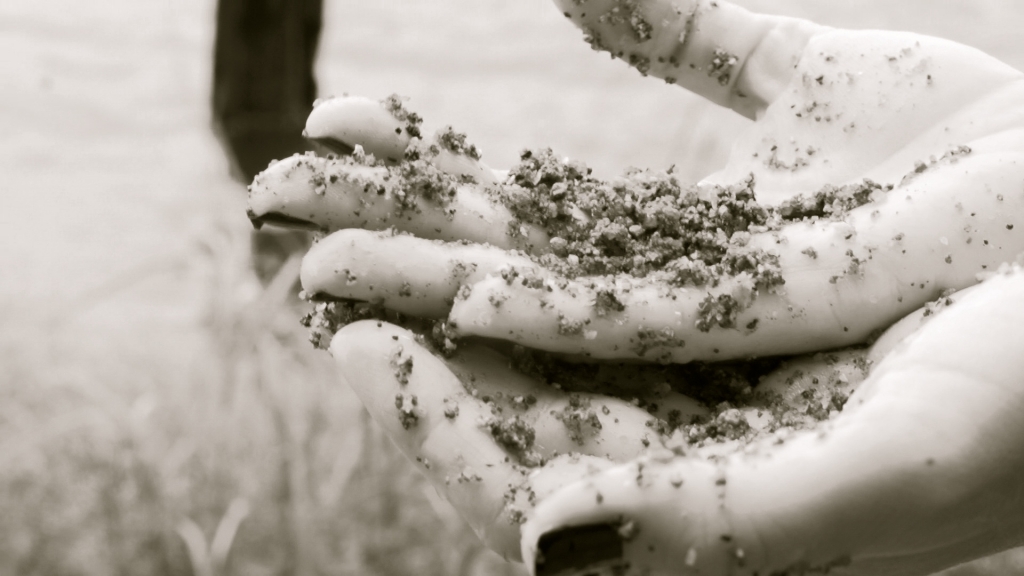
Photo by Stefan Kunze via Unsplash.

When I am sated, it is easy to feel independent. When I am hungry, it is possible to remember where my dependence lies.

Lauren F. Winner, Mudhouse Sabbath

Think about how much time we spend making sure our senses are sated. We eat, sometimes when we’re not even hungry, in order to avoid hunger. We work more hours to make more money, even when all of our current needs and most of our wants are fulfilled. We watch television long into the night instead of sitting in silence, because who wants to confront the voices that emerge in that vacuum?

At the foundation of this striving for surplus is an intense desire for independence and self-sufficiency. We avoid lack because we don’t like the feeling of being in need. We avoid vulnerability and community because we don’t want to be hurt again. We don’t want to be let down. We can still feel the sting of those last recent betrayals.

But what if we, in this culture of abundance, need to intentionally place ourselves in positions of hunger so that we can remember our true state of dependence? What if we decided to be more open regarding our weaknesses? More generous with our resources, even to the point of self-deprivation?

What would we learn, if we would allow ourselves, every once in a while, to become truly hungry?

To My Friends Who Are Not Famous

download
Photo by Roman Kraft via Unsplash

To my friends who are not famous,

Hi, there. I know you’re out there because after I sent out my newsletter yesterday confessing to my struggle with wanting to be famous, some of you emailed me. You wanted to let me know I wasn’t alone. You wondered what the right way forward might be.

I can’t tell you exactly what to do. After all, some of you might BECOME famous soon – how much fun would that be, right? I can’t tell you the perfect proportion of time to spend promoting versus creating. But one thing I want to say is this:

Keep creating. Keep trying. Keep having fun.

I’m talking to you, writer of a small or medium-sized blog, rolling out posts every week that don’t get a ton of comments, likes, or shares. You may not realize it, but your words are rippling out into the world, and they’re affecting people.

I’m talking to you, Pastor of that Tiny Church in the Middle of Nowhere. You’re not worth less than the megachurch pastor in his shiny suit and sparkling smile. You’re exactly where you’re supposed to be. Bigger church doesn’t equal better church. Keep going.

I’m talking to you, Self-Published Author, Mom of Five, Small Business Woman, Painter, Actor, and every other person who’s doing what they were created to do but might never be famous, might never be publicly adored. I’m talking to all of us. We need to revel in the enjoyment of the simple act of creation. Play. Live our beautiful, hidden lives. We need to go about our days and recognize how fortunate we are, those of us who have the means and the desire and the wherewithal to create.

Keep creating. Keep doing. Keep trying.

Now, there is a bit of difficult news, at least for those of us who have strong desire to be known, to contribute in measurable ways, to leave some kind of exceptional mark. The tough news is this: the world needs most of us to create our creations and focus on our calling even without receiving the adoration of the masses, without ever feeling the thunderous applause of a large crowd.

We’re no less needed, mind you. Even though our calling might be to fewer people, those people will be affected, hearts and minds changed for the better. We need to be okay with that. As Anne Lamott says, we need to be the kind of people who believe that “if we build our castles well enough, somehow the ocean won’t wash them away.”

I shared the following words by Henri Nouwen in my newsletter, but I want to make sure you read them, because sometimes these are the words that keep me going. These words adjust my heart in all the right ways:

“There is much emphasis on notoriety and fame in our society. Our newspapers and television keep giving us the message:  What counts is to be known, praised, and admired, whether you are a writer, an actor, a musician, or a politician.”

“Still, real greatness is often hidden, humble, simple, and unobtrusive.  It is not easy to trust ourselves and our actions without public affirmation.  We must have strong self-confidence combined with deep humility.  Some of the greatest works of art and the most important works of peace were created by people who had no need for the limelight.  They knew that what they were doing was their call, and they did it with great patience, perseverance, and love.”

Henri Nouwen, Bread for the Journey

I don’t think wanting to be famous is always a negative thing, but I have found the pitfalls. Believe me. The main dangers I see, when my desire to become famous turns towards obsession, are these: it leads to strong feelings of jealousy; it leads me to scrap and claw for my own piece of the pie, completely disregarding others; it leads to discouragement when I’m not the one speaking at the conference, when I’m not the one giving the interview, when my books are not the ones flying off the shelves.

So today, let’s you and me, in our relative anonymity, follow our calling “with great patience, perseverance, and love.” Let’s be okay with our current platform, no matter how simple. Let’s encourage each other, help each other. Let’s keep creating.

Remember, whether or not you’re known, praised, or admired, your work is important.

Signed,

Me


My 1000th Blog Post (or, Thank You!)

city

I cruised quietly past a mile-marker last week and didn’t get a chance to write about it, but I don’t think we celebrate things enough, you know? I don’t think we pull out of our daily grind and take time to enjoy each of these precious moments as much as we should. So I decided to rewind today and let you know:

This is my 1007th blog post.

It’s really all because of you folks. Let’s face it, I enjoy writing, but I’d also give up pretty quickly if no one was showing up to read this stuff. You’re a very encouraging bunch. Some of you comment regularly, a few of you comment intermittently, and even more of you tell me in real life, when our paths cross, how much you enjoy the blog.

I was at a small party a few months ago and no less than three people who I didn’t even know came up to me and told me how much they enjoy my writing. I was (as my dad says) as happy as a beaver in a lumberyard. Listen, if there is a blogger in your life whose blog you really enjoy, maybe once every year or two send them a message or comment on their blog letting them know how much you enjoy their writing. We don’t require much sustenance, us bloggers. A little encouragement goes a long way.

* * * * *

The other thing I love about you folks is how loyal you are. I didn’t blog for almost all of 2013, yet when I started blogging again at the end of that year, my first month back was my highest traffic month ever, by quite a large margin. So you were patient, and when I came back, you rejoined me.

Then came the time I decided to write a novel and float it on Kickstarter. You crazy folks showed up in droves and fully supported my Kickstarter project…I raised $3,500 in the first 48 hours, and nearly $10,000 total. Do you know how much this means to a writer? Can you even begin to understand how much it means to have a whole group of people behind me, cheering me on, encouraging me?

It’s what I always say whenever I talk about my blog: I may not have the largest audience in the world, but I’ve got one of the most loyal.

Thanks for that.

* * * * *

This blog has taken me to all kinds of crazy places, including Sri Lanka. Who ever saw that coming? I’ve met dozens of you in real life, and it was like we grew up together. You were with me through difficult times and good times, through miscarriages and births, through stinkbug infestations and way too many bowls of ice cream. Some of you joined me over on Instagram and continue to put up with all of my photos of Leo.

You are good people.

* * * * *

Can I encourage you with this? There are things I’m doing today only because I hung around this long, only because I was crazy or stubborn enough to write this. many. blog posts.

Find your thing, whatever it might be, and be tenacious. Don’t give up. Don’t let go. Keep writing, keep doing what you’re doing, one step at a time. One day at a time. One blog post at a time. Just one foot in front of the other. That’s how you get to the top of the mountain.

Did you know that if a helicopter could lift a climber from base camp and plop them down at the summit of Mount Everest, the climber would die within minutes because their lungs haven’t been acclimatized to the atmosphere? But a climber, making their slow, difficult way from base camp, will survive the summit, because it’s the trip that prepares them for the victory.

Keep climbing. No shortcuts allowed.

* * * * *

I don’t usually ask you to comment, but maybe today if you get a chance you could hop down there in the comments section and let me know when you started reading this blog, or how you found it. Or maybe what one of your favorite posts has been. If you leave a comment today I’ll enter you into a drawing and send one lucky winner a free, signed copy of The Day the Angels Fell and How to Use a Runaway Truck Ramp. Share this post on Facebook or Twitter  (and let me know in the comments) and I’ll give you an extra entry in the drawing.

So, consider this a huge thank you. 1007 blog posts. We did it, folks. What now? I guess we might as well keep going.

Wait, what? You haven’t signed up for my twice-monthly newsletter? (It’s basically a few bonus blog posts every month plus information on upcoming books.) You can sign up for that newsletter HERE. Don’t go another day without it.

The Sky is (not) Falling (or, Six Things I’ve Learned About the Seasons of Life)

Photo by Luca Zanon via Unsplash

We live in time and in process; we constantly change…The danger comes in our failing to see and embrace the seasons, in believing that all times of our lives must be the same. We cannot claw and scramble our way back to summer or quickly leave a harsh winter season…we must embrace the place where God has brought us, find the meaning and lessons to be learned in that place, and then be willing to move on…

– Wayne Martindale, The Soul of C.S. Lewis

It’s 5:29am and I’m sitting in my living room. It’s a glorious feeling, especially after spending ten hours on I-81 yesterday during our drive home from eastern Tennessee. Outside the large windows I can hear morning cars creep through the dark streets of this city, one at a time, intermittent, like moths in and out of the light. Patty Griffin plays on the stereo in the next room. She’s making pies. Scattered through the two floors above me, a wife and five children sleep.

I’ve been thinking a lot lately about what a difficult year 2015 has been. For about nine months, I didn’t have a lot of writing work. Things were slow. We had to take on some debt just to get by.

I’ve been writing full time now for six years, and these slow seasons seem to come every once in a while. They’re not easy – it’s never easy to not be making any money. You begin to doubt your calling, your ability. It’s easy to wonder if you’re on the right track.

But over the last six weeks, as is always the case, work has picked up. 2016 will be a busy year, I think.

Which brings me around to what I’ve been thinking about lately – this idea of seasons. Each time Maile and I go through a slow season, a season that feels, well, meager, I’ve become happier with how I deal with it. The first two times we had a slow year, I panicked. I ran around in circles screaming, “The sky is falling!” I thought I should find work in a factory or melt down my laptop and use it as a doorstop. My moods and my emotions came and went in tidal waves.

This time was a bit better. I tried to recognize the season for what it was, focus on the positives. Here are some things I’ve learned about slow seasons of life, times when work is scarce, times when things are difficult:

Enjoy the change of pace. It goes against our grain to attempt to enjoy anything that’s difficult, I know. But there’s no use in being financially tight AND anxious (change out financially tight with whatever best describes your current difficult season, if you’re in one). Might as well enjoy the leisure. I try to spend more time with Maile, more time with the kids. I sit in silence more often, write more letters, catch up on all the little things I’ve been meaning to do. The slow season (or whatever difficult season you’re in) won’t last forever. Which leads me to something very important:

Keep believing things will turn. This is crucial when you’re in a season of life that’s difficult or uncomfortable. These difficult times will pass. I promise. Hang in there. When we were going months without a paycheck, I clung to that belief. It’s going to change. It’s going to get better. Easier. More fun. Less depressing. Whatever difficult season you’re in, I promise, it will end.

You know who you are. A change in seasons doesn’t require a change in identity. This is something I still struggle with. When works slows to a trickle, I am still quick to look for something else. I am too ready to give away this wonderful life that’s taken six years to build in exchange for predictability or (perceived) stability. Don’t let a difficult season lead you to hit the panic button. Stay calm. Make solid decisions. But difficult seasons make that a tough thing to do, so…

Rely on people around you, people who aren’t in the middle of your mess, to help you keep perspective. I have certain people I know I need to have a coffee with when things get tough because these people help me stay the course. Locate these people in the good seasons of your life and then lean on them in the tough seasons. (And be there for them when they need you.)

Every season, no matter how difficult, has gifts to offer. During this last slow time, I reached out to some writer friends, which in turn led to me landing a literary agent. Who knows what that will lead to? I never would have gotten this agent had life continued on, steady and predictable. It was the instability of that slow season that led me to try something different.Keep your eyes open for the unlikely gifts that difficult seasons have to offer.

Be willing to move on. I’m always willing to move on from difficult seasons. But am I willing to do the same when a good season, an abundant season, is coming to an end? How hard do I cling to seasons when it is simply time to let go?

What have difficult seasons taught you?

The Crucial Nature of Little Things

940144507_bffa8dd93d_z

I’m always ready to do big things. After Ann Voskamp’s blog a few months ago, I wrote in this space about wanting to move to Iraq to help the refugees. I still have people asking me about that.

“Aren’t you moving to Iraq or something?” they ask.

“No, not yet,” I say.

It’s much easier for me to commit to doing big, radical things than it is to commit to the simple, daily things. I’m not sure what that says about me or my personality.

But as I get older, I’m learning important lessons about waiting. I care less about “impact and more about the crucial nature of little things. Maybe I’m not on this earth to write for millions of people. Maybe I’m here to make an important difference in the lives of a few.

I’m slowly, slowly becoming okay with this notion of a beautiful, hidden life.

* * * * *

A few weeks ago I read an article in the local paper about a few Syrian refugee families being relocated here, to the city of Lancaster where I live. This idea of being a refugee struck me more clearly than ever when I imaged people from halfway around the world trying to acclimate to life in Lancaster County. Seriously. My wife had trouble feeling like this place is home, and she’s from Ohio.

Maybe I would have read that article and went on with my day, but I made the crucial mistake of reading the comments under the article. Within moments I was ashamed of my fellow Lancastrians.

“Send them back,” one person wrote. “They’re probably with ISIS.”

“You know how those Muslims are,” someone else wrote. “They’ll take jobs but they won’t contribute to the community.”

It was embarrassing, this lack of regard for other humans beings who just want a safe place to live, a safe place for their kids to go to school, a safe place to work and eat and make new friends. But instead of just being embarrassed, I thought, you know what? I’m going to help welcome them. That racist, insular voice can’t be the only voice they hear when they arrive in Lancaster, our city.

So I contacted a few local organizations who are helping with their relocation. One of them sort of brushed me off, and that’s okay. When you offer to help, you can’t be offended when people say no. That’s something I’ve learned. But another organization wrote me back. We exchanged emails. I offered to write about the refugee families. I thought that maybe, just maybe, if my neighbors read about what these refugees have gone through, their hopes and dreams, their history, their stories, then maybe we would welcome them.

Next week I’m meeting with one of these organization, and I hope to share some of these refugee stories right here on my blog. That’s my dream anyway.

It’s not a big thing, you know? I don’t have a million dollars to donate. I don’t have a huge platform. I’m not writing a book about it. I don’t even know if anything will come of it, or if I’ll get to meet the families, or if they’ll want to share their stories.

But I think this is the crucial nature of little things. No one else was going to do this thing, this simple thing, not until I stepped forward. And who knows what might come of it?

The whole point of this post isn’t about me stepping up and doing something – it’s about you. What little things are you not doing because they seem too, well…too little? We all have to start somewhere. You know that sense that you should call that certain person or volunteer at that non-profit or take the lead on that project or mail that thank you note? You’re getting that sense for a reason. Follow through. Take that first, little step.

Do you believe in the power of our beautiful, hidden lives?

If you’d like to receive my twice-monthly newsletter (basically a few bonus blog posts every month plus information on upcoming books) you can sign up for that HERE. If you’d like to receive these blog posts directly in your inbox, just enter your email in the field at the bottom of the right hand column.

Bandersnatch: An Invitation to Explore Your Unconventional Soul

DSC03174

I find myself recommending this book to everyone these days.

“Have you read Erika Morrison’s book Bandersnatch yet?” I ask, but of you course you haven’t, BECAUSE IT COMES OUT TODAY!!! Here’s an excerpt from one of the best books of 2015. Read it. Love it. Go buy it. Tell all your friends about it.

But first let me say this: She asks dangerous questions, friends, questions about the nature of who we are. Proceed with caution.

———–

“In July of 2000, when my husband and I got married, I was the ripe old age of nineteen and he was a seasoned twenty-four. Six months later I found out there was a baby in my belly, not on purpose. Then shortly after, another baby got in my belly not on purpose; then even less shortly after another baby got in my belly not on purpose.

Now, I know what you’re probably thinking: somebody needs to check the date on her birth control! But I promise you that nothing short of a medieval chastity belt with a rusted-shut lock could keep this Fertile Myrtle from getting pregnant. I don’t even trust the vasectomy my . . . never mind, I digress.

When our last boy was born in the left leg of my husband’s pajama pants (I should probably mention I was wearing them) while we rode the elevator up to the labor and delivery floor of Yale-New Haven Hospital, I had just birthed my third baby in three years. I’ll go ahead and do the math for you. I was twenty- three years young with a three-year-old wrapped around my thighs, a sixteen-month-old in one arm, a newborn in the other, and a godforsaken look of “Help!” writ across my face.

It was about this time that, as mentioned in the previous chapter, our marriage dove headlong into mess, we lost our income for too long to hang onto our home, and we experienced religious restlessness and a whole heap of other life challenges. Those early years redefined my own terms for what it meant to be drowning in the lifeblood leaking from every pore on my body. My internal equipment just wasn’t mature and qualified enough for my external reality, a reality that was demanding more of me than I could bear

What happened to me is what some psychologists call an identity crisis, a term coined in the early 1950s by Erik Erikson to refer to a state of confusion and unhappiness over one’s sense of self. If anyone had thought to ask me “Who are you?” in my good and lucid moments—which were few and far between—I could’ve answered with just about nothing.

I don’t know if you’ve ever felt the pain of not knowing who you are or if you feel that pain right now, but what can easily happen in that place of ache is that you start looking at other people, extracting the qualities you like about them, and injecting those qualities into your person as a substitute for what you don’t understand about yourself.

This is no bueno and that was what I did. In my naivete, I saw the people around me as more inherently gifted than I was, so I decided that self-fulfillment meant adopting their God-given gifts as my own. I looked at this person’s way of socializing and that person’s version of hospitality and another person’s artistic expression and began mimicking their nuances. Before I knew any better, I had squeezed my shape into several different ill-fitting molds at once, while cramming my own personhood into a tiny, overlooked corner in the nether regions of my body.

What I didn’t realize at the time was how devastated my spirit would become under the influence of everyone else’s borrowed qualities. Other people’s gifts and character traits are designed to enhance, enrich, and complement our own, but never act as substitute for them.

A healthy sense of self-identity seemed to be a luxury I didn’t have the currency for . . .”

(Excerpt from Erika Morrison’s book, Bandersnatch: An Invitation to Explore Your Unconventional Soul.)

|||

The cardinals make it look so easy. The honeybees make it look so easy. The catfish and the black crow, the dairy cow and the cactus plant, all make being created appear effortless. They arise from the earth, do their beautiful, exclusive thing and die having fulfilled their fate.

None of nature seems to struggle to know who they are or what to do with themselves.

But humanity is the exception to nature’s rule because we’re individualized within our breed. We’re told by our mamas and mentors that–like snowflakes–no two of us are the same and that we each have a special purpose and part to play within the great Body of God.

(If your mama never told you this, consider yourself informed: YOU–your original cells and skin-print, guts and ingenuity–will never ever incarnate again. Do you believe it?)

So we struggle and seek and bald our knees asking variations of discovery-type questions (Who am I? Why am I here?) and if we’re semi-smart and moderately equipped we pay attention just enough to wake up piecemeal over years to the knowledge of our vital, indigenous selves.

And yet . . . even for all our wrestling and wondering, there are certain, abundant factors stacked against our waking up. We feel and fight the low ceiling of man made definitions, systems and institutions; we fight status quo, culture conformity, herd mentalities and more often than not, “The original shimmering self gets buried so deep that most of us end up hardly living out of it at all. Instead we live out of all our other selves, which we are constantly putting on and taking off like coats and hats against the world’s weather.” ~Frederick Buechner

So, let me ask you. Do you know something–anything–of your true, original, shimmering self?

I don’t mean: Coffee Drinker, Jesus Lover, Crossfitter, Writer, Wife, Mama.

Those are your interests and investments.

I do mean: Who are you undressed and naked of the things that tell you who you are?

Who are you before you became a Jesus lover or mother or husband?

Who are you without your church, your hobbies, your performances and projects?

I’m not talking about your confidence in saying, “I am a child of God”, either. What I am asking a quarter-dozen different ways is this: within the framework of being a child of God, what part of God do you represent? Do you know where you begin and where you end? Do you know the here-to-here of your uniqueness? Do you know, as John Duns Scotus puts it, your unusual, individual “thisness”?

I can’t resolve this question for you, I can only ask you if you’re interested.

(Are you interested . . . ?)

Without being formulaic and without offering one-size-fits-all “how-to” steps, Bandersnatch: An Invitation to Explore Your Unconventional Soul is support material for your soul odyssey; a kind of field guide designed to come alongside the moment of your unfurling.

Come with me? And I will go with you and who will care and who will lecture if you wander around a little bit every day to look for your own and only God-given glow

If you’re interested, you can order wherever books and ebooks are sold.

Or, if you’d like to read the first three chapters and just see if Bandersnatch is something for such a time as the hour you’re in, click HERE.

All my love,

Erika