Six Years Away From His Family – Jacques’ Story

photo-1433321768402-e8ed97b0324c

The sky spit a cold rain on that January afternoon, the kind of light mist that barely makes it to the ground. I locked the door of our house on James Street and walked south on Queen, down past The Belvedere and the street lined with shops and the flower store. Past the brewery with the large glass windows and the park where you can always find a handful of homeless people sitting in small groups, talking to each other, looking around with tired eyes.

The Church World Service office is about ten blocks southeast of me, right along King Street. I arrived and let the front desk know I was there. A few minutes later my two translators walked in. We had never met before, friends of friends. We had never worked together.

Our contact at CWS led us up to a small conference room, and we sat on one side of the table and we waited. There was a mixup with the time, we were told. The family would be with us in five or ten minutes.

They didn’t take long to arrive. An African man and three of his sons came into the room. We’ll call the man Jacques. He had a very proud, defined face. He was average height, and his forearms were thin and strong, like cables. His eyes were fiery.

His three sons were soft-spoken, gentle even, but they followed their father with a dogged sense of protection. I could tell they respected him greatly and were there for his sake. Or maybe they didn’t want to leave his side – they had only been reunited recently.

We said our halting hellos, the kind that happens when speaking through translators. And then Jacques told me his story.

* * * * *

I am 51 years old now. Six years ago, I was arrested in my country, The Republic of the Congo, by the government. I had many, many, many friends and relatives who were arrested from time to time, for a variety of things. What tends to happen is that when the government changes, they persecute the people who supported the previous regime. If you are of the same religion as the person leaving office, or from the same region, or if you have any connections at all, you are in danger of being detained and arrested.

In those days, I worked in the administration of a university. It was a good job, and it helped me provide for my wife and seven children. In fact, when all of this began, six years ago, I had a two-week-old child.

The first time, I was arrested and jailed without charges. They wanted to know where my nephew was living – he had connections to the previous president. When I wouldn’t tell them, they tortured me for five hours. I was placed upside down and tortured and nearly killed. Then they went and got my nephew and tortured him beside me. They went and got my nephew’s wife and child and threatened to kill them in front of him.

Finally, they left us in a cell, where we stayed without being charged. Those were long, dark months. A human rights organization heard about our situation and pressured the government to either charge us with a crime or release us. After four months, we were placed on house arrest and released to go home.

Our houses were searched often during this time, turned upside down. After six weeks, we were supposed to return to the police, check in, and then we would be released. Or so we were told. But during one of the searches of our home, an officer recognized the father of my nephew in a photo on the wall, and because they had once been friends, he warned us not to go back in.

“They are planning on torturing you again,” he warned us. “I cannot help you. You must run away. Flee the country.”

But still we weren’t sure what to do. We did not want to leave our families. So when our day came to check in at the police station, we started to walk there together, my nephew and I. As we got close, we saw a Jeep full of police. There was a crowd of street children, and we edged closer only to hear them talk about how they were on their way to arrest my nephew. Then they saw us and turned to follow us. My nephew threw his phone in their direction, and all the street children in the area (and there were many) ran to grab the phone, getting in the way of the police. This allowed us to slip away.

We had no money and had not even said good-bye to our families. We had left our homes hoping to check in at the police station and return home. This was in December of 2009, six years ago. I pictured my two month old. My other six children. My wife. But we had to leave, so we fled all the way to the border of the Congo and a man in a little hut let us stay with him.

“If you don’t go,” he said after a short time, “you will be arrested, and then I’ll be arrested for helping you.” So he directed us to someone who could take us over the river, from Congo to Gabon. We gave them our phone as payment for the hour and a half crossing. We were fortunate they accepted that. It was only by the grace of God.

We did indescribable work while we were there, physical labor that we were not used to doing. It was very difficult, but we saved our money and stayed in a cheap place and were able to take a train to the other side of the country, away from the bounty hunters who would have taken us back to Congo. After many difficult months and years, and help from my brother who also lived in Gabon, we were eventually able to get the attention of the United States embassy and get a visa. I was relocated to the United States only a few years ago.

But my family was still in Congo.

* * * * *

Jacques paused and the translators relayed his words to me. He spoke his French in a thick, African accent, and sometimes he nearly shouted with passion while he told his story. I turned to the sons. Their quiet eyes. Their calm patience. I wondered what my children would do, how they would seem, if I had to leave them for six years. If I left today, and was gone that long, Cade would be 18, almost 19. The baby Maile’s carrying would be 6.

“What was it like for you to not have your father for over six years?” I asked the three sons. The oldest one, 21 years old, responded.

* * * * *

We struggled when he was gone. We struggled even to eat. There was no way for us to make any money for food, and for a long time we didn’t know if he was even alive. The two oldest of us were able to get diplomas during those years, but the rest of the children couldn’t go to school. Books and clothes cost too much.

It was very difficult growing up without a father. Mother had the seven of us plus two other children she had taken in. She had no job. We prayed often that we would be reunited with our father.

When I heard that we might be reunited, it was like a dream that these things might happen.

* * * * *

The translator’s voice catches as he retells the story. The young men speak so calmly about such emotional details. Their faces are peaceful, like still water.

The father speaks up.

* * * * *

I had joy coming here, because I knew I wouldn’t be followed, hunted down, or arrested. I knew I could finally work, and then send the money back to my family. CWS helped me find the job as well as an apartment to live in. I worked at a food distribution plant, and now I work at a farm. It’s nothing like the academic work I did in Congo, but I am happy just to be working, just to be making money.

When I first saw my wife and children here in Lancaster after not having seen them for almost seven years, I wept and wept for joy. I wept openly. My oldest son did not weep, but later he said he wanted to cry, but he knew if he did then all the other children would cry, so he did not.

It was such immense joy, such deep joy, that I can’t really put it into words.

* * * * *

I asked Jacques what he wants for himself and his family, now that they are here in the United States. I guess I expected him to have goals and aspirations, perhaps to own a home. But he laughed a wide laugh, then smiled as he answered.

“I want nothing for myself. I have everything I need. The only thing I want is for my children to get the studies they need. An education, it is everything. That is my main purpose in life. Who knows after that? I feel so bad because during the six years I was gone, their education suffered. I want to make sure they can have that now. Besides that? What else could I want?”

* * * * *

Read other refugee profiles here:

A Muslim Refugee in Amish Country – Miriam’s Story
When Your Country is a Prison – Ahmed’s Story

* * * * *

Church World Service helps refugees like Jacques with many things: relocation, integration into society, finding employment and housing, and sometimes helping to cover the legal fees to apply for asylum, immigration, and green cards.

Here’s how you can help:

  • Will you give $10, $20, $50, $100 or more to help cover the legal costs for the reunification of families like Jacques’? If you can do that, please go HERE to make a donation towards CWS’ legal services.
  • CWS is in need of family law attorneys willing to take on cases pro bono. If you are willing to do this, please email me.
  • Would you be willing to get to know a refugee family who lives close to you and be part of a team who supports them as they try to start over in a new place? If so, please email me!
  • Like the Church World Service Facebook page.

*I am not an employee of CWS and any political or religious views expressed by me or the refugees I speak with do not necessarily reflect the views of CWS or its employees.

It’s Time to Leave What is Secure

photo-1429189096272-e07dc6aff539
Photo by Anna O’Connolly via Unsplash

I think we all have certain time periods of our lives that serve as turning points, the kind of days or months during which everything seems to change. Someone we love passes away. A relationship that meant quite a lot fades. Careers change or vanish. Traumatic moments of abuse scar us, or instances of great love fill us.

These days stand up on our timeline like a lone tree on the horizon. We glance back as we walk away, and when we see that monument to that particular time, it fills us with a renewed sense of hope. Or hurt. Or confusion.

I inevitably think back to the end of 2009 and the beginning of 2010 when it felt as if our entire world was vanishing. If you’ve read my book, Building a Life Out of Words (get it free HERE), you know what I’m talking about. It was a time of great hurt for Maile and I, a time of severe disappointment. But it was also a time for starting over, beginning afresh.

Whenever I think about times like that, transitional periods, I think of the wonderful words of Brennan Manning in his book Ruthless Trust:

The reality of naked trust is the life of a pilgrim who leaves what is nailed down, obvious, and secure, and walks into the unknown without any rational explanation to justify the decision or guarantee the future. Why? Because God has signaled the movement and offered it his presence and his promise.

Sometimes, I think it’s hard to move on in life from those poignant moments because those experiences are tangible, they’re nailed down, and they often become that which brings us security. Even the painful stuff. Even the stuff we think we’d rather leave behind. We cling to it, because it’s tangible or because it identifies us.

Sometimes walking into the unknown looks a lot like forgiveness, or a willingness to move on. Sometimes walking into the unknown is taking a deep breath and trying again. Sometimes walking into the unknown means saying “no” for the first time.

Don’t be afraid to leave what is nailed down, obvious, or secure. Leave that lone tree behind. Set your face toward the horizon, and start walking.

when winter clings to the bones

photo-1453473339606-94f70b4abcf6

The wind moves like spirit
through these Vermont trees, coaxing
the snow to fall a second time.
The evergreens stand a little straighter
with the weight removed. The oaks
and ash sigh,
relieved.

I sit beside the wood-
stove and watch it all happen through
the glass. I envy these
trees. My own burdens rest more
permanently. My own burdens
are not so easily blown away.

Or are they?

What if I walked into a field blanketed
with snow, mine the only tracks, and
closed my eyes, like the birch,
spread my arms wide, like the maple,
stopped doing whatever it is that I do
long enough to let the spirit
move around me, through me?
Would an unexpected thaw shake
the clinging cold from these creaking bones?
Would the weight from this winter
drift away with the wind, leave me
reaching for spring?

The Best of the Web

photo-1446483050676-bd2fdf3ac2d6
Photo by Paul Summers via Unsplash

Here are some excerpts from a few of my favorite blog posts from the last few weeks. Click on the links to read them in full. And enjoy the rest of your weekend!

I drove my car for three months with a broken tail light, and I was not stopped once. I had the luxury of taking my sweet time getting it fixed. That’s called white privilege.

My friend’s black son drove his car with a broken tail light for 36 hours and was pulled over four times. He couldn’t wait until it was convenient for him to get his car fixed. He had to do it immediately, for fear of getting pulled over a fifth time. That’s called racism.

* * * * *

I could not be more enthusiastic about this book, but just as Christie should be celebrating this beautiful book, tragedy struck her family. Christie’s brother-in-law, the husband of her sister, was one of the 12 Marines who appears to have perished in a helicopter crash off the coast of Hawaii. Christie has set off to Hawaii in order to comfort her sister and her four nieces and nephews.

* * * * *

I would really like to leave this place, this financial ledge where our income and expenses are the same number. I would like a place to rest, somewhere we could breathe easy, but I can’t seem to find it. We’re too busy roping our family to the cliff every month.

* * * * *

For those who are rocking the baby, washing the dishes, cleaning the gutters, shopping for groceries, planning transitions, fighting for justice, or matching the socks again –

Whether you are starting, finishing, or carrying on –

For anyone who wants to pray but can’t quite find the words, may you find a prayer here to borrow that fits your moments just right:

* * * * *

I’m not here to give you the twelve-step answer to the struggle, or to chide your disbelief. I’m also not here to provide resources for atheist and agnostic twelve-steppers (though they exist). Today I’m writing for a far different purpose; I’m writing to inspire your imagination.

Stop Complaining About People in Poverty (At Least Around Me)

IMG_1602

I was out shoveling the snow a few days after the most recent blizzard, and it gave me a chance to catch up with my neighbor Aaron. He lives across the street. He’s an older, African-American fellow, really nice, and we always wave and chat for a bit when we see each other.

Anyway, we were out there shoveling, and he was telling me about how he has to get up at 4am to catch his ride to go for dialysis. His kidneys are failing. He had gotten the call just the other week that they had a kidney for him, but then plans changed, and it didn’t happen.

“Man,” he said, taking his time with the shovel, “I went all day without eating or drinking. Then they called and told me I couldn’t have that kidney.”

He shook his head with disappointment.

“That must be rough getting up at 4:30 in this,” I said, motioning to the mountains of snow. “Must be cold at 4:30.”

“Nah,” he said, smiling. “By 4:30? Things are starting to warm up that late in the morning.”

He laughed and shook his head, as if he couldn’t believe how gullible he was, believing his own words.

* * * * *

I walked across the street and gave my shovel to a woman trying to clear her sidewalk of two feet of snow with a dust pan.

“Looks like you could use this,” I said.

She smiled.

“I have to keep this sidewalk clear,” she said, embarrassed that she had to accept my simple offering. “My friend has a lot of medical issues. I have to make sure she can get out to an ambulance, if she needs to.”

“No worries,” I said. “If you need anything, let me know.”

* * * * *

I noticed an older woman two houses down. She was really struggling to clear the snow, so I went down to help her, and we started talking.

“My doctor said it’s okay for me to shovel snow, as long as I take lots of breaks,” she said.

“Are you okay?” I asked.

“My husband and I, we both have cancer,” she said quietly. “But I’m doing better.”

* * * * *

This city is full of people in poverty. When you live in among them, when you become friends with them, when you see how hard they work and how little they get in return for that work, it will change the way you think about poverty. It will change the way you think about things like food stamps and disability, minimum wage and benefits.

I know single moms who walk their kids through the snow in the early morning dark, over a mile, just so they can get them to preschool. Then they walk to work at McDonald’s or the convention center or wash dishes for $8.75 an hour. They work as many hours as they can, and they’re always on the lookout for a second job.

I know dads who race home from working construction or warehouse jobs so they can coach their kid’s flag football team. The team my kid plays on.

I know parents who send their kids to these city schools, the ones we flippantly refer to as “failing schools,” because they don’t have other options. They don’t have the money for private school. They’re not in that massive place of privilege you have to inhabit to be able to homeschool. And they stay up late helping their kids do homework, and they wake up early and do it all again. Every. Single. Day.

* * * * *

Don’t talk to me about the people gaming the system. Don’t talk to me about how we should be drug-testing everyone on food stamps. Don’t talk to me about how the economy would collapse if we raised the minimum wage.

I’m tired of listening to my right-wing conservative friends complain about people in poverty while drinking their boutique beer and Instagramming their latest vacations. We live in a dream world, my friends. Of the billions of families on this planet, we were born into a place of extreme wealth. We’ve been given opportunities beyond most people’s wildest dreams.

If we choose to squander those blessings by sitting in cafes and restaurants with our buddies and arguing over theory, arguing about the latest political situation, arguing over why “those people” are taking taking taking too much, well, I’m afraid we will have hell to pay. If not today, someday.

If you have a problem with people in poverty, stop complaining about them. Partner up with them. Make yourself useful.

* * * * *

My friend Aaron got real quiet while we were shoveling. I looked over at him, and I was sweating under all my winter clothes. He stuck his shovel in the snowbank and gazed down the street.

“I sure would love to get out of the city, though. Get a place with a little more space, somewhere there’s not traffic going by all the time.”

His voice trailed off.

“Gotta get this kidney taken care of first, I guess.”

He picked up his shovel, and he went to work clearing a bank that was way taller than him, a bank he could barely see over.

From Auntie Anne to Angela: Today’s #LettersToThoseWeHaveLost

12642983_1220920521255954_7287609258199686257_n

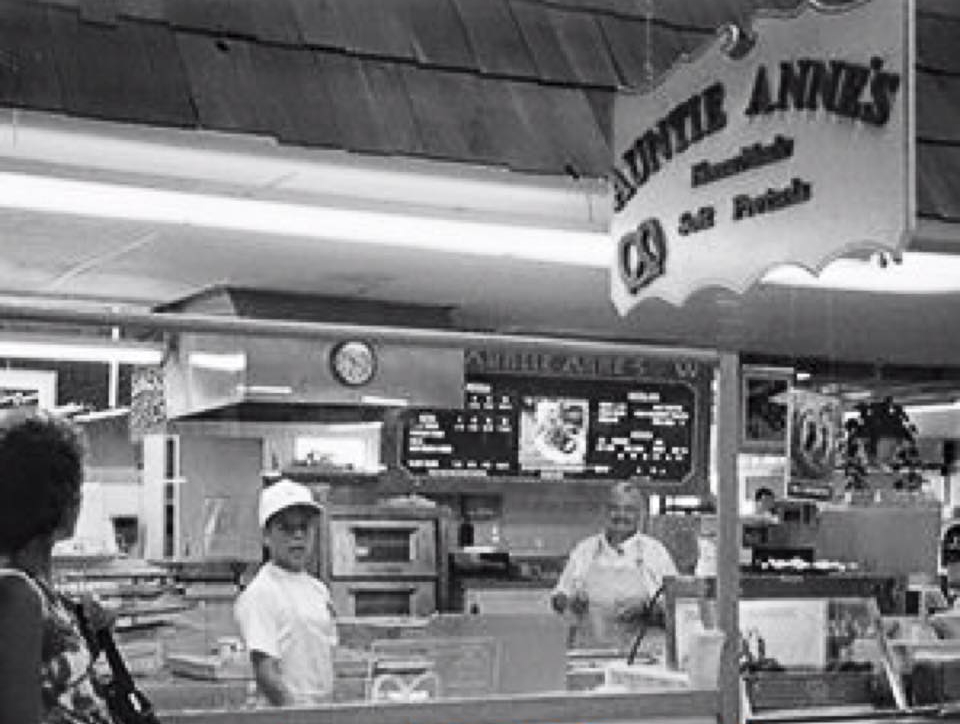
Today’s “Letters to Those We’ve Lost” is brought to you by Anne Beiler, founder of Auntie Anne’s Soft Pretzels. It just so happens that this week marks the 28th anniversary of Anne opening her first location (pictured above). She lost her daughter Angela Joy Beiler at the age of 19 months and 12 days on a warm summer day in 1975.

To our dear Angie,

Oh, how we miss you. It’s been 40 Christmases since we’ve seen you or held you. It seems so long ago, and yet your life as part of our family is still very much alive. There’s not a day goes by that I don’t think about you. Sometimes I sigh when I think of how long it’s been, and how much longer it might be until I see you. I often wish there was a way to visit you just for the day, and then come back to be with my family again.

Your sisters have beautiful children and I love being with them, too. LaWonna has three children: Trinity is 15; Ryan is 11, and Mia is 9. LaVale has one son, Cristian, who is 18.

You were here for only one Christmas, which I am sad to say I remember very little about. Your only Christmas with us. You were 11 months old at the time. What I remember clearly is the first Christmas without you. At the time, Angie, my pain was so deep that even Christmas couldn’t cheer my spirit. I could hardly mention your name because if I did I would fall apart. I tried to be brave and strong, but I was so scared and weak. Scared because I didn’t know how to live without you, weak because I didn’t have the strength to keep it together all the time.

I have heard it said that “Time and God are your friend,” and I agree now that it’s true. Time has helped me see things more clearly, and if you had stayed with us I would never have become the person I am today.

I often imagine what you might be doing in heaven? In my dreams you told me you wer eplaying with all the children, picking flowers and sitting on Jesus’ lap. Sometimes, though, I think you may be all grown up now…could it be true? I have so many questions.

One thing I know, sweet Angie: I will see you again and when I do, that will be the most glorious moment. We’ll be together forever and we’ll never have to say goodbye again.

Until then

Your Mom

Anne and I co-wrote a book about her life, Twist of Faith. You can also check out the other powerful letters people have written to those they’ve lost HERE. Please feel free to email me your own letter, and I’ll see if I can post it here at the blog.