This post first appeared at Nish Weiseth’s beautiful old site, Deeper Story. I have an unbelievably fond place in my heart for that website and especially for the people who wrote there alongside me. I wrote some of my best material for Deeper Story, and what I wrote in this post three years ago is even truer today. There is a Ring of Power presented to all of us, and there is a quiet river, and ne’er the twain shall meet.
I took the trail I had never taken before, the one that bore off to the right and ducked through a small cove before clinging to the rocky edges of the creek. Clouds rolled in from the west, heavy with expectation. First, the distant role call of thunder. Then the chattering patter of rain drops on a million leaves.
The unfamiliar path went up up up to the top of the hill, but I was still blinded by too many trees. Then down the hill I went with huge, massive strides jumping from long-dead roots on to smooth rocks.
At the bottom, a train track, stretching north and south, bending into eternity. I crossed the tracks, passed through the last grove of trees, and there it was: the river.
* * * * *
My son rides his small tricycle around me on the deck while I write, the plastic wheels thump-thump-thumping over each and every deck board.
Give me space to think, I want to say. Take this noisy life somewhere else, at least for a few precious moments.
But I try to be a good father. I say nothing. And his noisy life grounds me in this moment, this August breeze, these smooth boards under my feet.
He crashes into one of the chairs on the patio. He looks at me. I smile.
* * * * *
There is a scene in The Fellowship of the Ring where Frodo offers the ring of power to the Lady Galadriel. As she considers what it would be like to be the most powerful being in existence, she grows large and dark and fearful.
“In the place of a Dark Lord you would have a Queen! Not dark but beautiful and terrible as the Morn! Treacherous as the Seas! Stronger than the foundations of the Earth! All shall love me and despair!”
But then she sighs and turns her back on power and fame. Her whispering voice trembles.
“I have passed the test. I will diminish, and go into the West, and remain Galadriel.”
* * * * *
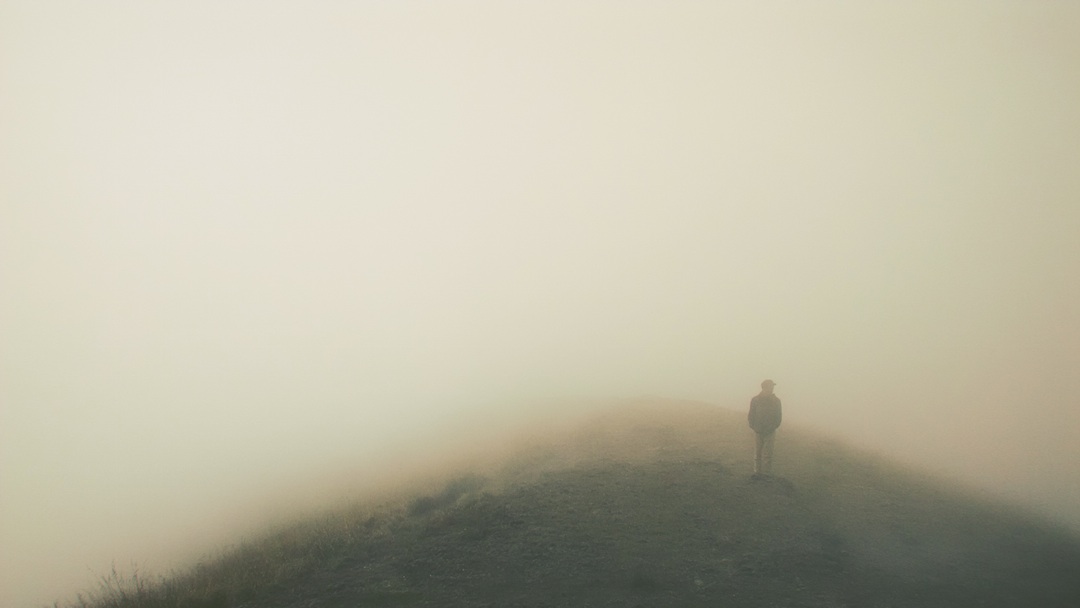
I found the river as I had never seen it before: the dam a mile downstream must have been opened, and the water level was low. A long land bridge stretched out into the deep, and I walked on its smooth stones. I sat down at the very end of it so that I could only see the water. It felt like I was sitting in the movement of time, watching the ages pass.
Later, I walked back towards the railroad tracks and found a small ring of stones and a few blackened logs. It gave me a strange feeling, in that quiet place, knowing that someone had spent the night there. Someone had a drink, probably on their own. For all I knew, they were still there, resting in the shadows, waiting for me to move on.
* * * * *
Last week I walked through the large hall at a conference held by the publisher of my latest book. I hovered around the sales area, hoping to be noticed, hoping someone would look up at me, begin to think very hard, and then, as complete and utter joy took over their countenance, they would recognize me, grab my arm, pull me over to their small circle of friends and gush about the wonderful book I had just written. Everyone would sheepishly pull a copy of the book from their bags, shrug their shoulders as if to say they could not help themselves, then ask me to sign their copy.
This never happened. Not even once.
If Frodo would have offered me the Ring of Power at this conference, I’m afraid to say I would probably have humbly accepted. I grew giddy at even the possibility of fame. I wanted to be important, recognized. Thankfully, there are no questing hobbits in Orlando offering rings of power.
In hindsight I smile with embarrassment and see myself for what I am: a small boy riding a loud tricycle on a wooden deck, making an endless amount of noise, crashing into anything that gets in my way, then looking up at my Father with a sheepish grin before riding on. As if that is all I have been created to do.
Make noise. Crash into things.
But when I listen, when I really listen, I realize my true purpose is not located within a hundred miles of the latest conference, the most popular speakers. When I listen, really listen, the same Father I’m too content to ride circles around beckons me to follow him down a much-neglected path. A path of silence. A path of hiddenness.
At the end of the path lies a river. I follow Him out to the end, and we sit there, watching the ages pass.
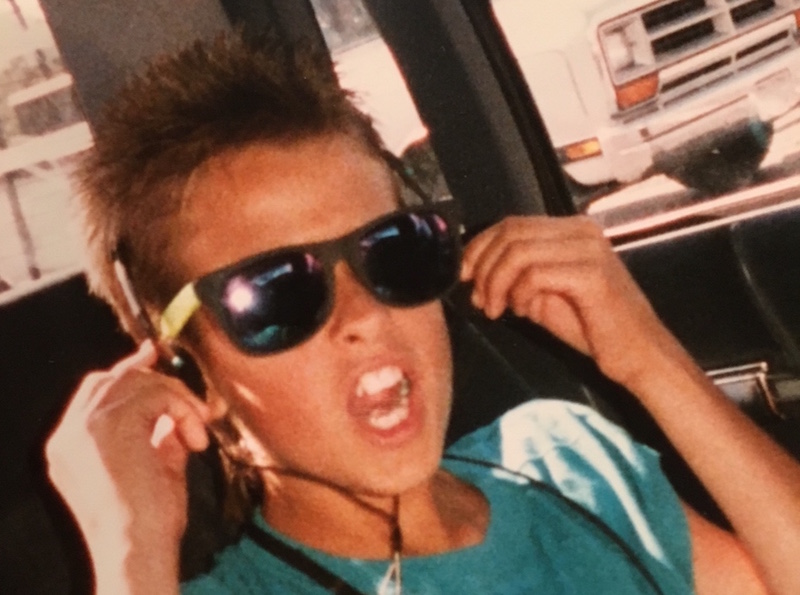
This is me rocking a spike, oversized glasses, and headphones that are either playing “You Can’t Touch This” or “Go West Young Man.” Also, that’s either an Ocean Pacific or Bugle Boys sleeveless T because, obviously, who covers up guns like that? But even then, I cared most about good stories.
Back in early June, I sent my literary agent a text. We were expecting to hear a final decision from the publisher on Tuesday. It was Wednesday. I felt like so much depended on this. So many years. So many words.
“Any news?” I asked in the text.
She wrote back.
“Call me.”
* * * * *
In the dog days of August, circa 1985, I was a skinny 8-year-old reading The Lion, the Witch, and the Wardrobe on the farmhouse porch, waving away the flies. Cows mooed in the background. The thing I hated the most was mowing the lawn, or anything else that interrupted my reading.
We had no air conditioning in that massive farmhouse, only a handful of huge box fans to move the warm air around, and on especially hot nights I’d sleep on the floor in front of one of them, the loud hum drowning out the world. I attached a sheet to the fan so that it blew up around me in a dome shape. It was like sleeping inside of a cloud.
I read under that dome with a flashlight until long into the night, the pages flapping back and forth in the gale force. It was like my own world, my own universe. There was the smell of the farm, the scratchiness of the carpet, the weariness of my eyes growing heavy. There was nothing else.
I devoured books in those days. I drank them down straight. The best of them left me in something like a buzzing stupor, and I wandered the farm for weeks after finishing, drifting through the beautiful trance they left me in. I sat by the creek, fishing, and my mind followed the water, meandered all the way to the sea.
I felt a tangible ache for Narnia. I opened every closet twice, quickly, and peered deep into the darkness, hoping to see snow-laden branches or hear the voice of a faun.
* * * * *
In college I dove deep into writing. It started out as journaling, moved into poetry, and occasionally stumbled into a few, halting efforts at novels. I spent afternoons beside the Yellow Breeches, a narrow stream that wound its way through our campus. I wrote in pencil then. Words and words and words in a little red notebook I found in the basement just the other day. The eroded red notebook was hiding between old yearbooks and containers holding floppy disks. The words are barely visible now, rubbed raw by all those years, all those moves.
I wrote the first paragraphs of at least twenty novels that never went any further (I wonder about all of those characters, where they went, what ever happened to them). I wrote a fair amount on three novels, got far enough to realize I didn’t know what to do with the middle part. There was something about that section of a story that always felt awkward, always trailed off into mumbled plot lines that never recovered. I became bored writing them and figured that meant someone would get bored reading them. I set them aside or threw them away.
I finished writing one novel in those days, very short. Very not-good. I might know where it is, but I’d rather not look at it. If I do find it, I think I’ll burn it ceremoniously. Maybe on a floating bier.
* * * * *
My writing road, like most people’s, has been long and winding. For the last 17 years I’ve experienced mostly rejections: I was rejected from at least five MFA programs (at least five – I’ve lost track), numerous literary journals, countless agents, and a series of publishers. I’ve kept many of those rejections in a file folder somewhere. I don’t know why. Maybe because they’re like scars? Maybe because I still want to prove them all wrong? Maybe because they make up this long, winding road I’ve traveled?
I broke into the publishing world seven years ago with the publication of a book I co-wrote, and that led to a lot of opportunities. In the following years, I self-published three books and co-wrote another fifteen, but my dream was still to have a publishing house publish my fiction. My own stories. Ever since I was 8 years old, under that sheet dome in the middle of the night, reading The Lion the Witch and the Wardrobe or A Wrinkle in Time, ever since then I’ve wanted nothing more than to make up stories, write them down, and have people read them.
Why?
I don’t know. I’ll have to think about that one. Maybe it’s because, to me, that’s the most real sort of magic I’ve ever encountered. I want to do it, too. I want to make that magic.
Four months ago, we started sending a book proposal for The Day the Angels Fell to publishers. That’s the book you all helped me self-publish through Kickstarter at the beginning of 2015. I think my agent sent the manuscript to 15 or 20 acquisitions editors. You can read about that process HERE and HERE. And that came with it’s fair share of rejections.
As one editor put it,
“Much as I like the voice, though, I’m afraid the story overall just doesn’t feel quite right for us.”
It was a long, hard wait, and towards the end I got impatient. I felt like the road I was on had leveled out and would never change. I was ready to move on with my life, chalk it up as another failure. But my agent, Ruth, kept encouraging me.
“Just give it a little more time,” she said.
So we did.
* * * * *
Then, a spark of light. An acquisitions editor liked my book. She loved it. She wanted her publishing house to take it on. We spent the better part of an afternoon talking with her, hearing her dreams for the book. I don’t think I said much. I was in shock. Someone who believed in my writing as much as I did? Someone from a publishing house who had fallen in love with something I had written?
“I’m taking this to my publication board next Tuesday,” she said. “And I’m hopeful that after that meeting, we will be making you an offer to acquire The Day the Angels Fell.”
* * * * *
Tuesday came and went. By Wednesday, I still hadn’t heard anything. I sent Ruth a text.
“Any news?”
She wrote back.
“Call me.”
I called her.
“I have good news,” she said. I sat there quietly as she told me the story.
Revell, a division of Baker Publishing Group, was offering me a three-book contract which included re-releasing The Day the Angels Fell, publishing the sequel, and publishing a third book of fiction, to be determined. I was shocked into silence. I couldn’t speak.
About ten minutes into describing the offer and what it meant, Ruth paused. She asked me a question.
“Are you happy with this?” There was uncertainty in her voice.
I laughed.
“Sorry, Ruth, I’m just in complete shock. I’m happier than you can imagine.”
* * * * *
Maile was listening outside the door the entire time. As soon as I hung up with Ruth, she came flying into the office.
“So?” she asked. “What did she say?”
I took a deep breath. I nodded.
“It’s good news. They’re making a three-book offer.”
She squealed.
“Are you serious?” she exclaimed. I told her the details. About that time, Ruth forwarded the offer letter to me.
“Here it is,” I told Maile. I started reading it to her, the opening note from the enthusiastic editor, Kelsey, who would now edit three of my novels. Here is one of the paragraphs:
When I initially read the first paragraph of The Day the Angels Fell, I was hooked. When one of our sales representatives read that same first chapter he emailed me immediately and said “this is something special.” Whether I’m reading what your fans are writing, listening to what my colleagues are saying, or am immersed in Sam Chambers’ world myself, I know that what you have here, in this book and in your writing overall, is exceptional.
The offer letter was so kind, so encouraging, so affirming of everything I’ve always tried to do as a story-teller. I got to the second paragraph of the offer letter when I was overcome with emotion. I sat down on the floor in the office, leaned my head up against the door frame, and sobbed.
“I don’t even know why I’m crying,” I finally said.
“You’ve been working towards this for years,” Maile said, laughing, still in disbelief. She sat down beside me. “This is it. You’ve finally done it.”
She took the computer from me and finished reading the letter out loud, and I sat there listening. It felt like she must be reading a letter written to someone else. I couldn’t believe this was for me.
* * * * *
I don’t think I ever would have gotten to this point without you, my kind and encouraging readers. For nearly seven years you’ve been reading my blog posts as well as the books I’ve co-written. Whether it’s the comments you’ve left, the emails you’ve sent, the reviews you’ve written, or the way you gave me overwhelming support when I self-published The Day the Angels Fell, your encouragement has propelled me forward on this journey.
There’s a long, exciting road ahead. We plan to release a hardback version (hardback!) of The Day the Angels Fell in the fall of 2017 (I know! That seems so far away!). It will be freshly edited and come with a brand new cover. For those of you who have been waiting for the sequel, The Edge of Over There, we’re planning to include the first few chapters of that book at the back of The Day the Angels Fell.
This is where I ask, once again, for your help. I cannot re-launch The Day the Angels Fell without your enthusiastic support. If you’re interested in being part of a fun group that will help me with the release of this book, sign up HERE. You’ll even receive a FREE ADVANCED COPY OF THE BOOK BEFORE IT RELEASES! In exchange, we’ll ask only two things: please review the book online, and help us spread the word during its release. You’ll also receive updates on our progress and provide important input on various things as they come up in the design and planning phase.
I’d love for you to continue to join me on this incredible ride. I promise I won’t email you more than once or twice a month. I won’t be sending these out in my normal newsletter, so if you can help with this book launch, please be sure to sign up HERE.
* * * * *
Now that the spike of excitement has begun to level off, I sit back and I wonder.
I wonder if I would have been in this precise spot, written this precise book, if I wouldn’t have received all of those stinging rejections through the years. I wonder if I would have met all the wonderful people I’ve met along the way if this opportunity would have fallen into my lap years ago. I wonder if we can ever write the stories we’re supposed to write without those times of deep sadness and disappointment, rejection and loneliness.
I hope you’ll keep walking your path. I hope you won’t give up. If I can do it, you can do it. I am no writing prodigy, no natural born success. I am simply someone who insisted on putting one foot in front of the other for a very long time. Someone who, with a lot of help from my writing community, refused to cave to the voices that told me I wasn’t good enough.
I wonder something else, too. I wonder what that little boy under the fan-and-sheet dome would think if he could have read The Day the Angels Fell. I wonder what dreams he would have had after reading it, what adventures he would have taken in the creek behind the church building. I wonder what he would have thought, looking up into the oak tree, the one struck by lightning when I was ten, the one that inspired the story in the first place.
Maybe somewhere, that will happen. Maybe a kid (or an adult) will stay up late into the night reading about Samuel Chambers. Maybe this book, this story, will somehow become tangled up in their life the way all those wonderful books I’ve read have become tangled up in my own.
A writer can hope.
Remember, please sign up HERE to join the launch team and receive your free advance reader copy next spring/summer. For more frequent updates and other random stuff, you can “like” my Facebook page HERE. And whatever your current dream, keep going!
I drive the truck faster, weaving past cars on the city streets. I nearly pull out in front of someone and hit my brakes. We are 35 minutes from the birth center, and Maile’s labor has started. I stop at a red light just as another contraction builds inside her.
This is our sixth child. I know in an intimate way the process my wife’s body goes through when the baby has decided to come. For example: Maile hums through her contractions. It’s quiet at first, barely a breath, but as the contractions get stronger and closer together her voice swells into a loud kind of almost-singing. It’s a prehistoric chant, something in her DNA. But as we sit at the red light, and the contraction swells, that particular pressure transforms her humming into a guttural grunt. I also know what that means.
“Do you have to push?” I ask, looking over at her. This is not a good time to push. We are too far away.
Her lips are pursed and white around the edges. She’s still exhaling the remnants of the last contraction. She nods.
“I wanted to that time.”
The traffic is slow. We hit every light red. Another contraction comes in, tides back out. Another. All those people we pass in their cars, living their normal evenings. Going out to eat. Going home from work. Talking with friends on their phones. Can’t they see there is a miracle in our truck, barely waiting to break forth?
“Play that song again,” Maile whispers. The song is “Born” by Over the Rhine.
I was born to laugh I learned to laugh though my tears I was born to love I’m gonna learn to love without fear
“You should probably drive faster,” she says in a flat, calm voice, but there is a trace of urgency, like a small, red thread on a white carpet.
Pour me a glass of wine Talk deep into the night Who knows what we’ll find
I look both ways and pull hesitantly through the red light, then drive the rest of the highway in the center lane, my four-ways flashing. We are 20 minutes from the birth center. But we are finally out of the city. We are fleeing into the country shadows, the sun setting behind us.
* * * * *
This I’ve also seen: when Maile begins labor, when the contractions start to come closer together, she withdraws inside of herself. There is a labyrinth she follows to the deepest parts, and when she’s there, when she’s in active labor, I can’t find her anymore. She wouldn’t recognize me if we passed in the street.
Intuition, deja-vu The Holy Ghost haunting you Whatever you got I don’t mind
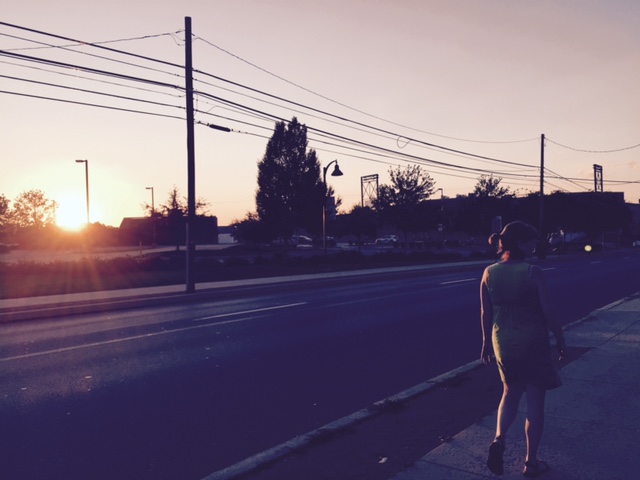
At 7:30pm on Saturday night, one hour before we raced down the turn lane of Route 30, she said she wanted to go for a walk, so she and I set out along with Leo and Cade. We went west on James and turned north on Prince and as we walked down the long hill, the sun was setting off to our left, its light dripping into a vacant parking lot. A cool breeze swept by with the traffic. The air felt lighter somehow, as if August had persuaded October to come and take over the evening duties.
We turned east onto Frederick Street. Cade walked ahead. Leo said hello to a little girl playing on the sidewalk. Maile slowed down. She breathed deep, and I could see it beginning to happen: the withdrawal, the searching. She was looking for a way into the labyrinth.
“You okay?” I asked her. There was some fear in her eyes.
“That was a strong one,” she said, walking with one hand supporting her back. “I’m scared. You’re going to have to help me with this baby.”
I nodded quietly.
“You got it, babe,” I said. “One at a time.”
We walked all the way to Duke, turned south, then doubled back on Prince towards home. A homeless man pointed at her stomach.
“I saw another one of you over on Lime,” he said, practically shouting. Indescribable joy was etched on his face. We smiled and nodded.
“Over on Lime!” he insisted. “Pregnant ladies everywhere.” Then he turned and walked away.
We got to the last crosswalk. Soon we would be home. The sign was orange, don’t walk. Maile bent over then arched her back, breathed deep again, hummed. That was the first hum I’d heard. The contractions were serious. She stood up, looked like she might throw up. Her eyes were far away. She was entering the labyrinth.
“Maybe we should head into the birth center,” I said, not expecting her to take me up on the suggestion. She doesn’t like to go in until it’s time. But she surprised me, there on the corner of Queen and James, just opposite the Greek restaurant we love. She didn’t even make eye contact with me. Only nodded.
“That’s a good idea. We should probably hurry a little bit.”
I wondered what it would be like to deliver a baby in the Suburban. I turned to Cade.
“Hey, buddy,” I said. “Why don’t you run ahead and tell Mimi we need to go? Now. Tell her we need to get moving, fast.”
Cade stared at his phone.
“Hey, you,” I said, half laughing. “Get moving.”
“Dad,” he said, looking slightly embarrassed. “I’ve got an awesome Pokemon on the line.”
“What?” I exclaimed. He paused, swiped his fingers up and down his phone, then took off in a sprint.
“I got him!” he shouted joyfully over his shoulder. Maile and I shook our heads. We both laughed.
Put your elbows on the table I’ll listen long as I am able There’s nowhere I’d rather be
That’s when we drove out of the city. That’s when I weaved in and out of city traffic. That’s when Maile started to feel an urge to push.
* * * * *
We slip away from the setting sun, now 15 minutes from the birth center. With every contraction I ask her if she needs to push. Sometimes she says yes, sometimes no.
These are the hills where I grew up, the sprawling, green fields with July corn as tall as a man. These are the summer nights I cut my teeth on. This is the land inside me, the place I will someday go home to when my life is over, my far, green country. I am not afraid of helping my wife deliver a baby in the truck, if I have to – not with those fields as witnesses. It almost seems fitting, that a child of mine would spring into being in the midst of the corn and the tobacco, the trees and the fireflies, the quiet, curving roads and the distant storm clouds.
But we make it. There will be no Suburban birth. We pull into the birth center and the nurse lets us in after hours and we go into the same room where Leo was born. The same room. The same bed, the same tub. I remember when Leo was born. I remember texting everyone the news, including our friend Alise who had recently had a stillborn son. I wanted her to know we were thinking of her. There is such joy and sorrow as I get older. Joy inextricably mixed with sorrow. They’re a tangled mess.
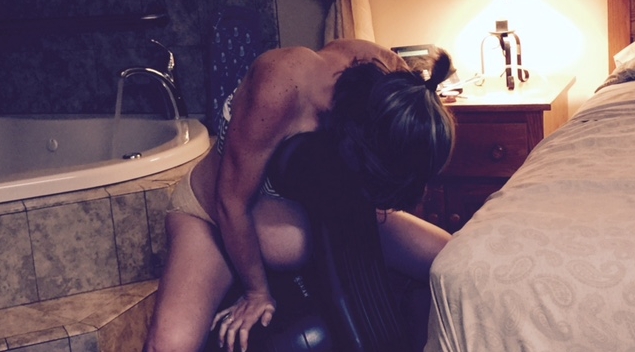
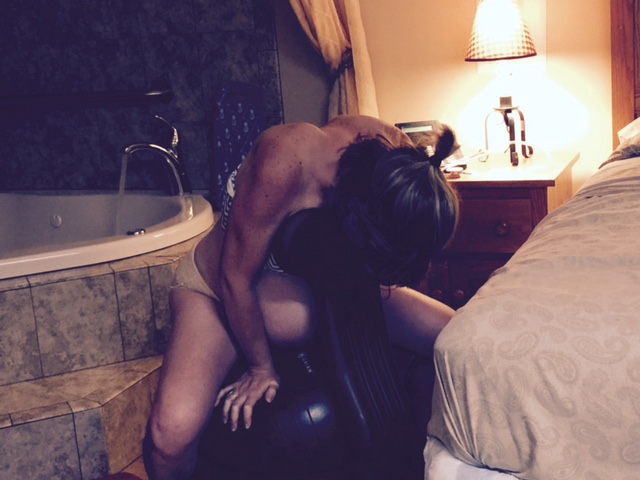
The contractions come closer together now, and Maile is far away. She is lost in the labyrinth, trying to find her way to the elusive center. She hums through contractions. She strips down and climbs into the warm bath, facing the corner, squatting down as far as she can, her arms out in front of her. In yoga, it is close to the child’s pose.
She whispers prayers into the water when the pain becomes unbearable. Her breath scatters shallow ripples over the thin surface. Or maybe it is the Spirit. She wants me to push deep into her back, and I press with the heels of my hands. I feel her spine and the deep muscles of her lower back, her ribs.
Bone from my bone. Flesh from my flesh.
She presses herself down until I think she might melt into the water or split in two. She wants help out of the tub, so we move her to the bed. She hums through the contractions and the humming turns louder and louder, rises up over itself until she sounds like a muezzin calling us all to prayer. Her powerful voice gives me chills. She moans and cries out and pushes.
Secret fears, the supernatural Thank God for this new laughter Thank God the joke’s on me We’ve seen the landfill rainbow We’ve seen the junkyard of love Baby it’s no place for you and me
The way a child comes into being from a woman is the birth of a galaxy. It is searing pain and numbing joy; it will break you into interstellar pieces. A bundle of powder-coated limbs slips and jumbles its way into the world, still attached to the source. A squirming heap of carbon and water covered in blood and a ghostly vernix. Believe in miracles. They are born every day, attached to their mothers.
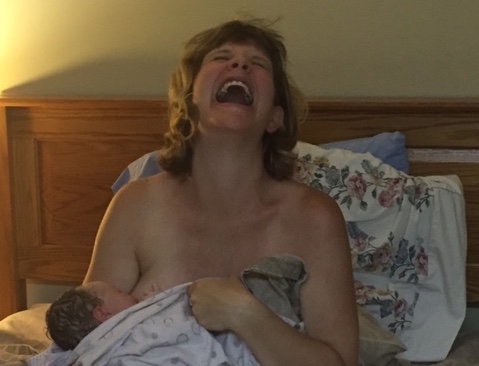
When Maile realizes the baby is a girl, she raises her face towards the ceiling. Her smile is like those clear shafts of light that break through storm clouds.
I was born to laugh I learned to laugh through my tears I was born to love I’m gonna learn to love without fear
“What a gift,” she kept whispering over and over again. “What a gift.”
Later, in the quiet, the labyrinth far behind (or perhaps all around, with us finally residing in the perfect center), we name her Poppy Lynne Louella.
Poppy for the ruby red fields in England we often hiked through, gazed at.
‘you okay?’ i ask for the seventeenth time
that day and you humor me, smile that same
old smile, as if the whole world isn’t growing
inside you. ‘right as rain,’ you say, resigned to
the fact that this baby is not coming today
maybe not tomorrow. forty weeks may
take a particular amount of time to pass but
after that, each day
each twenty-four hours
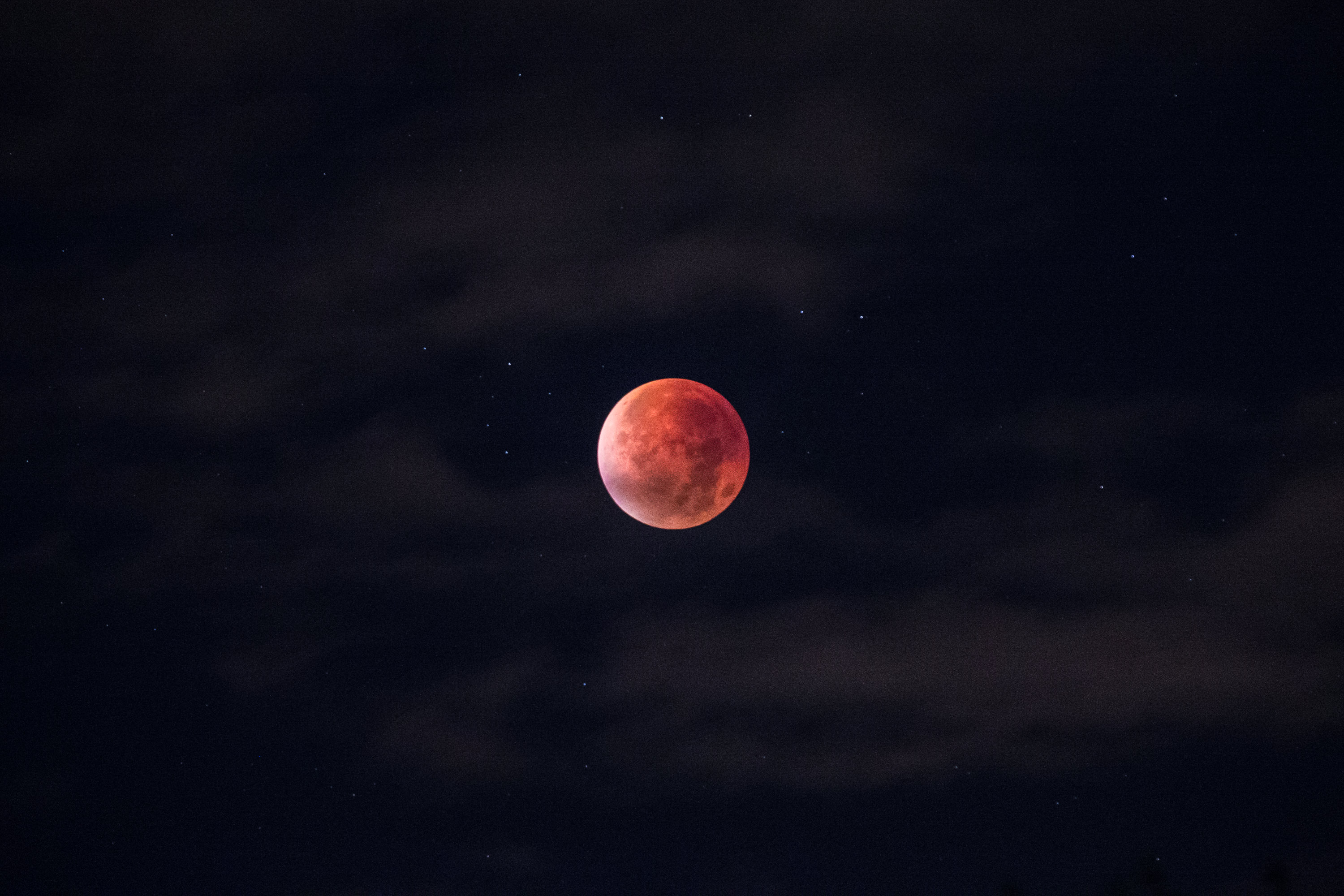
passes like an eclipse: long and slow and best
not to look directly at it.
you sit back in your chair and you drink from your
mug and i marvel at the woman you have
become. this, your sixth childbirth, and yet you
are a pool of still water. we both know
what is coming, the gradual increase, the pinnacle,
the parting of flesh, the eruption of life, and yet
there you sit, letting your raspberry tea
soak another minute, or making a list of things
to do tomorrow, a list of people to invite over
next week
just in case.
you bear the burden of knowing
it is late. we should both be sleeping. but we read.
you, the long ago faraway adventures of Taran, and
I read The Memory of Old Jack.
He is four miles and sixty-four years away,
in the time when he had music in him and he was light.
and i think, ‘that’s it,’ and i think,
‘yes.’ you have music in you, the music of fragile bones
swimming through ancient waters waiting to break, the
preposterous music of two thumping rhythms
in one body, the music of pressure
loosening hips and joints and tendons like the plucking
of a bass. There is a symphony
inside you, playing its chaotic warmup, waiting for some
conductor to raise the baton and bring
it all into sync.
Though he is at the end now, looking back at the beginning,
the pleasure of that work
and what it anticipated
comes to him again and fills his mind.
i turn out the lights and walk the dark house. soon, there
will be another one
here
among us. i check on everyone: the boy at the back
of the house, the girls upstairs, the boy, also upstairs,
and the smallest lion, asleep on his back, mouth open,
curls twisting over ears. it is inconceivable, the lives.
i slip back into bed. your foot
grazes mine, moves on, then strays back against me. skin
touching skin. you are curled into
position like a fern. ‘rest,’ i think. ‘rest.’
There is the tedious movement of the last few days of a pregnancy. The summer days well up like drips from a faucet, slowly gathering mass, then hanging there much longer than you thought possible. Maile’s stomach drops as the baby seeks out more space. At night she reaches over and grabs my hand, places it on her stomach in a particular spot, like the placing of a stethoscope. Like someone divining water. She doesn’t even say anything, and we sit there quietly, her eyes closed, my hand feeling the heel, the bottom, the bulging movements.
A sharp kick. She glances at me. Her eyes ask, “Did you feel that?”
I smile. After seventeen years you can have an entire conversation without saying a word. She rolls onto her side. I start reading again. I leave my hand on her stomach until she falls asleep.
* * * * *
The older I get, the more tempered my celebrations. I don’t know if this is good or not. It simply is.
When Cade was born thirteen summers ago, in a small hospital thirty miles outside of London, I basked in the joy of having a son. I could barely comprehend the wonder. My world revolved around the three of us, my small family, my insular world. There was no one else.
Now, five children later, my joy is touched by sadness. When our child is born, I will cry happy tears, yes. But I will also remember my friend’s son Eliot who was not born into life but into death. I will think of our friends for whom another month has come and gone without the pregnancy they so desperately want. I will think of my cousin’s child, born with complications.
I think the older we get, the more mixed up our grief and joy become. I supposed I could sit there, try to pull away all the beads of oil from the water. But there it is. Instead of separating it, I will swirl it around, watch the colors spread.
* * * * *
Sammy pushes on Maile’s stomach.
“Careful, you’ll break her waters!” Maile’s mom says, and we smile. Sammy’s intrigue passes from Maile’s belly to his own. He explores his belly button.
“Can boys break their waters?” he asks, deadly serious. We laugh until our sides hurt. Sam is rather pleased with himself.
* * * * *
Maybe we’re not meant to separate the joy from the sorrow. During Jesus’ long monologue in John about love, he interrupts himself to say that if we remain in his love, our joy will be full. Not pure joy. Not unadulterated joy. Full.
Which begs the question, “Full of what?”
Maybe full joy is a joy full of sorrow and grief and happiness and satisfaction and love and everything else, whatever it takes. Maybe full joy is like the movement of a baby still inside or the movement of summer days just before the labor begins.
One of the greatest temptations faced by American Christians today comes in the form of voices demanding that we, first and foremost, protect ourselves. In response to the very real dangers present in the world, these voices encourage, no, demand, that we withdraw, face inward, and put the well-being of ourselves and our families first. The voices promise a way to safety.
We have already, during the last few decades, successfully used the suburbs to separate ourselves from the poor. We have built highways that allow us to avoid the wretched cities, and we relocate refugees deep into those tangled streets, maintaining the illusion that we are all the same, that nothing has changed. We employ the police to sweep away the homeless from our neighborhoods and parks. We look away. We close our eyes. We sigh with relief.
He unrolled the scroll and found the place where it was written: ‘The Spirit of the Lord is upon me, because he has anointed me to bring good news to the poor. He has sent me to proclaim release to the captives and recovery of sight to the blind, to let the oppressed go free, to proclaim the year of the Lord’s favor.’
Jesus found that place in the scroll and proclaimed it to those who were listening. What are we proclaiming? What are we believing for? Safety? Security? A final and permanent separation from anyone or anything that might cause us harm?
At what cost?
* * * * *
The safe isolation we crave is not the way of Christ.
To make compassion the bottom line of life, to be open and vulnerable to others, to make community life the focus, and to let prayer be the breath of your life…that requires a willingness to tear down the countless walls that we have erected between ourselves and others in order to maintain our safe isolation.
Henri Nouwen
In our country we elevate anything that illustrates toughness and self-sufficiency. The sports we worship in the new cathedrals we call stadiums squash the weak and the small and celebrate strength and domination. We have left little room for compassion, especially a compassion that seems impractical or dangerous.
Yet we are being called back to compassion, the kind of compassion shown by the Good Samaritan to the man dying on the side of the road. The kind of compassion shown by Christ’s disciples, men and women willing to follow his leading into dangerous, dark places. The kind of compassion shown by Christ who chose not to retaliate, not to protect himself, not to escape, but to spread wide his arms and take us all in.
When our first thoughts are for the safety of ourselves and our families, our last thoughts are of Christ.