It Wasn’t My Writing Being Rejected – It Was Me

6527030185

This week’s #OvercomeRejection post is brought to you by Amy Young. Please submit your story about how you overcame rejection to smucker.shawn@gmail.com.

* * * * *

Um, Amy, the encouragement is too long.

It was a Tuesday morning and my boss sheepishly looked down as he delivered a message sent from higher up. It was in reference to a weekly encouragement I added to the bottom of a business email sent out to teachers spread around China.

Can you come in here, Amy? He asked the following Tuesday. You used too much scripture this week.

I inhaled slowly, knowing he was the messenger and could hear the absurdity of it himself. Slowly I exhaled.

By the third week I was at my wits end. You’re connecting too much.

It was never spoken, but we both knew no matter how much I changed it, he’d be reprimanded as my supervisor for not “keeping me in line” better.

I was aiming at a moving target. Having made the encouraging word shorter, the problem moved to scripture. Reducing the amount of scripture, I was connecting too much. What was the common thread in all three? Me. After about 18 months of writing the weekly messages, I pulled the plug on the spot, knowing it wasn’t my writing that was being rejected. It was me.

Feeling helpless, my boss made several suggestions. “You could …” But each suggestion seemed more about assuaging him and the ways in which he had to desert me because we both wearied of the weekly communication from headquarters and these conversations, which seemed unlikely to change.

To spare us both, I said, “It’s finished.”

This wasn’t my first rejection. Mercy no. But it’s the rejection I remember. How do you change who you are? Too long. OK, I’ll shorten it. Not the best fit. OK, I’ll look for another home. Even comments like your platform isn’t large enough sting but understanding money is on the line, as much as I wish it weren’t true, they’re right, I don’t have a large platform.

I didn’t know it then, but that moment in his office became a stone of remembrance, marking the beginning of the long and slow goodbye with a job I had loved and deeply identified with. A job I was good at and where I experienced success and satisfaction, even joy.

I went radio silent on my writing. Keeping up only work email, letters, and newsletters to folks back in the US praying for me.

Rejection hurts and to move too quickly to salve the pain seemed like an act of false peace.  I didn’t want to wallow in it, as many didn’t even know I’d been rejected. But I also didn’t want to pretend to myself and those near me it hadn’t happened. I sought holy space to honor the rejection and, paradoxically, the ways I could now more fully identify with Christ and his rejection and betrayal.

More than a year later a friend said, “You should write a blog.” And though others had suggested it before (one of them being my boss on that day) the timing was right. Not all rejections end up being the birthing pains to something good and a piece of me revolts at this tidy, happy ending.

But in truth, the tidy happy ending of the launch of my public writing has also brought a long hall containing more doors that have the potential for rejection than I ever imagined. Paradoxically, they have also held the promise of more joy and connection than I could have anticipated. And so, like you, I keep showing up each day, not sure if the door before me will open or close.

Amy Young is readjusting to messy middle of life in the US after more than twenty years in China and the recent death of her dad. When she first moved to China she knew three Chinese words: hello, thank you and watermelon. Often the only words really needed in life. She is known to jump in without all the facts, and blogs regularly at messymiddle.com and tweets as @amyinbj and is the most unbeautiful pinner Pinterest has ever seen (but she’s having fun!). Want a free book? Sign up for her quarterly newsletter and Signs of Eden Regained is YOURS.

* * * * *

Previous installments of #OvercomeRejection:
Permission To Try Again
Don’t Feed the Bear

When Someone Rents a Billboard To Tell The World You’re a Terrible Writer

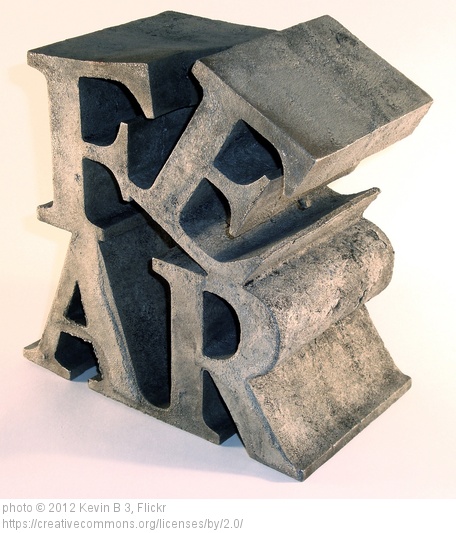
8290599649I shared my greatest fear here at the blog the other day (the one about publishing my fiction, not the one about staring down another two years of dirty diapers). I’ve spent a lot of time thinking through what it is about that particular thing that makes me so scared.

At first I thought the main fear is that it won’t be any good, which is kind of a silly thing to be afraid of. If it’s not very good, then a few of you will read it and think, Hmm, that’s not very good, and then you’ll get on with your life. You probably won’t think (that much) less of me simply because I wrote a terrible novel that didn’t deliver. You (probably) won’t track me down and demand your $10 back. You won’t take out billboards in major cities and have them say, “Shawn Smucker is a terrible writer.”

That is not a likely outcome. It’s nothing to be afraid of. (Besides, if you rented billboards, at least my blog traffic would spike.)

I’m also fairly certain that at least some of you will enjoy it, which will be nice. Some of you might even enjoy it enough to talk with me about it, or share it with other people. That seems like a reasonable outcome to expect.

That doesn’t sound like something to be afraid of.

There’s a small chance that most of you will enjoy the story quite a bit, in which case you will tell your friends about it and they will enjoy it, too. You’ll say mostly kind things about it, and you might even like one or two of the characters. That sounds like a fun scenario.

And not in the least bit scary.

None of those three outcomes sound scary to me. Not at all, in fact, now that I’ve written them down, where I can see them. When you throw light on the shadows, it’s amazing how quickly they disappear.

But it leaves me thinking, if those three outcomes aren’t what I’m scared of, then what am I actually scared of? What fear lies at the foundation of my hesitance to publish a book of fiction? What is really keeping me from doing that?

It didn’t take me long to find out the real reason for my fear: I’m worried that it won’t be exceptional. I’m worried that by releasing this book, I’ll be confronted with my ordinariness. This, I think, is what scares me the most as a writer.

But I’m realizing there is something I fear more than being ordinary.

I’m extremely frightened of not writing fiction. I’m scared of what not sharing my work will do to me, my creativity, and my general growth as a writer and a person. I feel that I have a few major life lessons to learn on the other side of publishing my stories, things to learn about myself and the world.

The last thing I want to do is carry untold stories to my grave. Even if, told, they are only read by a few hundred people.

That’s what I’m afraid of.

So I ask again, “What are you afraid of?”

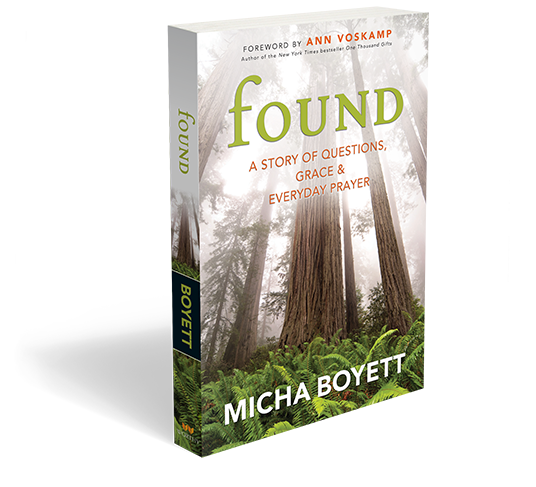
Found: A Story of Questions, Grace & Everyday Prayer (#100Words)

bookLG-found2Today’s another installment in #100Words, the first 100 (or so) words of a book I’d like you to know about. Some of these books I’ve read, some I haven’t. Some I’ve received advanced reader copies, others I haven’t. Hopefully getting a quick glimpse into a book will motivate you to check it out a little further.

Today’s book is Micha Boyett’s beautifully written book, Found: A Story of Questions, Grace & Everyday Prayer. Here are the first #100Words:

I

Late November; Friday before Advent
   I zip my fleece and turn back from the doorway of our barely-lived-in bottom-floor apartment, my bag already slipping off my shoulder.
   “And don’t let him run down the sidewalk. Cars just come out of garages. They don’t even look…”
   “I know, babe, I know.” Chris is holding our eighteen-month-old son, August. He grins. I’ve already given my husband a ten-minute speech on our kid’s needs and the dangers of diaper rash. Now I’m just being ridiculous.
   “Okay.” I look in Chris’s eyes and breathe deep.
   “We’re good, honey.”
   “Yep. Okay. Yes.” I kiss August…
Check out Micha’s book HERE.
Check out her blog HERE.

Natalie Merchant on the Creative Life

I love paying attention to how other creative people operate, especially those who have created things I admire. Maile and I had the great fortune of going to see Natalie Merchant perform a year or two ago, and it’s my favorite concert I’ve ever been to.

Here’s how she answered the question, How did becoming a parent change your songwriting process? Did that make it easier or harder?

My technique was completely altered by motherhood. I don’t have huge expanses of creative time like I used to have. I would put myself in a self-induced trance for days, and it was blissful — just alpha waves humming. It was great. Now I feel like I have to make appointments with my muse to meet at 3 a.m. So much of this new record was written during stolen moments in the middle of the night, whenever I could get away. During the day, when I’m doing laundry or making dinner, I’m not humming melodies or writing down lines. I have to sit and focus on the process, but finding the time to do it is so difficult. I blew so much time before I became a mother. I could have written novels, with all the time I used to have. When I talk to friends who have creative lives and children, we commiserate about all the time we wasted in our youth. Now time is the most precious thing in my life.

To read her entire interview over at Salon, click HERE.

Permission To Try Again (An #OvercomeRejection Post)

2230010178Today we continue a series here at the blog, #OvercomeRejection, a post written by someone who has overcome rejection in one form or another.

Today’s post is by Lisa Betz. Please feel free to email guest posts to me if you’d like to share your rejection with the world (aka my small blog readership).

For years I dabbled at writing. A few scripts here, an article there. Every now and then I would dust of my historical novel manuscripts and toy with it, until some other project came along and took priority. Two years ago I decided to buckle down and actually finish the thing. I plowed ahead, month after month, until the manuscript was finished. 106,000 words of polished—and hopefully readable—prose.

I was proud of my masterpiece, especially when friends and family claimed they loved it, but I was not so naive as to think it was ready for an agent, so I sent it off (with some trepidation) for a paid critique.

A few weeks later the lengthy document was returned. The critique was professional, thorough and filled with encouraging comments, but there was no escaping the verdict: The novel did not work.

I was angry—how could she say such unkind things about my hero? I was shaken—I knew my plot needed work, but was it really that bad? I was crushed—all those months of writing, wasted. Maybe I wasn’t cut out to be a novelist.

Or maybe I just needed to try again.

After a few days of grieving, grumbling and eating more chocolate than was good for me, I sat down and gave myself permission to start over. I would keep the basic premise, the main characters and the setting, but throw out everything else.

This time I took a month to think through the plot before plunging into the writing. I filled the dining room table with sticky notes and a notebook with possible scenarios. When I was finally satisfied with the plot, I began writing.

Half-way along, I realized that I was still holding too tightly to the previous version, so I threw out several months of work and rewrote entire sections. It was the decision.

A year later I am almost finished with a new first draft. In a few months I will be ready to submit it for a critique. Hopefully I have learned from my mistakes and this time the feedback will involve tweaking rather than wholesale revision, but whatever the verdict I know I can start over, make it better, and keep writing.

Because I am a writer.

For more on Lisa and her writing, check out my blog at lisaebetz.com

Stop Putting Things Off

Anne Lamott’s words on her Facebook page so completely resonated with me, especially after my post earlier today about my greatest fear. Here’s a small part of what she wrote:

It’s time to get serious about joy and fulfillment, work on our books, songs, dances, gardens. But perfectionism is always lurking nearby, like the demonic prowling lion in the Old Testament, waiting to pounce. It will convince you that your work-in-progress is not great, and that you may never get published. (Wait, forget the prowling satanic lion–your parents, living or dead, almost just as loudly either way, and your aunt Beth, and your passive-aggressive friends, whom we all think you should ditch, are going to ask, “Oh, you’re writing again? That’s nice. Do you have an agent?”)

Oh my God, what if you wake up some day, and you’re 65, or 75, and you never got your memoir or novel written; or you didn’t go swimming in warm pools and oceans all those years because your thighs were jiggly and you had a nice big comfortable tummy; or you were just so strung out on perfectionism and people-pleasing that you forgot to have a big juicy creative life, of imagination and radical silliness and staring off into space like when you were a kid? It’s going to break your heart. Don’t let this happen.

Read all of it HERE.

What are we waiting for?

Actually, I’m not waiting anymore. What are you waiting for?