A Net for Catching Days

Routines and schedules are important.

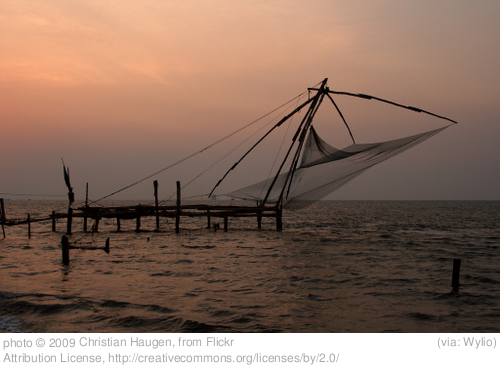
Annie Dillard calls them a net for catching days.

Without some sort of routine, you’re losing time.

* * * * *

Stephen King says, “My own schedule is pretty clear-cut…once I start work on a project, I don’t stop and I don’t slow down unless I absolutely have to. If I don’t write every day, the characters begin to stale off in my mind – they begin to seem like characters instead of real people. The tale’s narrative cutting edge starts to rust and I begin to lose my hold on the story’s plot and pace.”

But he’s a professional writer, we protest. He has the time to do this. Yet he did this even before he was a professional writer, when he had a “real” job and rent to pay and Ramen noodles to buy.

I have a friend, Bryan Allain, who works long hours at a normal job. Yet he’s an incredibly successful blogger, and blogging coach. How does he do it? He gets up every morning, early, before breakfast, and writes.

Sometimes this is what it takes.

* * * * *

Wait for the muse, if you dare. And watch the weeks slip by. Be witness to another year in which your writing goals get written over on to yet another New Year’s resolution list.

Or commit. Hold yourself accountable (or better yet, be accountable to someone else). Create a routine. Don’t write 60,000 words. Write 1000 words a day, for 60 days.

And watch the days begin snagging in your net. Watch the words begin to fill the pages. Next time, when the muse shows up, you’ll be ready.

Living in the Country, and Pluto, De-Planetized

On Wednesday afternoon I worked alongside Ken Mueller at Square One Coffee in Lancaster. Sometimes I love being in the city,  especially in the winter: everything is closer, people seem nicer (the cold gives everyone an excuse to hurry past one another – you can assume, true or not, that if the weather was warm you would stop and chat), and the street lights wink on, extending these short days when the sun sets so early.

Winter in the country feels very quiet, and dark, and removed from real life. Sort of like Pluto after it was de-planetized.

* * * * *

I’ve never lived in a city, but I think I would like to, some day.

* * * * *

Of course I would miss having a garden. And the kids would miss having a huge outdoor area to run around in, usually unattended. I love the peace and quiet and stillness. But, if we lived in the city, we could walk to places. We could get rid of one of our vehicles. We could have a favorite cafe and order in.

Would I miss the country more than I would enjoy the city? I don’t know.

Where do you live? What do you like the most about it?

Victoria Station, and Getting Pooped on by a Pigeon

The first time Ben and Shar took Maile and I to visit Victoria Station, we were standing around trying to get traffic counts to use in our business plan. Problem was, there were too many people to count.

Maile also got pooped on by a pigeon. I had gone to the bathroom and when I came back she was standing in the middle of the concourse, arms outspread, shaking her head back and forth in disbelief. She even had a little on her face.

* * * * *

The entire station smells like baking bread or coffee or sewage, depending on your proximity to various food stands and restrooms dotted throughout. There are five Starbucks in Victoria Station. This picture is of the small half of the station.

And 10 million travelers pass through Victoria Station…each month. It was the Heathrow Airport of train stations.

Yet somehow Ben managed to persuade the management team at Network Rail that two 20-somethings could open and operate an Auntie Anne’s Soft Pretzel stand in the middle of one of their busiest stations.

* * * * *

When our shipment of pretzel stuff arrived from the States, we couldn’t find a bay large enough to give the truck access. So we persuaded the driver to park on the street – I think one of us even promised we would pay the ticket if he got one. Then came the tedious process of unloading: pallet after pallet after pallet was lowered to the ground floor, (slightly illegally) carted through busy Victoria Station (after midnight it is still a bustling place), and deposited in an area they gave us for storage. Every time we rolled past the station manager he would shake his head disapprovingly, but we never stopped to discuss.

We didn’t know it at the time, but those pallets of flour would become our beds in the coming weeks, when 30 consecutive days of working 5am – midnight began taking their toll.

30 pallets in all, each weighing hundreds of pounds. We were exhausted. And exhilarated. And still waiting for all of our final permits.

* * * * *

Sometime in April, 2002, the store was completed. Everything was ready…except our general contractor had messed up on getting us access to water.  So each morning we took the train into the city, hoping that would be the day. And each day we discovered that the water had not been connected. Finally they identified a blue water pipe traversing the ceiling of the station, about forty feet above our store. We bargained for access. We promised to work on connecting to that pipe during off hours (from 1am to 5am). Each day we got closer.

The opening was imminent. We temporarily moved into one of Ben’s friend’s flats in the city, to shorten the commute during our opening. Yet each day, when we arrived, the water still hadn’t been connected.

I distinctly remember the feelings, the emotions, of those days. Frustration that forty feet separated us from a long-awaited opening. Excitement that we were so close. Dread, that it would fail.

* * * * *

(to read the next installment, “The First Pretzel,” click HERE

(to read the first installment about my life in England, click HERE)

Meditation, Postmodernism and Stories: 6 Questions

Do you feel free to ask questions about the meaning of life, about where to find truth? Or has your quest for spirituality or faith been squelched by those around you who seem to have answers to all the questions?

The most exciting thing for me about our upcoming experience, “8 Weeks in the Red,” is the freedom to ask questions. Here are some that came up during our last planning meeting:

– What are churches currently doing that stunts our quest for spiritual growth? How can our Sunday morning experience change those things?
– Why do Muslims, Buddhists and eastern religions have such a good grasp on practices like meditation and prayer, while most Christians never or rarely practice them outside of crisis points?
– What is the connection between my body and my spirit? Can the physical posture of my body influence the position of my heart?
– How is our attitude toward postmodernism altered when we look at it as a world view? What if we look at it as an era in world history? What if we view it as a religion?
– At what point in the church’s history did the Christian worship experience become all about singing?
– Why did Jesus always use stories when he spoke?

Feel free to give your thoughts on any of these questions in the comments section below. Or go to The Red and start up a discussion on our Facebook discussion page. Or come on out to our first meeting on January 9th and help us further the conversation on faith and spirituality.

Who Cares What the Professionals Think?

In 1965 Coca-Cola commissioned someone to write a Christmas special that they would pay for, promote, and then use to advertise their product during the holiday season. The special was put together in record time and submitted to CBS in time for Christmas, 1965.

But the professional TV people at CBS didn’t like it. They didn’t like the amateur voices, they thought the pace was too slow and they didn’t like the portion where one of the characters read from the King James Bible.  The homely, jazzy piano music catered to neither children nor adults. And the message was too traditional, didn’t line up with the commercial feel they were trying to generate.

But it was too late. They had already committed to Coca-Cola that they would have a Christmas special for them. They aired it.

“A Charlie Brown Christmas” went on to become one of the most popular Christmas specials of all time, garnering a 50 on the overnight Neilsen rating – 50% of the households in the US that owned a television tuned in to watch. The show won an Emmy and a Peabody award.

It’s time for you to stop caring what the “professionals” think.

How Writing is Giving Yourself Permission to Plant An Imperfect Garden

Do you ever decide not to do something because you think it could never turn out as well as you imagine?

* * * * *

“Perfectionism is the voice of the oppressor, the enemy of the people. It will keep you cramped and insane your whole life, and it is the main obstacle between you and a shitty first draft. I think perfectionism is based on the obsessive belief that if you run carefully enough, hitting each stepping-stone just right, you won’t have to die. The truth is that you will die anyway and that a lot of people who aren’t even looking at their feet are going to do a whole lot better than you, and have a lot more fun while they’re doing it.” – Anne Lamott, Bird By Bird

* * * * *

I remember staring at the garden plot in our yard last April. There is no way this is going to turn out well, I thought to myself, thinking of all the plants I had killed in my lifetime, just by looking at them. I wanted the garden to be perfect; I didn’t want a garden, I wanted Eden. I wanted tomatoes the size of bowling balls. I would pick every.single.weed. I would build a fence around my garden. The garden would be so perfect that we would live off it for the summer, spending no money on food.

I turned my back and walked away. Too much pressure.

* * * * *

Later, I decided to go ahead with it anyway. The broccoli got eaten by little yellow and black worms (the devils!), just before it was ready to be harvested. Most of the spinach developed small holes. The second batch of lettuce tasted bitter. The corn was attacked and decimated.

But we got some awesome zuchini and carrots and the first batch of lettuce was delicious. We had so many huge cucumbers that we gave many of them away. We probably got a few hundred tomatoes. The bell peppers did well. We had enough Thai chilis to affect the importation of chilis from Thailand. The habanera peppers nearly killed us, they were so hot and delicious.

It wasn’t perfect, but it was great. It was fun. It was a garden.

The seeds we planted magically transformed into things we could eat.

* * * * *

Write already. Who cares if the first draft is like a muddy puddle. The second draft will be good, the third draft even better.

Go ahead and write. It doesn’t matter if it stinks. It doesn’t matter what anyone else thinks. You have the words in your head, the ideas, the storyline. Don’t let perfectionism keep you stranded in that place. It’s a rotten place, when you turn your back on all that untilled ground.

Till it.

Plant it.

Harvest it.

Write it.