Trick-or-Treat? Your Chocolate Was Probably Made By Slaves

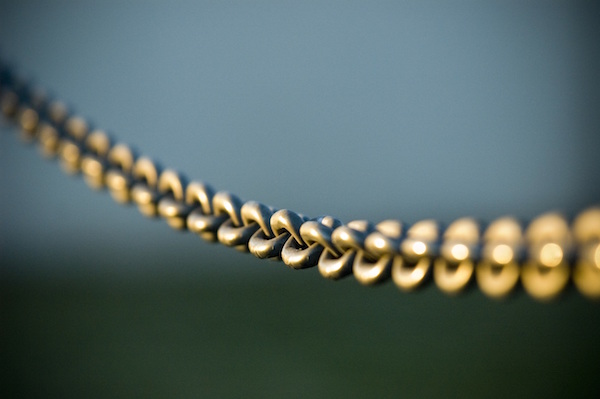
chains
Photo by Mike Alonzo via Unsplash.

We are The Capitol.

In case you haven’t read Suzanne Collins’ The Hunger Games, let me explain. In the trilogy, The Capitol lies at the center of everything, and the outlying Districts exist to give those in The Capitol a good life. The people outside The Capitol work non-stop, survive without luxuries, and many are near to starving. Those inside The Capitol, on the other hand, have plenty; they mostly spend their money on entertainment, making themselves look nice (or weird), and eating. And when they’re full, they drink a liquid that helps them throw up so they can eat more.

Do you see the analogy now? We who live in the United States are The Capitol. We are mostly concerned with the NFL, the shopping mall, and technology. We purchase items that can only remain at their current, inexpensive prices because they are made by slaves in other countries.

But we do our best not to think about this.

The developing world represents the Districts, where the people are working hard, and yet have almost nothing. They do not even get to enjoy the things that they are creating. They watch their children waste away to nothing, with no hope for ever getting out.

We are The Capitol.

* * * * *

One of the ways we continue this symbiotic relationship between ravenous consumer (us) and exploited worker (them) is in the way that we inhale chocolate, chocolate whose very existence and price depends on the use of slave labor, often child slave labor. This year we will spend almost $8 billion on Halloween, $2.3 billion of that on candy. Where is the majority if the chocolate coming from?

The ILO calls the cocoa industry the worst form of child labor today. And these farms, mostly in Ghana and Ivory Coast, exist because of brands like Hershey, Nestle, Mars, and Cadbury—they all purchase cocoa from these farms, are all aware of their practices, and as of today, have chosen to do little about it.

The Art of Simple

Please. Before you go out and buy pounds and pounds of chocolate from companies who use slave labor to provide us with our 99 cent chocolate bars, read these two articles by my friends Tsh and Kristen:

Chocolate: The Industry’s Hidden Truth (and the easy stuff we can do to still enjoy it)

The Inconvenient Truth About Your Halloween Chocolate and Forced Child Labor

Please. Do a little research on your own. If we continue to lament the existence of slavery in our world but refuse to give up our obsession with Reese’s Cups or Snickers bars, we become part of the chain, complicit, and just as guilty as the person standing over a child, telling them they have to work harder.

Which really sucks because I love Snickers. And Reese’s Cups. And all that stuff. But this year I’m going to do my best to avoid eating or purchasing candy from companies who so far have made big promises about changes they’re going to make to their supply chain, but unfortunately have yet to deliver.

Reconsider your Halloween Candy.

Question: Have you already looked into this problem? What chocolate alternatives are you finding? (Tsh has some great recommendations over at her blog.)
What I Learned From Catching a Fish in 1983

fish

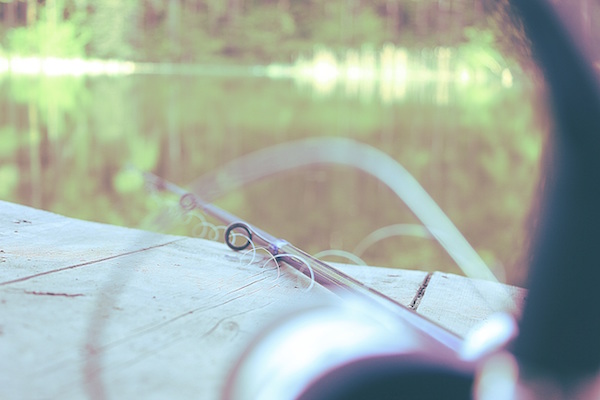
From 1st grade to 4th grade I lived in a farmhouse, and nearly every day after school I hopped out of the bus, ran up the long lane, dashed inside for a quick sandwich, then ran back outside as quickly as I could. I crossed the church parking lot that ran alongside the cemetery, slid down the muddy hill through the trees, walked through the pasture with its massive cows mooing their displeasure at me, and set up shop with my fishing pole and tackle box on the banks of the Pequea Creek.

I sat there and sometimes I took a Sugar Creek Gang book with me and sometimes I just stared at my bobber and waited for it to dance. I sat there in the shadows, and when the Amish school next door let out my best friend Daniel joined me. He always came racing down the same path, tumbling through the undergrowth, breathless, hoping he hadn’t missed anything.

“Fish biting?” he asked, grinning. We waited and we fished and when we got bored we skipped stones or waded into the water. We didn’t have watches or cell phones but in those fall days we could tell by the sun when it was dinner time, and we reluctantly pulled ourselves away from the slow-moving water, dragged ourselves up the bank, walked home.

My dad came down with me from time to time, usually after dinner, after work. It was even cooler then, and the fall air smelled of cut hay and sleepy evenings.

On one of those nights my bobber vanished down into the water and my pole bent almost to snapping. I yanked up on the reel and tried to pull that monster in. Eventually I did – it was a massive carp, not much good for eating, but boy that thing was huge. I’d never seen anything like it in that creek before. My dad and I stared at the fish and then we whooped and hollered and danced around.

I guess we had carried our stuff down there in one of those large, white, five-gallon buckets. Well, dad emptied out that bucket, filled it with muddy creek water, and dropped that huge fish into it.

“C’mon,” he said. “We’re showing this one to Grandma.”

So we packed up our stuff and he carried the heavy five-gallon bucket and we walked the quarter of a mile to Grandma’s house, along the road with the narrow shoulder. We got up to her house and showed her the fish. Dad poked it and it writhed around in the bucket like the Loch Ness monster. From there we stopped by the neighbor’s house, because they were outside, too, and we showed them the fish. Finally we walked back by our farmhouse and showed the fish to mom.

Dad was so excited about it, and I was, too. Eventually, when it was almost dark, we walked the long lane and crossed the parking lot and slid down the tree-covered bank, let the fish slip back into the water for some other boy to wrestle with.

* * * * *

I was thinking back on this story tonight and I realized what was special about that whole thing wasn’t the fact that I caught a huge fish. I mean, that was fun, but what made that whole experience different was how excited my dad was for me. He didn’t act upset that I had caught the biggest fish. He didn’t downplay it, tell me he’d seen bigger.

No, he celebrated with me, and then he went to great effort to show off my accomplishment.

And that’s what I was thinking about. I want to do that more. I want to point out my friends’ wonderful achievements and brag on them. I want to celebrate and laugh and dance around when people I know do something special. I want to put my own schedule on hold and carry the weight of their glory.

That’s what I’ve learned from that autumn night, sometime around 1983.

Let’s celebrate with each other more often.

Our Podcast About Death and the Winner of Last Week’s Book Giveaway

12107980_1480038425632273_5033259739015809488_n

A couple of months ago I emailed my friends Bryan Allain (blogger, funny guy) and Caleb Wilde (blogger, funeral director) with kind of a crazy idea.

“Let’s start a podcast where we interview people about a death that’s happened to someone they love,” I suggested. “Trust me, it’ll be great.”

After I sent the email, I had idea remorse. Do I really have the time to add “podcaster” to my resume? Would Caleb and Bryan think it was a stupid idea? And, perhaps most importantly, wouldn’t a podcast based around the simple premise of people retelling death stories be, well, depressing?

Who wants to listen to that.

Bryan, Caleb, and I met at our favorite midpoint meeting place, The Corner Coffee Shop. By the time we met, I had already talked myself out of the idea. We caught up about life, and then I began back-stepping out of my podcast idea.

“So, guys, listen, if you’re not into doing this podcast thing…” I began.

“No, I actually think it’s a great idea,” Caleb said. “I think our funeral home will sponsor the first three episodes.”

“Yeah, let’s go for it,” Bryan said.

“Um, yeah,” I said. “That’s what I was going to say.”

* * * * *

So we’re doing it. We’ve interviewed our first two stories with one left to go for this initial run of three podcasts. The first story is about a couple who took in a set of triplets through foster care. The second is the story of a couple, newly married, who realized just a few days after their first child was born that something was seriously wrong. In the third story we explore the idea of “The Good Death,” where two siblings tell the story of their mother’s passing.

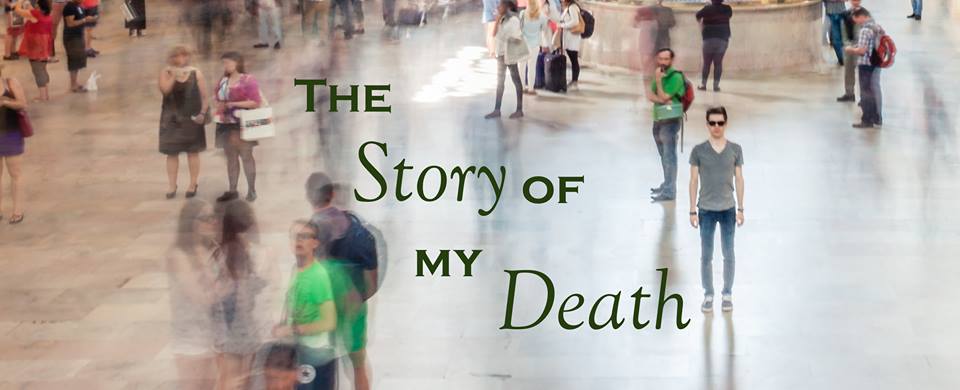
We named the podcast The Story of My Death. (Caleb calls it our Deathcast.) But the question remains: Why have a podcast where we interview people about death?

I don’t know that there’s a pragmatic answer to that question, or at least not one easily settled on. But I’ve learned a few things during our first two interviews. Talking about death, even tragic death, doesn’t have to be depressing. Even though the event itself, the loss, can be unbelievably sad, hearing people retell their stories hasn’t been a depressing experience. I actually found the stories, and the people telling them, to be extremely brave, resilient, and somehow hopeful.

Talking about death with people who had come face to face with it filled me, inexplicably, with a sense of peace.

If you’d like to stay in the loop regarding the release of the first episode, you can like our Facebook page, The Story of My Death or you can sign up for my twice-monthly newsletter HERE. We’re looking to release the first episode sometime in the next three or four weeks.

* * * * *

The winner of last week’s book giveaway is Dustin Fife! Message me with your address, Dustin, and I’ll send you the two books you won. Thanks to everyone who left a comment over at my 1000th blog post. It was hugely encouraging to hear from all of you.

Wait, what? You haven’t signed up for my twice-monthly newsletter? (It’s basically a few bonus blog posts every month plus information on upcoming books or special deals.) You can sign up for that newsletter HERE.

The Holy Thing About Helping Her With Her Socks

oldman

I get down on my knees
in front of her and gently slide
one sock on, then the other
past her toes
around her heels
flipping the elastic band so
everything is right. I
think she might be uncomfortable
letting me do this. Her
skin is tight, her leg
swollen from surgery. I go into her
room and find her white shoes
loosen the laces
and push them on
much like I do for my young son,
wedging in her heel,
tying the laces
and doubling the knot.

I guide one arm into her coat, then
the other. I go through her box of scarves
and she tells me which one
she’s looking for.
No, not that one, not
that one, yes, that’s
it, that’s the one.

There now.
All set.

There’s something holy about this
dance. I have never held her gently
behind the elbow while she rises
from her rocker
or lifted under her
arm while she leans into
the passenger side of the van.

Perhaps we should get down on
our knees more often
for those who once cared for us,
for those who have seen the passing
of decades, the turn of centuries,
for those who have been to too many
funerals to count.
Perhaps we should wait longer,
walk slower, and
even though they might refuse,
offer to help them with their socks
their shoes
their coat.

There is something about getting down
on my knees in front of my grandmother
that reminds me someday soon
that will be me
in the armchair
while some grandchild not yet
born slips on my socks,
ties my shoes, helps me to the car.

Can we not be gentle now
with each other,
while these uncommon days
are running out?

“Did God Break My Neck?”

The following is an excerpt from the book, Theology of Luck: Fate, Chaos, and Faith. In the book, authors Rob Fringer and Jeff Lane wrestle with the question of God’s role in the universe.

“Did God break my neck?”

Joshua Prager has struggled with this question for more than half his life. It is the question that has made him stop believing in God. On May 16, 1990, Joshua and his companions were traversing a winding hill in Jerusalem when a runaway truck carrying four tons of ceramic tiles hit them. One person was killed, many sustained serious injuries, and Joshua was paralyzed from the neck down.

Plagued by questions of why, Joshua set out twenty-two years after the crash to find the man who had been driving the runaway truck, seeking answers and some semblance of closure. Yet Joshua’s encounter with Abed, the driver of the runaway truck, left him well short of settled. Instead of showing remorse, Abed spent most of their conversation complaining about his own suffering, taking no responsibility for his part in the tragedy. But the most difficult part for Joshua was Abed’s suggestion that everything that happened that day was maktoob (the Arabic term for “letter,” or “written,” which communicates the idea that events are fated to occur for divine purposes). Abed described how he had lived an unholy life before the crash and how God had ordained this wreck to transform his journey. From where Abed sat, Joshua and all of the victims in the crash were part of a grand scheme that had been written by God to get Abed’s attention.

Overcome by a multitude of emotions, Joshua had to come to terms with the possibility that God might have caused these events. As difficult as this idea was, it actually provided him with some momentary relief. After all, if God had his hands in every activity, then there was likely some purpose behind it all, and at least Joshua had some answers.

Yet it was hard for Joshua to say thank you to this kind of God, especially in his current situation. The words of this reckless truck driver continued to haunt him. How could it be said it was God’s will? Eventually Joshua abandoned that belief. As he began to reflect and research, he realized that what others saw as divine orchestration could simply be a perfect storm of potentialities. Today, when he is asked about the cause of the accident, he describes how his neck snapped because of the lack of a proper headrest in his seat. He speaks about how the driver of the runaway truck had twenty-six driving violations, how the road they traveled was notorious for tragic accidents, with more than 144 reported and many casualties, and how bad the weather conditions were that day.

Joshua’s story may sound outlandish, but it is just one of many similar episodes. The times, places, and events are different, but the basic stories are the same. People faced with disease, death, or loss cry out for answers, and the best this world can give them is either purposeless chance or divine, random purpose.

God must have had a reason for the death of that child.

God must be trying to tell you something through the loss of that job.

That tragedy was meant as a judgment by God.
 God is in control; everything happens for a reason.


These types of phrases and our reactions to them say a lot about our understanding of God. (Or is it a misunderstanding?) Do we really believe God causes events like these as part of some divine plan? Do we really believe our lives, the good and the bad, are already written by God?

Check out the book Theology of Luck HERE.

Why We Walk Six Blocks Through the Cold

personyosemite
Photo by Cam Adams via Unsplash.

We left the house and I locked the door and it was early, at least for a Sunday: 9:00am on the first truly cold morning of autumn. I pushed Leo’s stroller and the other four kids trailed behind, like ducklings. The wind snatched at our coats. The leaves and the litter blew across James Street and crunched under our feet.

Eric doesn’t sit on his porch anymore, not when it’s this cold. This is the first winter that Mr. Paul is no longer with us, so his porch is empty, too. I didn’t see anyone walking Barb’s dogs. We made it one entire block on James Street, and the only person we saw was a young man emptying out an apartment, piling all the furniture like trash into the back of a trailer. Besides that, James Street was asleep.

It’s six blocks from our house to church, and some of those blocks were in the warm sun and some of those blocks were in the shadows, like the dark side of the moon. We pulled our hands inside our coat sleeves and lifted our shoulders. When we passed the library we were almost there.

We walked into Saint James Episcopal Church and slowed down in the warmth. I took a program and the kids picked a pew to sit in and we took breaths that came and went like sighs. The air in there was still and serene, like walking through thick woods and stumbling into a wide open place.

“Dad,” whispered Abra, “which one is your favorite?” And so the five of us (Maile was with Leo in the nursery) let our eyes taste each of the stained-glass windows, like we do almost every Sunday morning.

“I like the one with the angel,” Sam said.

“I like the blue one, at the top, in the middle,” Cade said. Lucy and Abra each picked their favorite window.

“What about you, Dad?” Abra insisted.

“That’s the one for me,” I said, pointing at one that shimmered white, the sun shining straight through it.

“Yeah, I like that one best, too,” Abra said, because she always changed her mind to choose the one I liked most.

There’s something about sitting in a warm church after a long walk through the cold. There’s something about the way the light shines through white stained glass. There’s something about that opening hymn, when the choir proceeds down the aisle and the priests line up and Reverend Lauren says in her clear voice,

“Blessed be God: Father, Son, and Holy Spirit,”

and all the rest of us say in voices silver-lined with hope,

“And blessed be his kingdom, now and for ever. Amen.”

Blessed be his kingdom. Not just today but on and on for as long as on-and-on goes. So be it.

That’s it, I guess. That’s why we walk six blocks through the cold. Can we believe that the Kingdom of God can somehow overcome the violence in our city, the injustice in our country, ISIS, or, even more tangibly, the darkness in my own heart? Can we somehow believe that the terrors and the sadness of this world do not have the final say? That each of us, in our own place, on our own streets, can somehow usher in this upside-down kingdom, where the last shall be first and the first last, where it’s not by wealth or by power or by making boisterous claims that we inherit everything of true value, but by being poor in spirit? Where those who hunger and thirst are finally filled?

Most days, I don’t know. Most days, it seems the evil and the ignorance is winning. Most days it seems like the corrupt businessmen and the blowhard politicians have everything going for them. But then there are brief moments, when we’re choosing our favorite stained glass window, or when Reverend Lauren’s voice first sounds out, or when we as a congregation say those words together, I can almost believe it.

Lord, I believe. Help my unbelief.