Regarding the Miscarriage That Led Us To You

222271_8775448289_2471_n

Someday I’ll tell you how empty we felt
when the nurse left the room, the scan of your
mother’s womb, empty and dark, like a sun-
spot. The Catholic doctor
who did the second scan tried to spin it
into light.

“My mother had a dozen kids and nearly as many
misses,” he said (or something like that)
with a sympathetic smile, but your
mother still wept all the way home,
and for days after, wondering who that small space
would have been.

There

were

large

spaces

in

our

lives

during

those

later

days. The minutes and hours stretched
like an awkward verse pried open and scraped
clean.

Then, two months later,
two months after the emptiness
two months after the breath-taking scans
your mother became pregnant
with you.

I’m sorry to say it, but we didn’t dare hope for you
in those early days, so recent was that vast
emptiness. That lost future. We held our breath at the
first doctor’s visit
and the second
and especially later, when your heart would stop
for short periods of time. Your mother strapped on
a machine that tracked your beats through the night,
the line on the paper sometimes straightening out like
a desert horizon
or a needle with no string trailing behind.

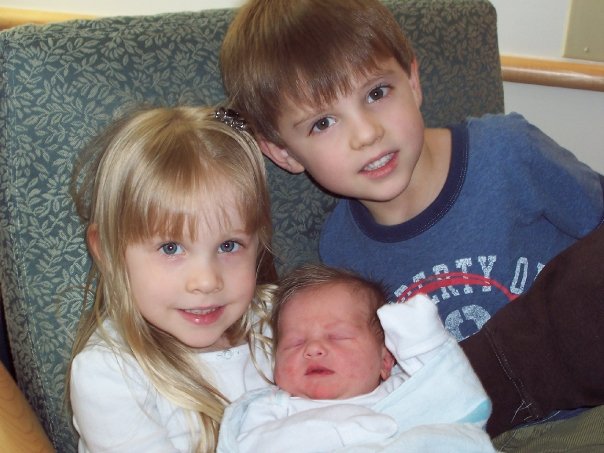
When you finally slid into the world, angry and pooping
all over your mother, we laughed and cried and named you
Abra, “mother of nations,” from my favorite book
East of Eden
because, yes, we had left the garden behind, but we
also realized there was still good in this world, even after
the empty spaces.

Perhaps I could even say there is good in this world
because of the empty spaces
but that is a leap over a void
I am not yet prepared to take.


IMG_0752

Why You Should Tell Your Story Now, In the Middle

wVlfnlTbRtK8eGvbnBZI_VolkanOlmez_005
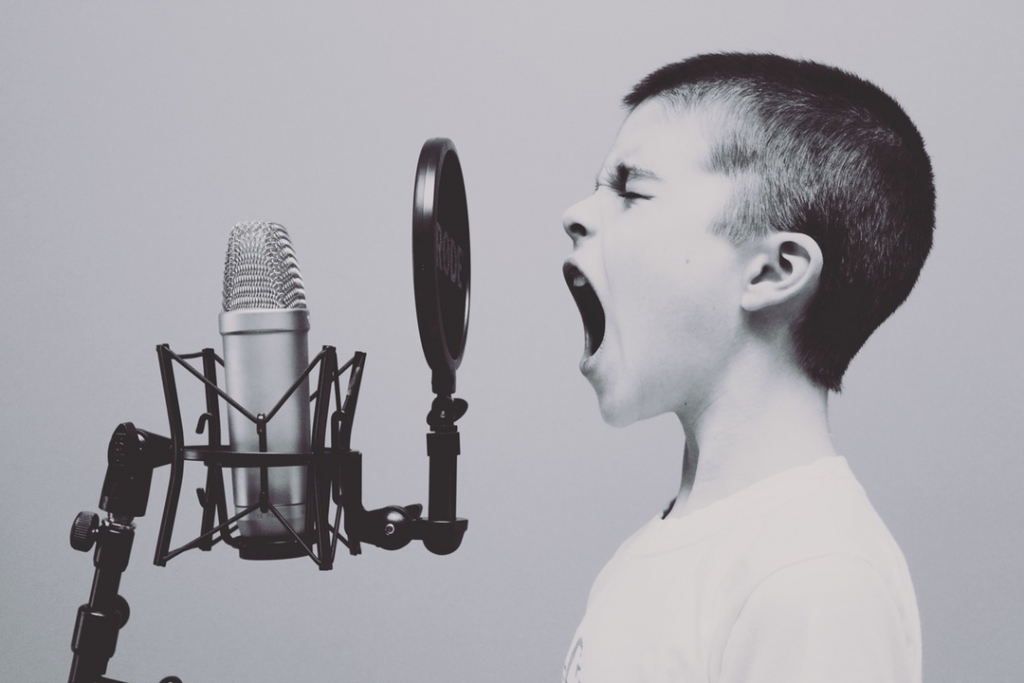
Photo by Volkan Olmez via Unsplash

A few months ago my wife peeked her head around the corner and asked me one of the last questions I expected her to ask.

“So, are you ready for baby number six?” she asked, her unblinking eyes wide open.

“Really?” I asked.

She nodded. I took a deep breath.

“Really?” I asked again. “Are you sure?”

The question then became, “When do we tell the kids?” We knew our other children would be ecstatic to learn there was another baby on the way, but Maile had miscarried twice. Should we try to spare them the potential heartache? Or should we tell them and involve them in the unfolding story?

This is part of a post I wrote for You Are Here about the importance of telling our stories in the middle. You can read the rest of it HERE.

I Got a Mean Email (or, Three Reasons Criticism Might Be Bothering You Too Much)

photo-1453738773917-9c3eff1db985

I received a mean email last week. I know. Gasp. I actually don’t get very many of them, especially considering the fact that I blog about religion from time to time. It’s the religion blog posts that bring out the angry in a lot of people, but the crowd that hangs out here is so graceful with me and my questions, my searching. Thanks for that.

But this mean email I got wasn’t in response to my faulty theology. The basis of her criticism wasn’t the fact that our family homeschools (I sometimes hear that, and I actually understand that criticism) or that by living in the city we subject our children to a dangerous environment (I’ve gotten that one, too). Her criticism was much more intense.

She focused on my grammar.

I actually get a handful of emails a year from kind people who point out a grammar or spelling mistake here at the blog, and I appreciate those. Usually it is a simple oversight on my part, but occasionally it is a grammar rule I’ve always gotten wrong or long forgotten, so it’s nice to learn something new. This is me saying I welcome your feedback. If you’re nice.

But the email I got last week was different. She insinuated that I must not know very much about writing, that I demonstrate carelessness, and that most 3rd graders wouldn’t make the mistake that I made. She is either someone who is completely tone deaf in how she writes, or she simply enjoys trying to make people feel small.

I’m glad I got that off my chest. Because it’s not even the point. The point is something very different. The point is this:

Why did her criticism bother me so much?

She’s a complete stranger. She’s not someone who I’m trying to impress, like the editor of a major publishing house or my literary agent (shout out to Ruth!). She’s not a family member or a friend whose opinion I value.

Why, oh, why, did her email make me crazy?

I have three suggestions.

1 – Her criticism involved a new venture, something I’m doing for the first time, and so her words struck a part of me that is already a little tender, a little unsure, and a little hesitant. The dastardly mistake I made was in the newsletter I sent out about an upcoming writers’ course Bryan Allain and I are creating. I know, right? A grammar mistake in the announcement I’m sending out…ABOUT A WRITERS’ COURSE. *sigh* These things happen, apparently. Anyway, I’m super excited about offering the course, but I’m also nervous. (You can sign up to get more details about the course HERE.)

Whenever we’re trying something new, I think we need to be aware that we’ll probably be a little more sensitive to criticism than we usually are. This is okay, but it should also inform our response. We should probably take a few days before replying. Trust me. And if the criticism isn’t said in a nice way and comes from a stranger, the best thing you can do is delete it.

2 – Her criticism pinpointed an area I already know is weak. I am not a grammarian, never have been. It’s just not interesting to me. That said, I know it’s important, and I learn every chance I get. Every time I’ve written a book and worked with an editor, I’ve learned a lot. I’m improving, but I know it’s a weakness.

I think that when people criticize us in areas we know to be weak, a great response might be to simply nod and smile, because our response to their critique will probably be out of proportion.

3 – I have an inflated desire to be liked by everyone. Everyone. Yes. Everyone. Actually, this particular email was a gift, because it has reminded me that not everyone will be on board with what I do, not everyone will support me or point out my flaws in a kind way. And that’s okay! It’s the world we live in.

What kind of criticism bothers you the most? How do you handle it? Any pointers for me?

Waiting is Something Besides Sitting Around

iqlYdAAYQiaOCoKnT6jE_kabia
Photo by Ermin Celikovic via Unsplash

“A waiting person is a patient person. The word patience means the willingness to stay where we are and live the situation out to the full in the belief that something hidden there will manifest itself to us.”

Henri Nouwen

Aren’t those beautiful words? Nouwen has a way of making even the most difficult things sound noble and worth doing.

But I still don’t enjoy waiting, no matter how glorious Nouwen tries to make it sound. I wonder if that’s because I’ve always seen waiting as sitting around, as nothing more than passing time. That’s not how Nouwen talks about it.

To him, waiting means 1) remaining 2) living 3) and paying attention.

That doesn’t sound like doing nothing. If this is true, if this Nouwen-esque kind of waiting is possible, then waiting is actually a switch from being static to being still, from a blank stare to calm awareness. Note especially that he doesn’t say waiting involves finding something new. No, the newness will make itself apparent to us when we remain, live, and pay attention.

What are you waiting for? Are you, like me, still trying too hard, when all that’s required of us in this time of waiting is to be still and aware?

* * * * *

These lucky folks are the winners of last week’s drawing for Christie Purifoy’s incredible memoir, Roots and Sky:

Kristin Potler
Jessica SanbornLaura Brownstein

Message me your info. I can’t wait for you to read this book!

* * * * *

Bryan Allain and I are putting together a top-secret project that will benefit writers. To get more info as it becomes available, go HERE.

When It Storms in the City

photo-1444047427283-88a67f631b3e

About a week ago – it was a Wednesday night – I grabbed my coat and put on my shoes and walked outside, into the pouring rain, the kind that soaks you in a few seconds. I took a deep breath and ran for my truck, ducking through the drops. Cars drove by slowly, leaving a wake behind them.

The water on the windshield made the nighttime lights blur and run, like liquid spilled on a wet painting. When I parked outside of Saint James Episcopal Church, that particular band of rain had already fled east, leaving only a spitting drizzle and a small river that rushed along the sidewalks, plunging under the city. It made me wonder about the invisible side of a city, the things we can’t see, the dark depths always there just beneath us.

I walked into the small chapel, into the semi-darkness, and joined about ten other people. The only light that was on was a spotlight shining on a painting of Jesus on the cross. I stared at his suffering. I found my breath coming low and heavy, like consecutive sighs.

Father David, in his graceful way, led us through some short thoughts, and then we sat there for 25 minutes in silence. I repeated one phrase over and over again in my mind, maybe 100 times during those minutes.

“Come, Lord Jesus.”

When you wade into silence for that long, a novice like me must have an anchor to hold to, a phrase or a thought or an image that keeps you tethered in space. Otherwise, I’ll be cast adrift, lost in the battling thoughts of my own mind. Silence is a deep water that welcomes us, but the voices in our head are strong currents.

Outside, another band of rain approached, pinging against the stained glass windows, followed by rumbles of thunder that shook me to the core. Things pulled at my mind – current events, certain presidential nominees, my own financial uncertainties – but as each thought entered my mind, I opened the back door and let it walk straight out.

“Come, Lord Jesus.”

Whether or not you are a Christian, there is incredible peace found in the depths of silence. If you’ll take the time to enter. Of course, you’re likely to find your worst fears there, and the meanest voices, and the loudest worries. Just make sure to prop open the back door of your mind so that the chattering voices can find a way out.

I put on my coat and walked back out into the city, once again between bands of heavy rain. The air was warm and smelled of spring. The trees rattled and clattered together in the wind. The deep shadows that lined the alleys were welcoming, like silence.

While You Were Away – A Confession

IMG_0466

I drove home from the airport
absent-minded.
The highway was quiet and I left
the radio off. I considered the last
17 years of us, the turning of the tides, the ins
and outs of two tangled lives. I thought
about how we’ve become
a sort of background noise for one another
comforting
like the hum of tires on long, straight
roads. Sometimes
you have to turn down the noise to hear
what is constant,
what is true.

I must admit that when you are gone
we eat more pizza than usual, and more
cereal. The Nutella is nearly gone, and the ice cream
didn’t last the first night.
The kids all sleep on our bedroom floor
so that when Leo wakes up,
crying for you,
I have to walk to him gingerly, stepping
through the tangled trickery of blanket-
covered legs and arms, not always succeeding,
missteps then yelps or groans.

I lift Leo from his bed and rock him on that
tiny chair, smell his hair, and think of you
six or eight states away. I know your geography
better than my own country. I feel his weight and think,
We made this human being together, and
How can we possibly be responsible
for this kind of beauty? and
When will he finally sleep through the night?
These children are, all of them,
the two of us, wrapped in skin
and bone, like a gift we gave each other
not caring how much we could keep
for ourselves.