The Long, Slow Road to the Top

2012-05-17 21.15.03
Sam, taking in the Grand Tetons, standing on the edge of Yellowstone National Park.

It was just over three years ago that my family and I took a four-month trip around the United States in a big, blue bus named Willie. We left in February, and it was in the early spring days of May that we arrived at the base of the Tetons and began the long, slow trek to the top. I’m not sure that I would recommend driving a 20,000-pound vehicle up a 10% grade on a winding, two-lane road.

That diesel engine chugged along so slowly that at some points it felt like we might start coasting backwards. My hands were white-knuckle grasping the wheel, not because of the speed at which we traveled, but precisely because of how SLOW our progress was. We followed hairpin turns and chugged along narrow stretches without guard rails, sections where we could look down on either side and see rubble and evergreens and wilderness.

The journey to the top of that mountain range was tedious and heart-burn inducing. It was much slower than we would have liked. The road up was perilous and beautiful.

But the view at the top was breathtaking.

(Yes, I know, we did lose our brakes on the way down, but let’s put that to the side for a moment.)

* * * * *

My point is this: you have a long, difficult road ahead.

Encouraging, eh?

I think it’s important to realize this and settle in for the long haul. Our culture has sort of arrived at this point where the prevalent message is IMMEDIATE SUCCESS and SHOOTING STAR and UNEXPECTED RISE TO THE TOP. Businesses should be immediately successful, musicians should be selling tens of thousands of albums tomorrow, writers should be on the best-seller list within a few months of the release of their first book.

The top is right there, within your grasp! WHAT IS TAKING YOU SO LONG?

When the trajectory of our rise is not as fast or as famous, it’s easy to get discouraged.

Don’t get discouraged. Keep plugging away. Keep your foot on the accelerator. Keep moving forward.

* * * * *

This morning Maile and I sat at the table at 4:45am drinking coffee and having a delicious, quiet morning before the kids descended. We don’t always wake up so early. I happened upon a list of the books I’ve written in the last six years, since the beginning of this crazy adventure of ours in which I decided to try to write for a living. There are nineteen books on that list, some traditionally published, some self-published, some not yet published.

That means I’ve written around a million words worth of books.

I’m closing in on my 1,000th blog post. That’s approximately 500,000 words of blog posts.

And you know what? I don’t have any best sellers to my name. I haven’t made millions of dollars. Very few people have ever heard of me and my writing. In fact, I only had my first serious conversation with a literary agent earlier this week. After six years of writing. After 1.5 million words.

It’s been a long, slow, precipitous road.

* * * * *

Let’s keep going, you and I. Let’s keep our foot on the accelerator. Let’s not worry about the select few who shoot past us on their motorcycles, racing to the peak. The top will still be there when we arrive, whatever that might look like. It will still be there. I promise.

How This City is Changing Me

IMG_1175

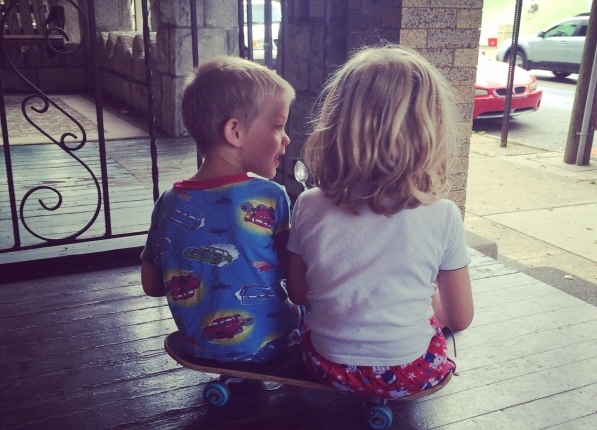
We are finding our rhythm here on James Street. It’s our second summer, after all, and we’re feeling our way into place, like a jigsaw puzzle piece you have to turn a few times before you push it in. There are familiar faces now, and a few of them have names, and a few of the people are starting to feel like our people.

There’s a little Hispanic boy who runs over to our porch every time he sees us outside, and he asks for Sammy, and when Sammy comes out he sees the boy and gets a bashful smile on his face.

“Hey,” he says, and the little boy asks where we’re going and how long we’ll be away. On Sunday he told me that he has a dad – he wanted me to be sure to know he had a dad, even though he doesn’t live with them. He kept saying it over and over at random places in the conversation.

“I have a dad, you know.”

There’s a neighbor across the street who walks with a crooked limp, always rubbing his head as if he’s just been asked a question he doesn’t understand. As soon as he sees us, he smiles and waves, his grin as crooked as the rocking chair he’s often sitting on. He seemed genuinely disappointed for me when he pointed out the fact that I had gotten a ticket for parking too close to a fire hydrant.

“They got you, man,” he said, disgust in his voice.

Two doors down a young man just moved in with his girlfriend and their little girl. He’s a hard case, one of those who thinks smiling is for the weak. His head is shaved and his arms are covered in tattoos. Sometimes in the evening if I’m sitting on the porch I’ll look down the row of porches and he’ll be sitting there, looking angry at the world. I’ve waved at him a few times, but he pretends not to see me.

Then this past weekend, as I pulled a few things out of the car, he brought his trash outside. I said hi. He nodded and something like the beginning of a smile flashed across his face, fast as lightning. He nodded again, and went back inside. He came out again just as 1-year-old Leo toddled down the sidewalk towards where I stood.

“Hey, little man!” he said, and suddenly I remembered he is a human being, too, and there are reasons he doesn’t smile, and those walls he lives behind were built long ago, probably around a young boy.

And there are always doors, always gates leading through those types of walls. Patience will find them.

* * * * *

Henri Nouwen writes this about the poverty around us:

Just as we are inclined to ignore our own poverty, we are inclined to ignore others’.  We prefer not to see people who are destitute, we do not like to look at people who are deformed or disabled, we avoid talking about people’s pains and sorrows, we stay away from brokenness, helplessness, and neediness.

By this avoidance we might lose touch with the people through whom God is manifested to us.  But when we have discovered God in our own poverty, we will lose our fear of the poor and go to them to meet God.

Every time I see an old friend, they ask me if we enjoy living in the city, and my enthusiasm is almost always met with skepticism. I know that my friends are thinking about the shootings they read about in the paper, the theft, the drugs. The blatant need. But those things here in Lancaster City don’t stand out to me anymore. If I see poverty, it’s one that reflects my own.

These people all around us, these people on James Street, they are helping me find God again.

Jodi won the copy of Amber Haines’ book, Wild in the Hollow. Congratulations!

I decided to close down my Facebook and Twitter accounts in June (you can read more about that HERE), so this little space of mine depends entirely on you to spread the word. If you read something you enjoy, please share it.

Also, if you’d like to receive my twice-monthly newsletter (basically a few bonus blog posts every month plus information on upcoming books) you can sign up for that HERE.

What Happened When I Walked a Stranger’s Pit Bulls

IMG_0469

Monday morning was a beautiful morning on James Street so I decided to work outside. I took a few minutes and sat in the city silence, enjoying the sound of the passing traffic, the wind in the peeling sycamore tree, the sound of cicadas high up in other trees on other blocks. I read a portion of Erika Morrison’s book Bandersnatch. I’m getting toward the end and find I’m reading it slowly, sipping it, like the last bit of a good drink at the end of a delightful evening. I set the book aside and felt a little overwhelmed at how much work I had to do – Mondays are usually that way. But I brought all my work out on to the front porch and started with the fun part – the bills.

“Excuse me?” a watery voice asked. “Could you walk my dogs?”

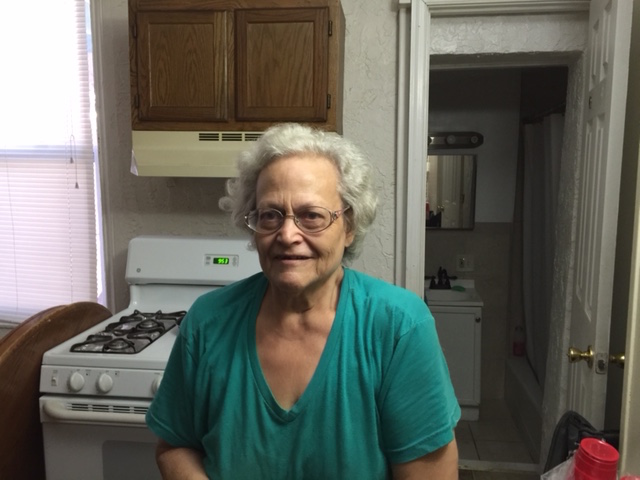
I looked up and saw her standing at the bottom of our steps: a white-haired woman. She wore a red skirt and a green top that she kept tucking in nervously. She leaned over, her hand on the iron railing.

“I’m sorry?” I said because I was sure I hadn’t heard her correctly. People don’t just walk the city streets asking random strangers to walk their dogs. Right?

“I’m looking for someone to walk my dogs,” she repeated, and I looked around. I still couldn’t believe she was talking to me. I was busy. Didn’t I look busy? In my mind, I started to reply to her.

I’m sorry, I have too much to do. Good luck. I’m sure you’ll find someone. I’m not even a dog lover. If you are looking for a stranger to walk your dog, don’t you at least want them to really love dogs?

But I looked up and down the street and no one was there. No one was anywhere. It was just me and this white-haired woman. And I remembered a passage from Erika’s book. I remembered all she had written about seeing Jesus in the people around us, and I realized with startling clarity that this woman, with her hesitant smile and insistence, with her missing teeth and her wind-blown hair, was Jesus.

Jesus needed me to walk his dogs.

Which, let’s be honest, was slightly inconvenient and even a little annoying. If Jesus would ask me to move to Iraq or do something else radical, I’d probably do it. But something simple and inconvenient? Something I don’t feel “called” to do? I sighed and packed up my things because I knew I wouldn’t experience a moments peace for the rest of the day if I didn’t walk these dogs. I left with the woman who said her house was only just around the corner.

I asked her what kind of dogs she has.

“Pit bulls,” she said, “but the one is just a puppy, and the other one should be okay if you come into the house behind me.”

Should?

To say she was a slow walker would be the understatement of the year. I asked her about it, and she said she had arthritis in both knees. She told me about how her mother had died a few years ago, how she had moved south to take care of her, then came back to Lancaster after she passed. She asked me what I did and when I said writer her eyes lit up.

“I’ve always wanted to write down my own stories,” she said, and proceeded to tell me things about her life. Graduating from the community college when she was 54. Going to Catholic school when she was a girl.

I followed her into a dark corridor and up two flights of hand rail-less steps. I thought that this could be the beginning of one of those stories that doesn’t always end very well, the kind of tale that ends in a mugging or a dog bite. But I’ve told myself recently that I need to do more things worth writing about, I need to live more adventures. It turns out the first one was walking two pit bulls owned by a woman who lived around the corner, a woman named Barb who I had never met before.

She practically had to crawl up the stairs because of her knees. I helped her when I could.

“My therapist says I have to keep moving, I have to get out of the house,” she said. “If I don’t, she says I’ll become a shut-in.”

She climbed those stairs like Everest, all the way up, then opened the door to the dogs’ room. A pit bull jumped up on me. She was the older one, brindle colored with scars on her head.

“Oh, good, she likes you,” Barb said with obvious relief in her voice. We talked for a little while, and then I walked the dogs. The older one was well-behaved and left slack in the leash. The younger one pulled me down the sidewalk. When I got back I asked her for a favor.

“Could I take your picture and put it on my website?” I asked. “I want to start telling the stories of the people who live in my neighborhood.”

“Oh, my,” she said, “I have to fix my hair. She rain into the bathroom and came out, furiously patting her clothes down and fixing her hair. She was suddenly a bundle of nerves.

“Don’t worry,” I said. “You look great.”

* * * * *

Maile came back from running her errands and found me on the porch, working. Leo was asleep in the stroller. Mai started to laugh, because she knows I like to keep to myself. She knows I’m not a spontaneous kind of person.

“How was it, walking the dogs?” she asked, smiling.

I told her about Barb. I told her about the dogs. I shook my head, finding it hard to believe how far outside of my expectations a morning can go when I follow that quiet voice.

The voice only audible in the silence.

* * * * *

Friends, before you go let me tell you about a book that came out on Tuesday, just yesterday, a book I can’t wait to read. It’s called Wild in the Hollow and it’s written by my friend Amber Haines. Here’s what it’s about:

I always knew there was more than what my eyes could see. Maybe that’s why it’s easy for me to imagine Eden. I have my own version, the place where I clearly remember my early childhood experience as beautiful, wild, and protected.

In prose that is at once lyrical and utterly honest, a brave new voice takes you on a windswept journey down the path of brokenness to healing, satisfaction, and true intimacy with God. Amber Haines calls us to dispense with the pretty bows we use to dress up our stories and instead trust God to take our untidy, unfinished lives and make them free, authentic, and whole.
Here’s what people are saying about it:
“This book made me feel homesick and at home all at the same time. Only Amber could so beautifully and rightly write into the parts of our human experience that usually defy words.”–Sarah Bessey, author of Jesus Feminist and Out of Sorts

“Amber Haines is a once-in-a-generation voice. She moves us back to the place we all long to be–deeply intimate with and known by God. This book is a true gift, and I have more hope because of it.”–Nish Weiseth, author of Speak: How Your Story Can Change the World

“How can a woman with a story so different from my own be telling my story too? Amber Haines has found a way, and I am deeply grateful for her artistry, her honesty, and her courage. This captivating book has stunned me speechless.”–Emily P. Freeman, author of Simply Tuesday and A Million Little Ways

Here’s the cover. Isn’t it beautiful?
51eMabthipL._SX342_BO1,204,203,200_
I have an extra hardback copy of the book, so if you’d like to win it, simply let me know in the comments below. I’ll choose a winner at the end of next week.

I decided to close down my Facebook and Twitter accounts in June (you can read more about that HERE), so this little space of mine depends entirely on you to spread the word. If you read something you enjoy, please share it.

Also, if you’d like to receive my twice-monthly newsletter (basically a few bonus blog posts every month plus information on upcoming books) you can sign up for that HERE.

Let the Thieves Come: Everything is Already Taken

The area behind our neighbor’s backyard here in the city always seemed like a good site for an archaeological dig or, at night, a haunting. It looked like at some point in recent history dinner parties had been hosted there. I imagined late night talks around the small fire pit and Sunday afternoon barbecues, standing room only.

But now? Weeds grew up through the uneven brick patio, weeds as tall as me. Chairs had been left askew, as if something had sent everyone scurrying and they had never come back. In the first few weeks after we moved in, I noticed the door to the garage behind the courtyard wasn’t always closed.

Concerned that someone might walk into the small garage and take something, I told Paul that the door to his garage was open. But he just waved his hand slowly in the air, as if warding off a pesky fly.

“It’s okay,” he said, not looking at me, his eyes gazing out on to James Street.

* * * * *

Paul was a complete enigma to me. I figured he was around 70 or 75, but it was hard to say. He used a cane to get from his front door down his steps to his motorized scooter, which we sometimes saw him driving through the city. If the weather was nice, he was always on his porch. Always, from morning to night. He knew who was coming and going in the neighborhood, and his persistent calls to the police about suspicious activity a few doors down forced a drug dealer to leave the neighborhood. I liked knowing Paul was out there, watching.

When Leo was just a newborn, not sleeping well, one night I took him out on to our front porch. It must have been 3am. The summer air was heavy. Every so often, someone walked past our house, coming and going through the angled halo of street lights and shadows. I walked out on to the porch, and there sat Paul on his porch. It kind of startled me, his constant presence. I said hello, and neither of us commented on the strange hour it was to be seeing each other.

We sat there for a long time in the middle of the night, neither of us saying anything, Leo new and silent on my lap, the occasional passing car putting him to sleep.

That’s one thing I always liked about Paul. He could sit there in silence. He never made me feel like we had to talk.

I went inside for a glass of water, and when I brought Leo back out, Paul was gone.

* * * * *

This past winter was a hard one for Paul. He was in and out of the hospital with complications from a bowel surgery. He never came out on to his porch, not even on the nice days. Then I saw him in the barber shop on a warm winter day. The place smells of after shave and hot soap. The one entire wall is glass facing out on to James Street, and the winter sun glared down on us. Paul looked ashen, thinner than before. He looked like a survivor. He smiled when he saw me, and he told me about his recent escapades in the hospital. I asked him how he felt.

“I’m not dead yet,” he said, laughing.

* * * * *

A month or two later, I fumbled with the key to my front door. Two of Paul’s daughters came out of his house. They looked tired and stretched.

“Oh, Shawn,” one of them said. “I’m glad we caught you.”

“Are you okay?” I asked.

They both sort of smiled through a cloud of sadness, and I realized they had been crying.

“My father passed away last night,” one of them said. “He’s gone. He’s gone.”

She said it twice like that, as if she didn’t quite believe it herself, as if she would need to go on saying it for quite some time before the truth of the thing would settle in.

* * * * *

We had various conversations with Paul’s daughters for the next few months as they came and went, taking out a box of things here, a box of things there. The boxes didn’t look hard to carry, but they were heavy, if you know the weight of sadness, the density of lost things.

I found out at some point during those visits things I had never known about Paul and also about his wife who had passed away before we had moved in. Like how much she had loved that house. Like how it had been her idea to paint the trim of the house purple and light blue and how Paul had done it willingly because he would do anything for her. How they had spent so much time in their back courtyard together.

And how, one day many years before, she had fallen there in the courtyard, striking her head on a planter. She died soon after that.

There are empty courtyards all around us, growing high with weeds. Maybe we let the weeds grow, so we don’t have to see the beauty of a thing anymore, the heart of the sadness. Maybe we let the door open because, why not? Let the thieves come: everything we cared about has already been taken.

* * * * *

I’ve wondered if I should have asked Paul more questions about his wife. I’ve wondered. But I’m okay with the quiet times we shared, each of us to each, each of us on our own porch, each of us watching the cars and people pass on James Street. I’ll not soon forget that quiet night at three in the morning, the three of us sitting in the hot summer night: Paul, Leo, and I. It’s strange to think that Leo’s first summer on earth was Paul’s last. It’s strange to think these things are happening all the time, all around us, if we’ll only open our eyes.

The Real Reason I’m Leaving Facebook and Twitter

IMG_0304

There is this incredible scene in the movie version of The Lord of the Rings where Frodo offers Lady Galadriel the One Ring. His offer surprises her, and she imagines what she could accomplish with that kind of power:

In the place of a Dark Lord you would have a Queen! Not dark but beautiful and terrible as the Morn! Treacherous as the Seas! Stronger than the foundations of the Earth! All shall love me and despair!

As she speaks she seems to grow in size and her voice becomes terrible and massive. But then, somehow, she refuses the Ring. Somehow, she turns away from all of that “potential.” She suddenly seems older, almost frail. But also relieved:

I have passed the test. I will diminish, and go into the West, and remain Galadriel.

Choosing to diminish is perhaps one of the most counter-cultural things we might choose these days. Choosing to become less (or perhaps to remain who we truly are instead of seeking to be something greater) is the hard way of downward mobility Henri Nouwen talks about.

Why not put the things you know are important, things like your family or your community or your true calling, on the back burner while you take some time to make money, to grow your following, to build a career?

This is the question we are confronted with every day, and how we answer will determine the course of our lives.

* * * * *

We are, all of us, offered Rings of Power. We are all, from time to time, presented with things that, if we take them, promise to increase our platform, our influence, our own little kingdoms. But there is always a price.

Always a price.

Recently I’ve realized that, for me, one of those little tiny Rings of Power is Facebook. That might sound kind of funny to you. Innocent little Facebook? Maybe for you, Facebook is not a problem, but for me? Facebook whispers many promises, the kind that appeal to me and my own deep-seated issues.

“Look at how much they like you,” FB whispers.

“You’re a good writer – the likes are evidence of this.”

“Look how popular you are – so many friends and fans and followers.”

“I’ll help you sell books,” Facebook reasons. “How will you tell anyone your new book is out if I’m not around to help?”

“Publishers won’t be interested in your work if you’re not on Facebook,” Facebook says.

Facebook knows how to speak my language (as each of our own Rings of Power know how to do), and the reasons pile up on one side of the scale, daunting and beautiful and so weighty, so important.

On the other side of the scale, measured up against all of those appealing, valuable, rational reasons for staying on Facebook, are the weightless, powerless, plain-vanilla-kind-of-reasons. These reasons comes to me in a still, small voice, the kind of voice that is not overpowering in the least, the kind of voice I have found easy to ignore in the past. The voice whispers, “Your life is too noisy, your mind is too cluttered. You need to trust that I will make you everything you need to be, that I will give you good gifts. You need to trust that I will not forget about you.”

They sit on the other side of the scale, the weightless reasons, full of silence, simplicity, and trust.

* * * * *

One of the things I heard loud and clear during my 48 hours of silence a few weeks ago was this: “Withdraw from social media. Look for truth and love in the silence. Spend less time caring how many likes you get and more time breathing, more time listening.” I came back determined to do exactly that, but I am learning something about myself: I do not have the strength, right now, to turn away. (Even this moment, as I write, I am checking for likes on something I posted a few minutes ago.) I am not like my wife, who has a FB account she rarely checks. I’m addicted to what Facebook has to offer, and the only freedom for me is the freedom that comes in giving it up completely.

This voice, what it is asking me to do, it doesn’t make any sense. By all accounts, a writer such as me should be building a platform, not dismantling a section of it. I should be posting multiple times a day, using Facebook to grow my reach and my readership. I should use it to become friends with influential individuals. I should be targeting likes and shares and using Facebook to make my voice louder.

But I’ve learned something these last five or six years – when that still small voice speaks, even if what it says doesn’t seem to make any sense, listen. When it tells you to sell and move, do it. When it tells you to go on a cross-country adventure, listen. When it suggests you go on that overseas trip even though you’re in the middle of a tough time financially, go.

The problem with Facebook and social media is that, for most of us, it becomes the noise that blocks out the still, small voice. We forget how to listen. We become battered, driven by the noise around us, the noise that at first has so much to offer, the noise that speaks to the wounded parts of us. So we join in, we shout a little louder. We lose sight of the fact that suddenly all we’re doing is screaming to the world…about ourselves.

“Look at me! Look at me!” we plead, trying harder and harder to project our voice above the chaos. But the louder we shout, the smaller we become.

I’ve become so small. So silly. I’m sorry I haven’t been a better listener. I’m sorry I’ve added to the noise in your life.

* * * * *

I have to be honest: in my heart, I’m still not okay with diminishing. I still want to be famous and popular. Like Galadriel, I want my own little kingdom to be “stronger than the foundations of the earth.”

But I also know the relief that will come at the end of the week when I deactivate my FB and Twitter accounts. When I click those buttons and no longer have access to those particular addictions. In that moment, I will have passed a test. A small test, perhaps, but I will have chosen to diminish. I will have chosen to remain me.

Can it be that the meaning in my life has less to do with having thousands of “followers” than it does knowing the people who live in this small part of my own city? Can I somehow believe that the new creature I am destined to become might not be bigger or fancier or more popular, but smaller and kinder and simpler?

Simply me. Only me.

I’m starting to believe “me” might just be good enough.

* * * * *

Farewell, Facebook and Twitter. I say that with a little disappointment, a little sadness, a tinge of anxiety, and a huge sense of relief.

Farewell.

* * * * *

I’ll share this post through the weekend and then close my accounts. After that I’ll still be blogging about once a week and sending out an email newsletter a few times a month (you can subscribe to that in the upper right corner of this page). I’ve met so many wonderful friends through Facebook and Twitter over the last few years, and I hope we stay in touch. You can always contact me through the blog or email me at shawnsmucker(at)yahoo(dot)com.

Shooting the Ones We Love

IMG_0984

My father was the seventh
of eight children and grew up
on a farm, which in the sixties apparently
meant your older brothers told you to
run around the barn
then shot at you with
BB guns,
something we still do today
– shooting the ones we love –
though we pull different triggers, mostly of
judgment
ambivalence or
criticism.

My daughter, for example,
knows exactly how to
glare off into the ether, firing
shots with her silence,
while one of my sons is a real marksman
with his breathing, and that particular way
he slumps his shoulders.

Imagine running from an older
brother knowing the cross-
hairs are on your back, then hearing
the !pop! of the gun – that is
fear in its purest form,
the feeling that surges in the moment
between sound
and sting.

It is similar to how I feel listening
to a mosquito in the room at night. The buzzing
swerves like a drunk driver, always
closer, always
louder,
and while the sound is annoying,
the silence that follows means the small
bug is preparing to
take something from me.

During one hot summer evening at the cabin
not too many years ago, my
sisters and my wife and my brother-in-law
decided two of us should run into
the night while the rest shot at them
with BB guns. The past, it seems, is inescapable
an endless loop, one
that will always circle
around and bite you when you’re sleeping.

My brother-in-law returned from his dash
with a BB stuck under his skin, and
I used a butter knife to press
beside the small lump. It was satisfying,
squeezing out the BB,
like lancing the head
of a boil, or finally

releasing fear
and embracing silence,
the empty space beneath my skin.