Making Eye Contact With the Toughest One in the Group, and What He Said

photo-24
I crossed the street in front of a white van that pulled up to the curb. Two men got out and stared at me for a moment, but I walked away. When I looked back, they were marching up to a house across the street from ours, a three-story brick row home that at some point in the last fifty years had been turned into apartments. The one man was dressed like a sheriff, and the other wore jeans, the word CONSTABLE in white letters on the back of his navy blue t-shirt.

When I got back to my house a few minutes later, my neighbor, a man in his 70s who has lived here for nearly 30 years, said hello.

“They got their man,” he said, nodding towards the other side of the street. The white van was gone.

* * * * *

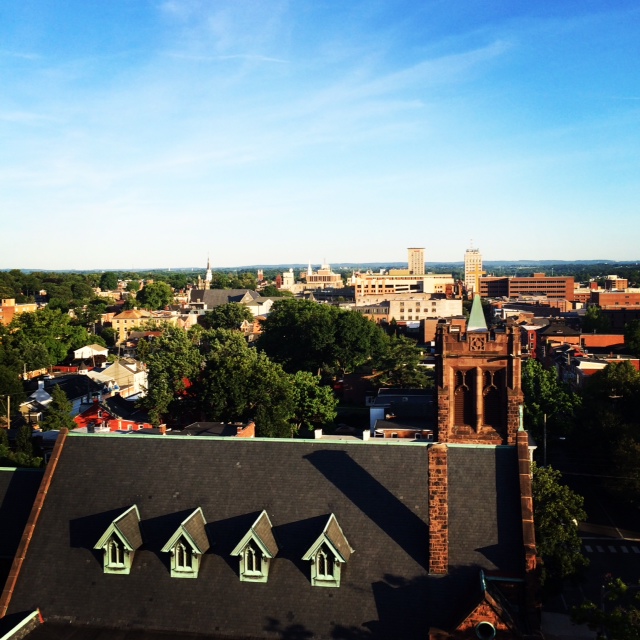
A few days ago we walked out on to the top floor of the parking garage and the sky spread out all around us and we were kings and queens, looking out over the realm. When we got to the edge, my stomach did a little flip and I held on to the rail. Ten floors doesn’t look like all that much from the ground, but when you’re standing there, contemplating the distance between you and the end of you, it’s a fair ways down.

I never realized this city is so green, but from up there it looked like a forest with buildings growing out of it, steeples everywhere and the flat tops of brick and cement buildings marching away from us. The sky was a white-washed blue stretching out to distant hills, remote and wild. The kids ran off and played tag while we stood there and pointed out the places we knew.

It’s a strange experience, looking down on your own city like you’re looking into a snow globe just before giving it a shake.

* * * * *

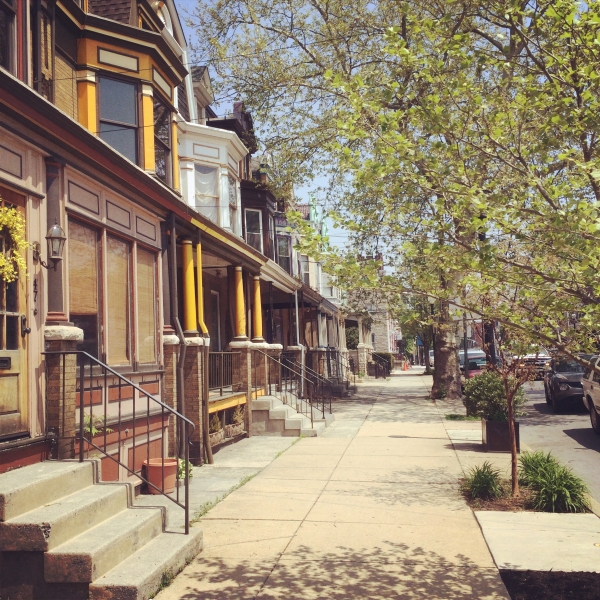
We walked home from the parking garage and turned on to our street. James Street. It was evening and the sky was turning gray and a few of the street lights thought about turning on and the temperature was that late spring perfection. We walked past the old Steak Out that’s now being renovated into a Greek restaurant. Paper covered its windows, and painter’s tape lined the fresh white and blue pattern on the brick. We walked past the small parking lot and up to the first row of houses, the ones before ours that have little porches jutting out into a narrow sidewalk. The sidewalk is so narrow in that spot that if someone is sitting on their porch you can just about smell their breath when you walk by.

A group of six or seven men hung out around one of the porches, their group blocking the sidewalk. Two of the men were old and sitting on folding chairs. The rest were young men, antsy, looking for something to do. They were all African-American, and this is where I tell you exactly how I feel in this city. It’s a strange thing, being a minority, walking the streets and feeling like the odd person out. It gives you a new perspective on life, a new view of how others feel in other circumstances, in other places. When you’re the only person with white skin all kinds of questions pop into your mind.

Do they wish I wasn’t here?

Do they think I’m a racist?

Do they not like me, because of my skin color?

It’s good for me, all of it. It’s opening me up.

* * * * *

My family and I approached the group of men blocking the sidewalk close to our house and at the last second I decided I was going to stick with the strategy I’ve adopted since we moved into the city: make eye contact with anyone who is willing, and say hello. No matter how intimidating this group seemed. No matter how grouchy the two old men looked; no matter how the young men made me feel.

“Hi,” I said, looking up at a few of the guys, and they parted as we went through. At first it was all stares and silence. They stopped talking while we walked through. Then one of the older men, a man with jowls and wrinkles around his eyes and white stubble for hair, smiled, and his smile was like water.

“You have a good night, now,” he said, his voice music.

“Thanks. You, too,” Maile said, smiling. Abra waved, then dashed behind me and hid. Lucy grew bashful.

And then, one of the younger men, one with a handkerchief tied on to his head, a young man with tattoos and a sort of natural scowl, glanced down at my four kids trailing behind me like ducklings, took in my wife’s belly holding baby number five, and that toughest man of the group smiled and nearly laughed.

“Happy Father’s Day, man,” he said, shaking his head and giving out a loud “Whew!” while taking in the small crowd that is our family. All the other guys laughed, and I laughed with them.

“Thanks, man,” I said, and I felt this shock race through me, a shock that came from the realization that we are not different, this man and me. We are the same, no matter how we dress or talk or carry ourselves. No matter our skin color or talents or upbringing.

We are human.

Sometimes it will almost bring you to tears, the kindness of strangers, and especially when you feel like the strangest one.
This is How I Deal With Rejection

IMG_0125

Today’s #OvercomeRejection post is brought to you by Kelly Chripczuk, blogger over at “A Field of Wild Flowers,” one of the most beautifully written blogs your bound to stumble upon here on these old interwebs. So follow the link at the end of the post and check out some of her other words. In the mean time, here is her post on overcoming rejection (and please feel free to submit your story of overcoming rejection to shawnsmucker@yahoo.com):

It took me over a week to think of a single concrete experience of writing related rejection.

Repress much?  Maybe.

Or maybe I simply haven’t risked enough.  You have to play your cards to win.  You have to play your cards to lose.

Driving in the car the other day, though, it came to me, the memory of a very concrete experience.

About six months into blogging I met with a friend, the editor of a regional parenting magazine.  She wanted to know whether I would be interested in writing a monthly print column, something about parenting and faith.

“What angle are you looking for?” I asked.

“It’s up to you,” she replied, “I see this as an opportunity for you to build a name, a platform, you can do whatever you like.”

Gulp.

So I started, I played my cards and led with what I thought was a pretty impressive hand.  I kept to my word limit and tried to tell spacious stories that invited the reader in.

Three months in I got an email, they were going to go “in another direction,” the column was canceled.

Game over.  Just like that.

I will say that I wept.

It was something, you know, and when you’re a full-time homemaker and mother to four, having a paying gig in the real world, well, it helps you feel like a real person might someday emerge when the years of diapers and laundry pass (they do pass, right?!).

Rejection, like praise, comes with its own set of temptations.

I knew I had written well.  I knew it had simply been a poor fit and there hadn’t been enough time and feedback to find a voice that worked for that publication.

I knew all of that.

But I was tempted, sorely, to let that rejection say something more about my writing and, more importantly, about me.  Desperate (at times) for affirmation and (ultimately) for identity that transcends my circumstances, I face (still) the temptation to let that experience sink all the way down to the heart of me; to let it become an answer to that ever present question, “Am I good enough?”

It’s the same thing I want to do with praise, the same process, only it feels a whole lot worse to begin with.

And there you have it, the heart of the problem, I’m not going to be free to take risks if every failure, every success is allowed to imprint itself with permanence upon the heart of me.

Risk (read: writing) involves vulnerability, a willingness to walk into the arena of life as Brene Brown puts it.  It’s a glorious, muddy, terrifying place, this arena – parenting, writing, I face failure and success every day.  I play good hands and terribly poor ones.

I celebrate the wins and mourn the losses but I don’t live there.  Not any more.  I won’t let what happens in the ring label the heart of me or answer that ancient question.

At the end of the day, at the end of all of my successes and failures, I return home.

I return to love that is unconditional, love that reshuffles the deck and deals out a new hand – new every morning.  I return to the One who changes the question, changes the answers and offers a simple affirmation, “You are loved.”

From that place of truth I step out again, renewed and cautiously hopeful.

This is how I deal with rejection.

Oh, and repression helps too.

Previous installments of #OvercomeRejection:

It Wasn’t My Writing Being Rejected – It Was Me
Permission To Try Again

Don’t Feed the Bear

And don’t forget to go visit Kelly at A Field of Wild Flowers.

From Forty Acres to James Street (or, Moving, in Eight Acts)

IMG_0971

The Lord has been so good to me,
I feel like traveling on;
Until that blessed home I see,
I feel like traveling on

The wild raspberries are on the way, their blossoms lining the half-mile lane with white spots. The tree leaves have unfurled as well, like arthritic hands suddenly wide open, released from all pain.

Forty acres of spring will do that. It will open you up. Spring is like a confession, or the last soldier laying down the last weapon and sighing with relief.

* * * * *

There’s an ocean of pain and disappointment in the world, but sometimes we’re given a respite from this knowledge. Sometimes we’re given short periods of time where we can wander inland, away from those dark shores, and we can set up a life for ourselves. We forget, and we stay busy, because if we sit in silence we hear the distant roar of those persistent waves.

Eventually though, the reminder comes back, that death is everywhere, enormous pain just around the corner. Cancer. Divorce. Failure. Eventually you have to watch someone you love travel through a space of incredible pain, and there’s not a single thing you can do to change it.

So you sit there and you listen. You wait for it to pass, whatever that might mean, whatever that might look like.

As you get older, you go down to those painful shores much more often.

How does one get to the place where you’re not simply waiting for the next bad thing to happen? It has taken me 37 years to learn this, that life is not about finding a place where pain does not exist, but more about finding a way to sing through it.

* * * * *

We’re moving, again, to our tenth residence in fifteen years. We’ve lived in basements and almost-palaces, small one-story homes in Florida and even smaller cottages in England. We’ve battled stink bugs and mice and an enormous spider that lived under our bathtub in Buckinghamshire. When I went to the bathroom in the middle of the night, I could see one of its hairy legs sticking out of the hole where it lived.

When I came back up to the bedroom, Maile would always ask the same question in a sleepy voice.

“How’s Shelob?”

* * * * *

The kids run through the new house. It’s still empty – moving day is May 31st. Their voices echo down long halls, their footsteps vanishing into the third floor high above. But Abra trails behind, dawdling around an empty wardrobe.

Her hand reaches up and strokes one of the door handles. Her blond head of hair tilts to the side as she tries to peer through the crack. She turns and sees me sitting there. She smiles, embarrassed, but she can’t resist sharing her little secret.

“Daddy, look. It’s a magic wardrobe. If you go into it, you never know where you might come out.”

Where will we come out? I wonder. We’ve stepped into the wardrobe and we push our hands towards the back, feeling our way into…what?

* * * * *

Two in the morning on our first night in the new house. I stirred throughout the night, hearing the voices of young men as they walked the dark streets. A siren wails past the house. Then a car pulls up to the light just down the street, revving its engine, its exhaust fitted with some kind of other-wordly noise maker.

It screams over and over, waiting for the green light. Then the light turns and the car jets off into the night, into the city.

I hear footsteps pounding through the house. I sit up. Our oldest son races in from a bedroom he no longer shares with our youngest son. They all have their own rooms now, their own worlds.

“Dad,” he asks in a panicked voice. “What was that?”

“Just a car, buddy. Just a very loud car.”

“Oh,” he says, reluctantly returning to his own room.

* * * * *

A few days later, Maile wanders a grocery store in the city, looking for milk. A young boy, probably as old as our oldest son (10 years old), walks up to her holding two loaves of bread. He raised them towards her, and in broken English manages to communicate to her that he doesn’t know the price. She looks at the shelf.

“Those are two for $3,” she says. He holds up a handful of change and shrugs his shoulders. She helps him count out the money.

“I pay you?” he asks.

“No,” she says, smiling. “Come.”

So she takes him to the register and helps him check out. This is life in the city, seeing a ten-year-old child at the grocery store alone, helping him pay for a loaf of bread.

* * * * *

This is what it means, to live in the city, where you are forced to live with other people’s noise, where you walk outside and listen to Miss Joyce tell you for the hundredth time that she is being forced to move, that she doesn’t want to move because it means giving up her cats, that she doesn’t want to move because she’s rented here for 36 years. And she cries again, and you tell her it will be okay.

Living in the city for one week has taught me that if people look scary, it’s not their fault – it’s my fault. It’s how I choose to view them. I started saying hello to all the scary people, and 99% of them say hello in return, most of them with a smile on their face.

There’s something about living in the city that will unite you with all kinds of different people, if you let it.

* * * * *

We sit on the roof of our house and watch the fireworks explode in the sky, stars being reborn, or dying. The flashes of light reflect on the faces of my four children. Maile watches from the window behind us, the window we crawled through.

This season of life will change us, if we let it. It will open us up, like spring.

Revisiting the Scariest Moment of My Life

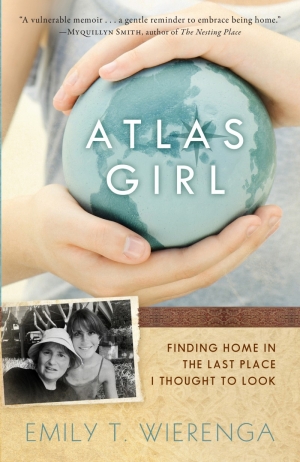
wierenga_AtlasGirl_Mech-800x1232Two years ago my family and I were returning from a four-month cross-country trip, and we were glad to be home. It had been a wonderful, beautiful, frustrating, terrifying, exhausting, unbelievable, magical, stressful, incredible four months.

Without a doubt, the highlight of the trip (if by highlight you mean moment that will never be forgotten) was when we started down the Teton Pass and lost our brakes. Today I’m retelling that story over at my friend Emily Wierenga’s blog as we celebrate the forthcoming release of her travel memoir, Atlas Girl.

If you’ve never read the story of our brakes going out, or if you’d like to revisit it with me, please head over to Emily’s place and go down the mountain with us. And be sure to take a look at her new book as well.

* * * * *

By the way, thanks for continuing to check out my sporadic writing here at the blog. With our move into the city, and a crazy amount of writing work, and a baby on the way, it’s been hard to find blogging time. But I’m still here, and I’m glad you are, too. If you’d like to get some mini-posts from me, you can always follow my writer’s page on Facebook, where I occasionally post some shorter pieces.

May the road go ever on before you, and may your brakes never go out!


The Definition of the Christian Life in One Word

Today’s #100Words comes from Brennan Manning’s life-changing book, Ruthless Trust:

This book started itself with a remark from my spiritual director. “Brennan, you don’t need any more insights into the faith,” he observed. “You’ve got enough insights to last you three hundred years. The most urgent need in your life is to trust what you have received.”

That sounded simple enough. But his remark sparked a searing reexamination of my life, my ministry, and the authenticity of my relationship with God – a reexamination that spanned the next two years. The challenge to actually trust God forced me to deconstruct what I had spent my life constructing, to stop clutching what I was so afraid of losing…

At another point in the book, Manning asks someone if he could describe the Christian life in one sentence.

“Brennan,” the man replied. “I can describe it in one word. ‘Trust.'” Manning’s examination of “trust” in this book changed the way I live my life. I cannot recommend it enough.

Find out more about Brennan Manning’s book HERE.
* * * * *

Previous books highlighted in #100Words:

Micha Boyett’s Found
Michelle DeRusha’s Spiritual Misfit

What Woke Me Up

IMG_0567

The guy looked at me and said something that drilled down deep inside of me.

“I have to thank you. When I got laid off eighteen months ago, I was pretty discouraged, but I was also determined. I read two books that made a huge difference and put me on the right path: Stephen Pressfield’s Do The Work, and your book, Building a Life Out of Words.

I was shocked. Building a Life Out of Words has gotten into the hands of maybe 5,000 people in the last few years, at the most. It’s a little e-book I put together, and I don’t really think about it too much anymore. But it’s making a difference.

* * * * *

“Nowadays most people die of a sort of creeping common sense, and discover when it is too late that the only things one never regrets are one’s mistakes.”

– Oscar Wilde, The Picture of Dorian Gray

* * * * *

We have been seduced by the voices of fame and fortune. Their siren-call lured us to the island of perfectionism, and now we refuse to leave unless we can be guaranteed of success. Instead of building a makeshift boat with the materials at hand, we wait for the perfect ship to sail.

We put off creating because we reason that what we will create won’t be enjoyed by millions or even tens of thousands. We reason that what we have to say has surely been said before; what we want to write about or paint or build or capture with a camera, well, there’s nothing new under the sun, right?

And even if we do it, it’s already been done much better by someone else.

Right?

I’m 37 years old and I’m tired of waiting for inspiration, I’m tired of waiting to publish my fiction until I’m assured of a best-seller. I’m not going to let the idea of failure keep me from trying. I think there are a lot of you out there like me. You think you’re not good enough, or experienced enough, or talented enough.

But now’s the time.

Start that new blog.

Write your script.

Self-publish your novel.

Write your memoir.

Take a cooking class.

Show people your photographs.

Build your bookshelf.

Write an e-book.

Buy your first paint set and canvas.

Remodel your bathroom.

Take up the piano.

Make your movie.

You can’t get these years back. Perfectionism is getting you nowhere. Waiting for the approval of others is getting you nowhere. What you create will make a difference for someone, and that’s enough reason to stop waiting.